Africa-Press – Uganda. More than 20 primary schools in Kalungu District have undergone training on the effective use of newly distributed science kits in an initiative aimed at strengthening practical science education at the primary level.
The training was organised by the District Education Office under Kalungu District Local Government in partnership with River Flow International and the Ministry of Education and Sports.
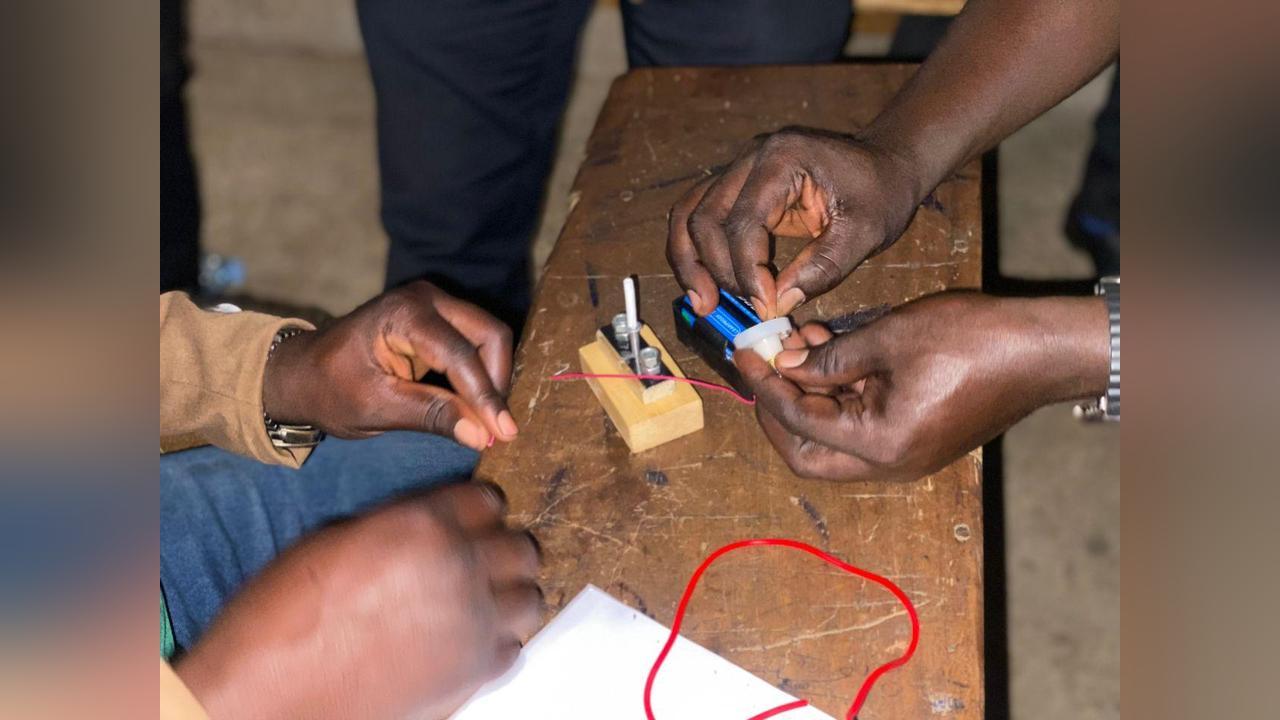
It brought together headteachers, science teachers and education officials for hands-on demonstrations on integrating the equipment into classroom instruction.
Participants said the workshop focused on equipping teachers with practical skills to teach science topics that have traditionally been challenging to handle through theory alone, including human body systems, electricity and magnetism.
Anna Maria Nanbusu, Headmistress of Sacred Heart Primary School Kyamusansala, described the intervention as timely.
“Receiving this science kit feels like a blessing. We have a science room that is safe for experiments, but what we lacked were the practical materials. Now we are committed to using everything we have received to benefit our learners,” she said.
Katuramu Moses, a teacher at St Kizito Primary School, said the materials would make it easier to explain complex topics.
“We have been facing challenges teaching some chapters, especially internal body systems. With these materials and the training, learning will become smoother and more practical,” he said.
Nakanjako Noelline of St Charles Lwanga Primary School said the training equipped her with the knowledge to use the equipment effectively.
“The training has shown us how to use the kit, and it will greatly help our learners understand science better,” she said.
Teachers emphasised that the kits will promote learner-centred approaches by allowing pupils to interact with real models rather than relying solely on diagrams and hand-drawn charts. In many schools, limited teaching aids have previously constrained practical learning.
At St Mary Immaculate Villa Primary School, Owere John Alfred said the school plans to store the kit in the library under supervision to ensure accountability and shared access among staff, despite concerns about limited quantities relative to large class sizes.
Education officials expressed optimism that the initiative will improve science performance across the district. Abubakar, an Inspector of Schools in Kalungu District, said the kits would help shift lessons from teacher-centred to learner-centred instruction.
“These materials bring distant concepts into the classroom. Learners can now interact with models of the skeleton and human heart, making science easier to understand,” he said.
However, he noted that only a fraction of schools have so far benefited.
“Kalungu has over 270 schools, but only 20 have benefited. We appeal for more support so that all learners can access practical science education,” he added.
Officials said the programme targets both high- and low-performing schools in an effort to raise standards across the district.
The training concluded with teachers committing to share the knowledge acquired with colleagues in their respective schools. Stakeholders expressed hope that sustained support and expansion of the programme will not only improve examination performance but also nurture problem-solving skills and long-term interest in science and technology among learners.