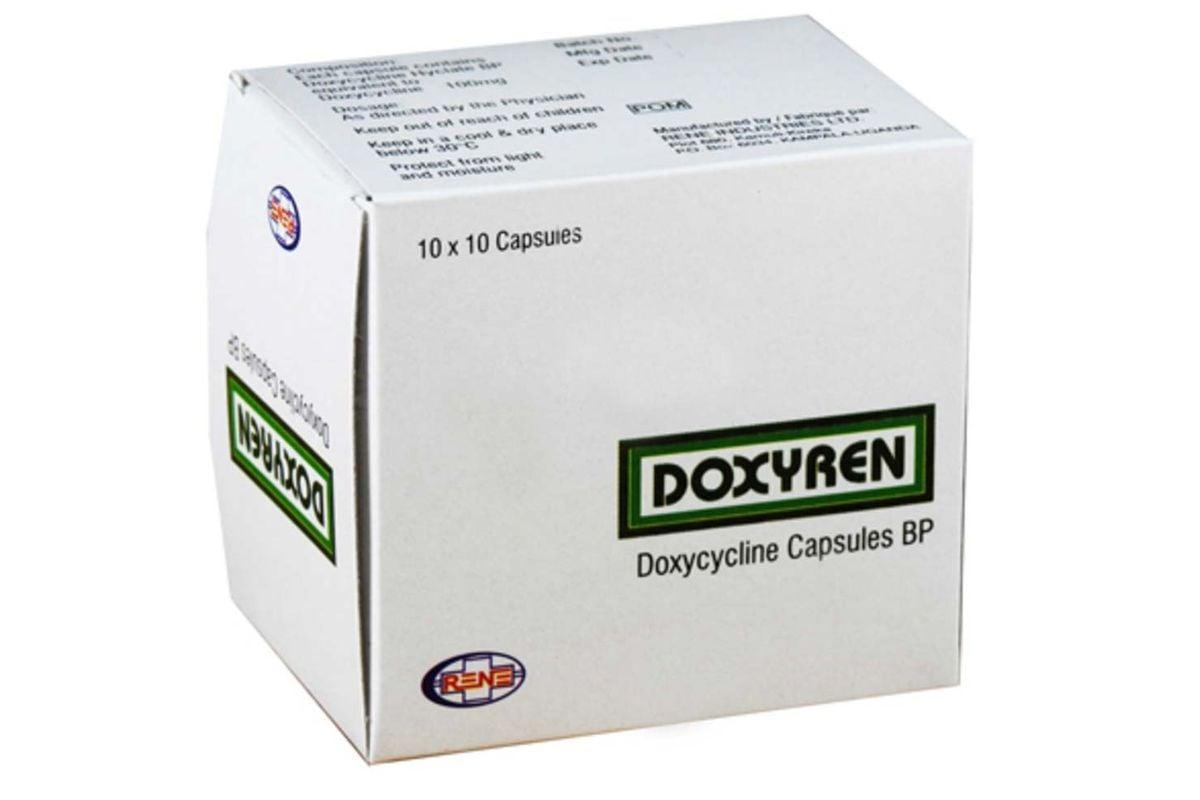
Africa-Press – Uganda. Scientists have expressed mixed reactions about the proposed use of an antibiotic, doxycycline, to curb sexually transmitted infections such as syphilis, gonorrhoea, and chlamydia.
The proposal by the Centers for Disease Control and Prevention (CDC) of the United States is premised on a study done between 2020 and 2022 by researchers at the University of California, San Francisco (UCSF) and the University of Washington, among 501 adults in four clinic sites of San Francisco and Seattle.
The researchers, in their report released this year, said they found a two-thirds reduction in the incidence of syphilis, gonorrhoea, and chlamydia among the study participants who took doxycycline within 72 hours of having unprotected intercourse.
Commenting on whether Uganda is also considering the post-exposure (PEP) medicine, Dr Rony Bahatungire, the acting commissioner for clinical services at the Health ministry, said they need to first get concrete information about it.
“We shall evaluate their evidence and once proven effective, we shall adopt the protocol at the review of our Uganda clinical guidelines,” he said in a brief interview.
2021 study
In Uganda, according to a 2021 study report by Ms Veronicah Masanja, the prevalence of self-reported sexually transmitted infections (STIs) has remained persistently “high”, with an increase from 22 percent in 2006 to 27 percent in 2011.
The researcher indicated that “up to 1.5 million cases of STIs were reported between 2015 and 2017,’’ and recommended that “this high prevalence of STIs and associated adverse health outcomes makes STI control a public health priority.”
However, Dr Ivan Kisuule, a physician at Mulago National Referral Hospital, who doubles as the acting deputy registrar at Uganda Medical and Dental Practitioners Council, warned that adopting doxycycline would have more disadvantages.
“If used for prophylaxis, it can lead to misuse by the public, resulting in bacterial resistance,” Dr Kisuule said.
“Currently, we have the Uganda Clinical Guidelines of 2022 and they don’t recommend the use of doxycycline for prophylaxis (prevention of infection) against sexually transmitted infections (STIs) but rather for treatment,” he added.
The warning comes amid a recent global report of a study conducted in Uganda and other 203 countries, which indicates that infections with drug-resistant bacteria caused about 1.2 million deaths in 2019, more deaths than HIV/Aids (690,000) or malaria (409,000) combined.
Dr Kisuule’s concern about drug resistance is similar to that which the National Health Institute (NIH) of America, the body that funded the study, indicated in a press statement on April 6, when they unveiled the study findings.
“Specifically, the post-exposure approach, termed doxy-PEP, resulted in a two-thirds reduction in the incidence of syphilis, gonorrhoea, and chlamydia among the study participants, all of whom reported having an STI within the previous year,” NIH said in the statement.
“However, the research also revealed a slight increase in antibacterial resistance that requires further exploration, the authors found. The research was funded by the National Institute of Allergy and Infectious Diseases (NIAID), part of the National Institutes of Health,” they added.
Condom use and abstinence are some of the proven ways to prevent STIs, according to scientists.
For More News And Analysis About Uganda Follow Africa-Press