Africa-Press – Uganda. Lubega is the only child of his mother Night Oliver and father Maj Muhammad Yiga, who separated soon after his birth.
Raised by his paternal grandfather in Luweero, Lubega’s chances of correcting that deformity were as limited as his chances to get an education. After struggling through school, he dropped out in Senior Three.
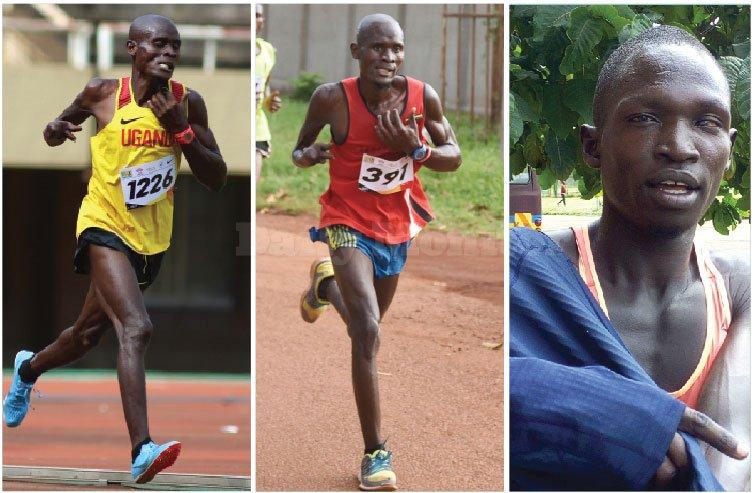
Almost twice every week, Abdul-Karim Lubega runs 24 kilometres from Makerere University to Ssentema Prison in Wakiso and back, to keep his lungs, heart, joints, and muscles fit for the next race. He has run countless races. From his favourite 21km races to middle distances and sometimes, sprints.
But after coming close to his dream of running an international race last year, Lubega now feels thousands of miles away from that dream. He is neither disabled enough nor abled enough to compete in serious races.
Born to soldier parents on March 10, 1986, in Luweero, Lubega was told he was only eight months old when fire from a kerosene lamp caught the bed in which he was lying.
His mother left him in a Gulu military barracks for duty and by the time responders stopped the fire, Lubega’s right side had been severely damaged. His knee, lower thigh, and rib area were badly scalded. His right wrist and arm, severely burnt from the bicep, would be deformed permanently.
The hustle
Lubega is the only child born to his mother Night Oliver and father Maj Muhammad Yiga, who separated soon after his birth.
Raised by his paternal grandfather in Luweero, Lubega’s chances of correcting that deformity were as limited as his chances to get an education. After struggling through school, he dropped out in Senior Three.“I started running in primary school with big ambitions,” Lubega says.
But teachers discouraged him because of his disability. From Luweero, Lubega went to Mubende. He paid for and encouraged other disabled persons to participate in fundraising runs to “sell our abilities to potential benefactors.”
Eventually, in 2014, Dorcus Inzikuru, the former world steeplechase champion, spotted Lubega and brought him to Kampala for more exposure.
Lubega believed that soliciting sponsorship for his talent was better than petty begging. Though people’s attitude was negative, some have been supportive.
Morocco heartbreak
It had been a long journey for the 34-year-old to finally board a plane and compete for the 2020 African Paralympic Qualifiers.
Lubega had also failed to pay for his passport until an influential leader from Luweero bailed him out.
But his dream trip to Casablanca, Morocco turned out the heartbreak of his life.
Lubega was sure of qualifying for the 2020 Paralympics—the Olympics for the disabled— in Tokyo and dreamt of winning medals for Uganda.
“His times were so good we saw him as the potential replacement for David Emong,” says James Ssenkungu, a coach who had travelled with Team Uganda to Casablanca, Morocco.
But just before the event, Lubega was told he was ineligible to compete among the disabled. He cried and no explanations made sense to him.
“I couldn’t believe my ears,” he retells with dejection. “I still wonder what they call a disability and not.”
According to a copy of the IPC datasheet, Lubega’s first classification was marked NE (not eligible).Bumali Mpindi, the Uganda Paralympic Committee president, was in the room when Lubega was being assessed. He protested the results.
“We had great hopes in him and we appealed so that he is at least allowed to compete under review,” Mpindi says. Mpindi paid Euros 150 (Shs640,000), a requirement to protest a classification decision. But even the four-man appellate panel confirmed on February 26, 2020 that Lubega is not eligible.
“They said his disability doesn’t limit his performance, unless he has his wrist cut off,” Mpindi says. Lubega’s innocence and excitement could have cost him. Some athletes exaggerate the impact of their disability during assessment tests, but witnesses say, Lubega instead tried so hard to show his abilities.
Hard choices
After being disowned by World Para Athletics, Lubega faced hard choices. Amputation of his wrist could cost him millions of shillings yet he lacks an income.
“He could return to the World Para -athletics for reconsideration. But at his expense,” Mpindi says. He also says Lubega can resort to competing against the non-disabled. But Lubega says: “Those too told me I don’t belong among them.”
Even then, Faustin Kiwa, a seasoned coach, says, Lubega is good among the disabled but many non-disabled runners beat him.
Of the 16 Ugandan athletes in the World Para-Athletics database only Lubega is confirmed non-eligible. According to World Para-Athletics, like in other sports, classification determines an athlete’s eligibility and the fitting sport class.
To qualify, one must have an eligible impairment judged severe enough to affect the sport of athletics.
There are 10 eligible impairment types: eight physical plus vision and intellectual impairment.Track and field athletes are classified into several groups, denoted with letters T, for track events such as running or F, for field events like javelin, shot-put, plus a two-digit number. The lower the number, the higher the degree of impairment.
The Ugandan classifier put Lubega in T46, one of the categories for runners with an impaired arm. According to the rules, that impairment affects the shoulder and/or elbow joint of the arm, and the activity limitations in running are roughly comparable to that of an athlete with an amputation above the elbow.
International classifiers judged Lubega ineligible for this class. Emong, a 2016 Paralympic silver medalist, belongs to T46. But his disability—thinner left arm, fractured above the elbow—is less visible than Lubega’s right arm which cannot fully stretch due to the burn in the elbow joint.
While running, Emong’s shoulder swings. His elbow doesn’t. But people ask him: “what’s your disability?” Ironically, Lubega struggles to explain that he is less disabled than Emong.
Lubega is not a sprinter, but he was ready to compete in T47, where an athlete’s impairment on the arm causes some loss of function at the shoulder, elbow and wrist and which primarily impacts sprints—as if that athlete’s arm was amputated from the wrist or below the elbow. Again, Lubega was judged ineligible.
Tea Cisic, IPC classification senior manager, was on annual leave when we contacted her.And Rafael Maranhao, IPC public relations senior manager, told us via mail that “information about athletes’ classification panels and medical diagnostic are confidential.”
“Where do I go from here? Why did I waste all my time?” he regretted. “It’s not the end of the world,” came the counsel from world 800m champion Halima Nakaayi. “If God closes one door for you, He opens another.”
During the lockdown last year, Lubega retreated to Bundibugyo, his mother’s birthplace, and climbed the hills daily to get fit enough to compete against the able-bodied.
But Lubega, like other disabled athletes, trains and runs trial events among the able-bodied, but when it comes to international competitions, he belongs nowhere.
Not alone
Before Emong won gold at the 2017 World Para-Athletics Championship in London, Simon Peter Etabu was terrific during the national qualifiers at Namboole Stadium. His personal best times of 1:54.1 minutes and 3:53.5 minutes were enough to qualify for the 800m and the 1500m races in the T13 category in London.
But Etabu and Benjamin Ayebare, who hit the exact qualification time of 56 seconds in the 400m, were dropped because their visual impairment—one functioning eye and a faulty one—did not have a class in para-athletics.
Runners with the least severe vision impairment are categorised as T13. But that impairment must be affecting both eyes and meet the minimal disability criteria of say, a visual field less than a radius of 40 degrees. The Ugandan classifier found Etabu and Ayebare ineligible, despite their complaint that on the track, they struggle dealing with opponents on the side of their faulty eyes.
Dejected, Etabu quit Uganda Wildlife Authority athletics club, and returned to Soroti. He tried coaching children, but passion and desperation brought him back to Namboole this year, hoping that “one day I will get a second chance.”Christine Akullo, a visually impaired sprinter, who won Uganda gold at the 2011 and 2015 All-Africa Games, has been under review as international classifiers have not confirmed her disability status since 2011.
Kenya’s Abraham Tarbei won two gold medals in the 2008 Summer Paralympics in Beijing, China and at the World Championships in the T46 1500 metres and the 5000 metres. His left hand has no wrist, while his right wrist is deformed. Last year, he was declared ineligible for para-athletics.
Such inconsistencies bring into question the fairness and inclusiveness of the Paralympic movement, the same virtues classification intends to promote.
According to Vice Magazine of December 2017, Sam de Leve, a multidisciplinary athlete, competed broadly in para-sport but ultimately gave up his pursuit of Paralympic competition due to a “pseudoscientific” classification process.
Leve is just among many who hope the International Paralympic Committee (IPC) introduces a more scientific approach to classifications to expand and advance disability sport.
But Craig Spence, IPC communications and media director responded that “No impairment is identical and if the boundaries were narrowed further, the result would be even more medal events at events with less depth of talent.”
He added that the classification system is evolving and improving all the time as a result of ongoing research and competition data.
Maybe that is a silver lining to Lubega, Etabu, Ayebare, Tarbei and many others across the world. But keeping on track amid poverty and slim hope can be harder than pinning a medal on a shadow.
Unrelenting
Lubega struggles to survive even off the track. Sometimes his scars itch severely. He lacks a job yet he pays for the smallest of basics, such as washing his clothes. He has tried carpentry, selling used clothes in Owino Market, but still his disability, which para-athletics managers think gives him an unfair advantage over others, haunts him.
“Employers think I lack the energy to work better.”He runs in almost every charity event, wins medals but while wheelchair-bound colleagues bag money prizes, Lubega walks home empty-handed “because you had no competitors,” organisers tell him. Lubega is a sociable character. The day before we met, his friends in Owino Market raised Shs70,000 and bought him a pair of used racing boots.
His colleagues at Namboole Stadium, who call him Musiraamu, borrowed it in turns during the national trials. Lubega does not take any help for granted, and hopes a well-wisher will assist him with capital to start a business.
“I want to employ myself so that I determine my programme: work, train and compete. Otherwise, I don’t want a job that only allows me to run just for fun.”
Almost every Muslim athlete who came to Namboole was sipping on a water bottle. But Lubega is as fanatic to the sport as he is to Islam. “I need Allah’s favour more than anybody. So running can’t stop me from fasting.”
Lubega is hoping against hope that one day he shall be eligible to compete in international events.“I insist on competing to improve my life, but also inspire other disabled persons. Otherwise, they will get discouraged to do sports.”
The other side…The social man
Lubega is a sociable character. The day before we met, his friends in Owino Market raised Shs70,000 and bought him a pair of used racing boots.His colleagues at Namboole Stadium, who call him Musiraamu, borrowed it in turns during the national trials. Lubega does not take any help for granted, and hopes a well-wisher will assist him with capital to start a business.