Africa-Press – Uganda. In a remarkable collaboration aimed at addressing vulnerability and poverty, the World Food Program (WFP), in partnership with the Government and other UN Agencies, has achieved significant milestones in strengthening national and sub-national social protection systems.
By leveraging innovative interventions, including child-sensitive social protection programs, cash-based transfers, and tailored skill-building initiatives, this collaboration has transformed the lives of countless vulnerable households and individuals in the across three West Nile Districts of Adjumani, Koboko, Arua and beyond.
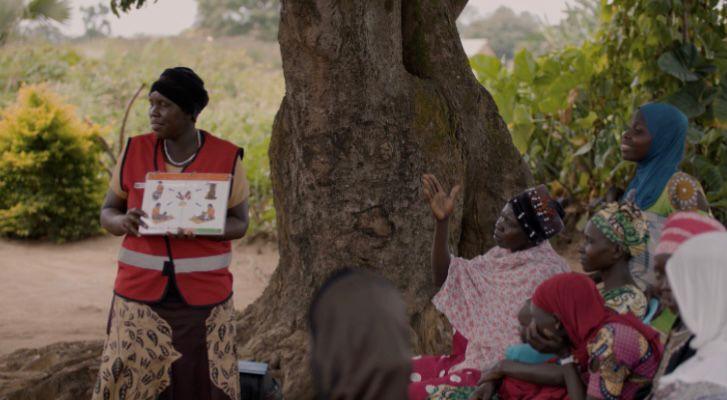
Care Groups and Household Support Groups were established to build social cohesion, engaging community members to understand the social norms and barriers toward skills development.
The overall linkage to ability to utilise skills that are building a sustainable income to take care of their babies, ensuring that children are able to access a nutritious meal and babies are not at risk of getting malnourished.
Faida Gloria, a facilitator for the Social Behaviour Change Communication (SBCC) group for Lead-Mothers under the NutriCash program in Koboko District, says that they used to witness a lot of ailments plus under-five malnutrition cases in their community
‘This was because of inadequate feeding, we realised that most mothers did not have breast milk yet the food the children were eating was not enough. If you go to the community right now, you will realise that the number of malnourished children has reduced.’ Faida said.
She explained that they were trained by the Save the Children, under the NutriCash program on backyard gardening which plays a significant role in combating malnutrition by addressing food insecurity, improving dietary diversity and reduce food costs.
‘So mothers have greens ready at home. Its not only the household members benefiting but also the neighbours and you find that every Lead-Mother has household members to train. For example, this is our group, we meeting on a monthly basis, we train them, they go back and train their neighbours on the same topics.’ She added.
A pivotal component of these interventions has been the introduction of cash-based transfers coupled with financial literacy training.
Vulnerable households, including those headed by women, have been equipped with the skills to manage finances effectively through trainings with Save the Children, fostering economic resilience.
Through SBCC, beneficiaries have also been educated on budgeting, savings, and investments, enabling them to make informed financial decisions.
This approach has not only alleviated immediate financial challenges but also built a foundation for long-term economic stability.
‘Every month, mothers receive a small token to improve on the nutrition and add on what they have at a household level, in the community. After getting that money from WFP, they get training on how to save part of it, sell some of the backyard produce, make budgets and invest.’ Faida explained.
To address the challenges faced by teenage parents, the partnership has rolled out vocational training programs across these districts of West Nile.
Abale Robinson, the Deputy Academic Officer at Koboko Technical Institute says that these programs have provided young parents with marketable skills, ranging from mechanics, tailoring and carpentry to agribusiness and digital literacy.
By empowering teenage parents with livelihoods, the initiative has offered a pathway out of poverty while fostering self-reliance and dignity.
‘The project is achieving its intended target because the students are accounting to us that they have learned something because by the time they arrived here they were unable to do anything but now they are progressing well and have already started to help themselves and their communities.’ Abale
‘In Koboko alone, we have had 130 teen mothers who were skilled in various enterprises and as a District, we hope the people do well’.
The impact of these interventions is best reflected in the stories of beneficiaries. For instance, Sunday Mary, a teenage mother from Mongoyo village, Padum Parish, in Koboko District, joined Koboko Technical Institute months ago and she shares how vocational training in tailoring is helping her gain skills. She says she dreams to start a small business that will support her family once she graduates.
‘I will use the start-up package they have promised to start a small shop where I will be sewing clothes and selling them.’ Sunday said.
Similarly, her 19-year-old husband, Rudde Ali, highlighted how the training in Motor repair has allowed him to start earning some money that helps around his home.
These stories underscore the transformative power of the interventions.
‘I married when I was so young, around 16 years, I faced challenges of taking care of my family. I got defeated to provide my wife with even the basic needs like soap, I lacked skills to help me make a living. But since I came here my life is changing. I now know how to remove and fix spare parts on a motorcycle. My future is brighter than before.’ Rudde Ali said.
Moro Paul, the project coordinator at the district says that by combining financial assistance, education, and skills development, the WFP and its partners have demonstrated that sustainable change is possible when interventions are holistic and community-centered.
He adds that as the programs continue to evolve, they hold the promise of lifting even more vulnerable populations out of poverty, ensuring a brighter future for all.
For More News And Analysis About Uganda Follow Africa-Press