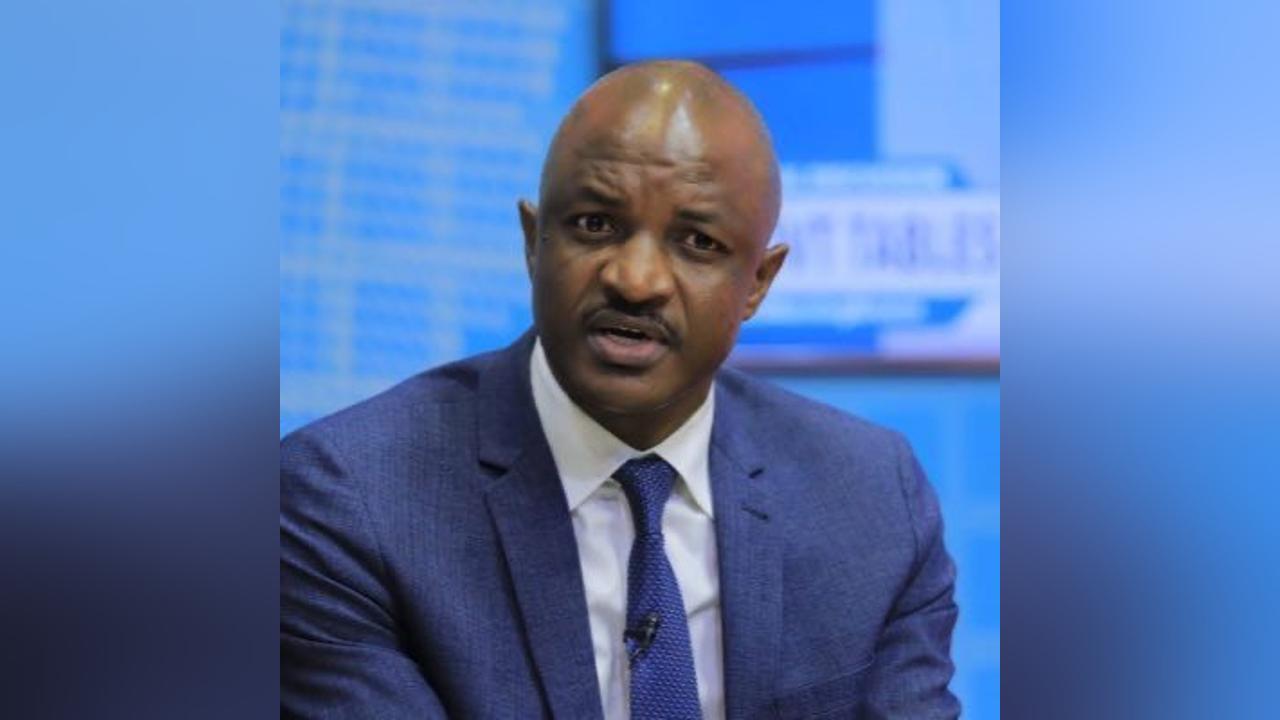
Africa-Press – Uganda. ganda recorded its highest balance of payments surplus in 15 years during the recent election period, defying historical trends that typically see economic instability and capital flight, Permanent Secretary and Secretary to the Treasury Ramathan Ggoobi has said.
While appearing on NBS Morning Breeze on Thursday ,Ggoobi said Uganda’s macroeconomic fundamentals remained stable throughout the election cycle, with strong capital inflows, a strengthening shilling, and sustained investor confidence.“I should tell you, Mildred, that currently, contrary to what many people thought, we have had a comfortable election in terms of economic fundamentals,” Ggoobi said.
“Anyone outside Uganda who just looks at our numbers and macroeconomic indicators would not believe this is a country that has been in an election,”he added.According to Ggoobi, the country registered a balance of payments surplus of about $2.37 billion, the highest recorded in the last 15 years.
A balance of payments surplus means that Uganda received more foreign currency than it paid out over the period.
“What do we mean by a surplus balance of payments? It means that overall Uganda has received more money than the money which has gone out,” he explained.
Data from the Ministry of Finance shows that by the end of September, foreign direct investment inflows reached about $3.5 billion, while portfolio investments stood at $1.7 billion.n addition, tourism receipts amounted to $1.8 billion, while remittances from Ugandans abroad totaled about $1.5 billion.
Ggoobi attributed the strong performance largely to the financial account, which tracks the movement of capital into and out of the country.
“The financial account has performed very well, which shows you that there was a vote of confidence in the economy of Uganda,” he said. “Even during the election year, we were receiving more money than what flowed out.”
Historically, election periods in Uganda have been associated with currency depreciation and reduced investment inflows. However, Ggoobi noted that the shilling strengthened instead of weakening, and investors continued to bring capital into the country.
“In the past, investors used to be shy during election time. They didn’t want to bring money. Now they brought the money into the country,” he said.Uganda’s export performance also improved significantly. By the end of September, total export receipts for goods and services reached $14.4 billion, representing a record level over the 12 months ending September.
“That’s massive,” Ggoobi said.
However, imports grew to $19.3 billion, resulting in a trade deficit. Despite this, the strong performance of the financial account offset the trade imbalance.
“Yes, our balance of trade was negative,” he said. “But because of the good performance of the financial account, we still had a surplus balance of payments.”
Ggoobi explained that the increase in imports was largely driven by productive investments rather than consumption.
He pointed to Uganda’s oil and gas sector, where companies such as TotalEnergies and CNOOC are importing machinery, chemicals, and equipment to prepare for the start of oil production.
“We are in the tail end of our oil development,” he said. “These companies are importing machinery, equipment, and materials to finish the pipeline and develop the oil fields so that oil can start flowing.”
He added that the composition of imports has shifted away from consumer goods toward intermediate goods used in manufacturing and energy production.
“Our imports are no longer basically consumer goods. That component is reducing,” Ggoobi said.
Addressing concerns about election-related spending and its potential inflationary impact, Ggoobi said government agencies worked closely with the Bank of Uganda to prevent illicit money flows during the campaign period.
“That is one of the things that kept us awake heading into the election season,” he said. “We worked to ensure that we stop illegal money from entering the economy during the campaign period.”
He noted that Uganda’s previous placement on the international anti-money laundering grey list helped strengthen oversight mechanisms.
“We improved our institutions, our frameworks, and the ability of the state to track and stop illicit money,” he said.
According to Ggoobi, any election spending that occurred largely came from already existing money within the financial system and did not significantly affect inflation.
“That money was already part of the money supply allowed to circulate in the economy,” he said. “It had no impact on our numbers.”
For More News And Analysis About Uganda Follow Africa-Press