Africa-Press – Uganda. The State Minister for Energy and Mineral Development, Mr Peter Lokeris has said Uganda is committed to advocating for the non-proliferation of nuclear weapons as part of its efforts in maintaining peace in the world.
“Of course, nuclear facilities are abundant in the areas of health, agriculture, and energy among other sectors but these devices should be handled well. That’s why we decided to join the world in this direction,” he said.
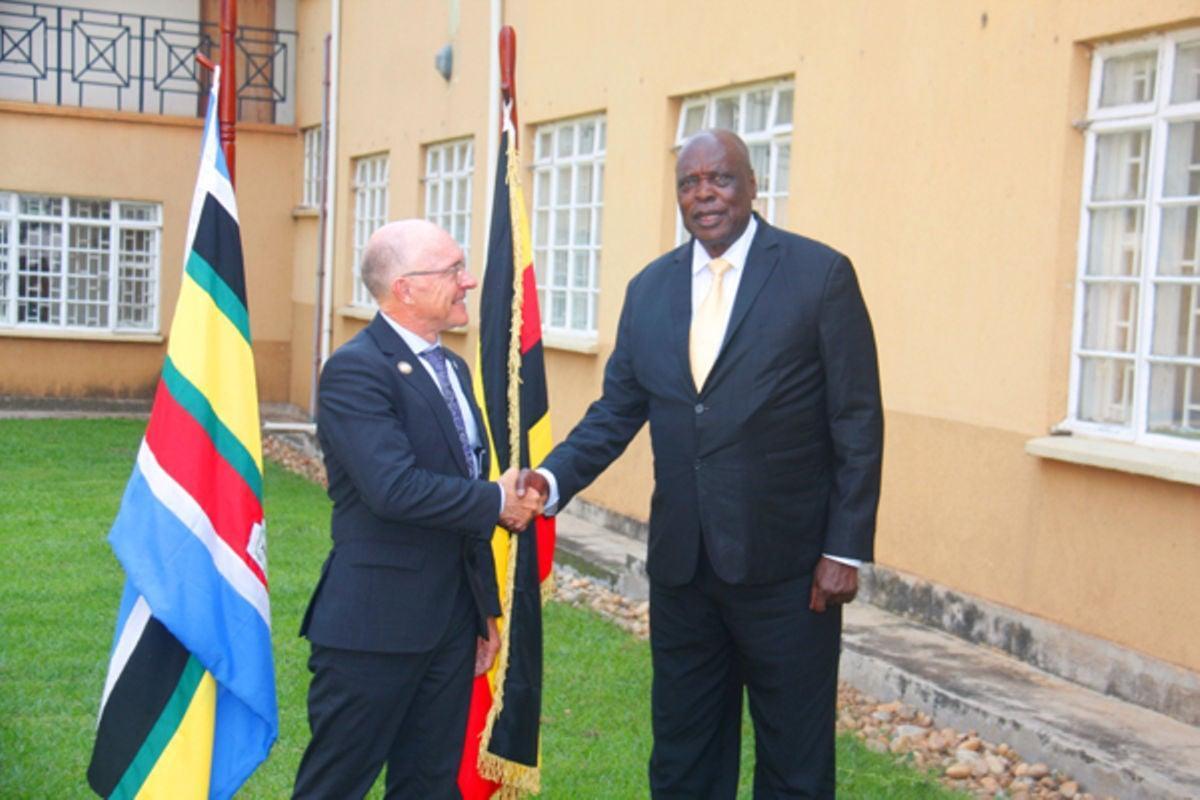
Mr Lokeris made the remarks during a courtesy visit of the Executive Secretary of the Comprehensive Nuclear-Test-Ban Treaty Organization (CTBTO) Dr Robert Floyd to the directorate of Geological Survey and Mines at the ministry’s offices on the sidelines of the NAM summit on Saturday in Entebbe.
“These are people responsible for analysing and monitoring nuclear activities, explosions and their effects on a global scale including earth tremors in case of earthquakes. We also know that some of these nuclear activities may be very dangerous although we use them for our everyday life in hospitals, agriculture and schools and they must be then tested to ensure they are not harmful to our lives,” he said.
Mr Lokeris said Uganda will remain committed to the treaty which she became a signatory to in 1996 and ratified in 2001 to ensure nuclear resources like uranium are not enriched for use as weapons.
The CTBTO Executive Secretary Mr Robert Floyd said the organisation is looking forward to Uganda’s continued contribution to advocate for nuclear non-proliferation & disarmament through using the data collected for other civil and scientific purposes while striving for a better world collectively.
“The CTBTO will have to be here forever because in a world where there might not be any nuclear weapons left, we still need the international monitoring system to keep everyone honest so we need to keep supporting this program,” he said.
Mr Floyd said there is a need to train the youth and women to ensure a continuance in the monitoring of nuclear power use across the world and make the CTBT a stronger treaty to monitor the nuclear weapons explosions.
The acting commissioner of the Department of Geological Survey, Mr Fred Tugume, cited limited high-level participation in decision-making by Uganda and lack of attendance at regular meetings as one of the gaps in implementing the treaty in the country.
“We have these facilities for monitoring earthquakes, the technology used in monitoring nuclear explosions is the same technology used in monitoring earthquakes which can allow you to plan better for the people,” he said.
For More News And Analysis About Uganda Follow Africa-Press