Africa-Press – Uganda. The number of leadership positions in the country has increased from 1, 314,428 in 2016 to 1,658,260 in 2021, the Electoral Commission (EC) post-election report indicates.
The new report titled: “The Electoral Commission Report on the 2020/21 General Elections”, shows that the number of elective positions for general elections has been on the rise since polls of 2001/2002 (711,611), 2005/2006 (768,445), 2010/2011 (948,834), 2015/2016 (1,299,348) and 2020/2021 (1.656, 260).
The lowest political administrative unit at the Local Government system, according to the EC, is based at the village level.
Article 60 of the Constitution mandates the commission to conduct elections in offices covering presidential, parliamentary (special interest groups), village, parish administrative unit councils (LC1 and II), youth, older persons, PwDs, and the women councils/committees from village to national level. There are 70,512 villages/cells, 10,690 parishes/wards, 2,211 sub-counties/town/municipal divisions, which are distributed in 146 districts/cities across Uganda which participated in 2020/2021 General Election, according to the report.
On the leadership radar, the number of youth councils/committee leaders increased from 601,344 to 752,535 followed by leadership committees for older persons and PwDs which also increased from 334,528 to 418,075 leaders.
In the third position, the number of leaders at sub-county/ town/municipal/ division councillors representing special interest groups (youth, PwDs, and older persons) increased from 8,352 to 12,942 due to the creation of lower administrative units.
The number of leaders at district/city directly elected councils and sub-county/town/municipal division chairperson increased from 1,409 in the last five years to 2,211 in 2021.
The report also indicated an increase in the number of legislators from 427 in 2016 to 529 in 2021.
Electoral Commission officials attributed the increase to the creation of new administrative positions at various parts of governance levels.
“There were new cities and villages created and that automatically brings about the increase in the number of elective areas. There is a legal; process of creating new elective areas,” Mr Paul Bukenya, the EC spokesperson, said on Wednesday.
He added: “The local government councils sit and agree that because of certain factors such as an increase in population in an area, there should be a new administrative area created. As a commission, these are brought to our notice and we capture them into our database.”
By 2018, EC statistics indicated that there were about 68, 000 village LCs but these have since been increased to 70,512 after the creation of about 2, 512 new villages.
In the run-up to the last General Election, Parliament passed a resolution to create seven more new cities which have since started operation.
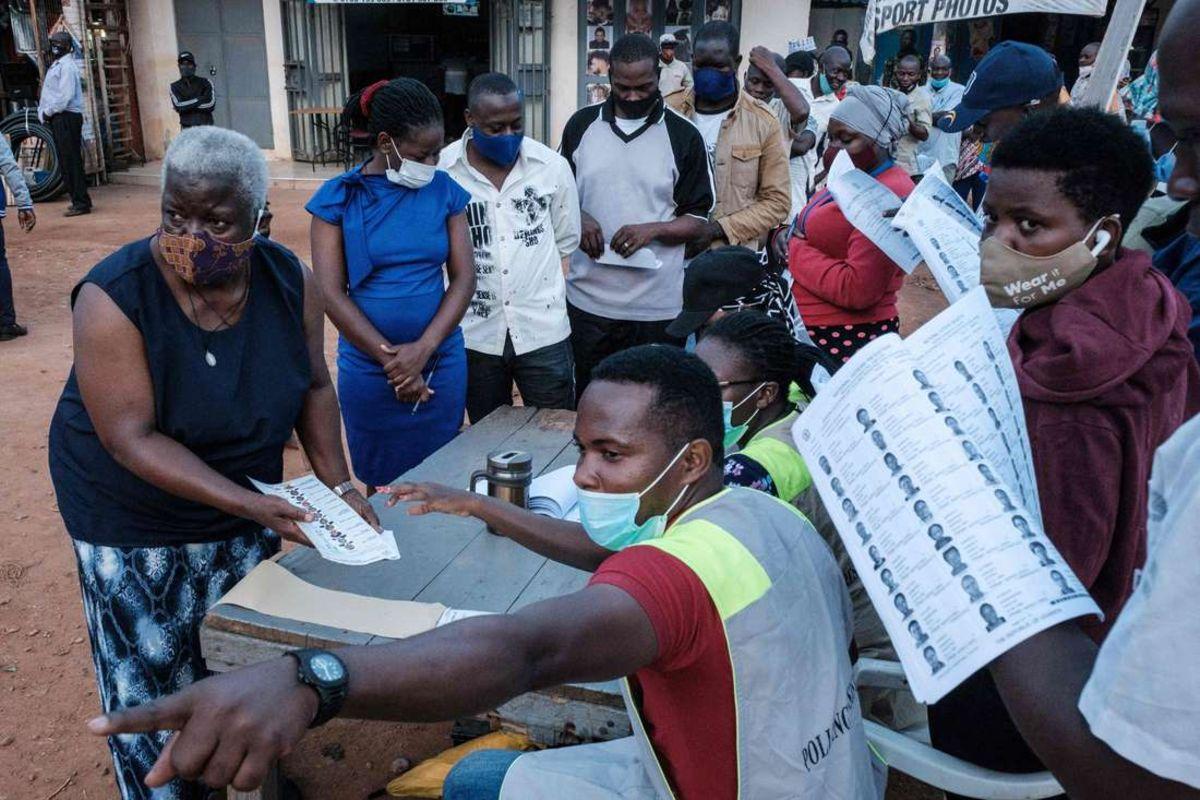
The report indicates that although there had been an increase in the number of registered voters, from 15,277,198 in 2016 to 18,103,603 voters in 2021, there was a low voter turnout on polling for the presidential election where only 59.35 percent participated in voting (10,744,319 voters of the 18,103,603 registered voters).
The report also indicated that there was an increase in the number of post nomination complaints from 277 in 2016 to 462 in 2020/21 where 40 candidates for the General Election were denominated, that is general parliamentary (15), district/city (12), municipality/city division (05) and sub-county/town/municipal division (08),
The report cites Covid-19 pandemic as one of the biggest challenges which they say forced them to increase the number of temporary workers by 843.
In some of the recommendations, the report asked Parliament to amend laws that grant it powers to sanction candidates, who break different EC regulation during a campaign.
In the last presidential elections, EC instructed the different presidential candidates to hold campaigns with a total number of 200 people at the rallies.
However, many candidates flouted this resolution, pulling mammoth crowds.
The report also indicates that Covid-19 led to suspension of activities in March 2020, which resulted in congestion of activities and gave rise to an increase in the budget.
Two months into the enforcement of the election roadmap, EC issued another revised timetable for candidates.
“We had very little time to pull off the elections amidst all the challenges … So all the ups and downs were dealt with,” Mr Bukenya said.
The EC appealed to government for timely and equate funding. It was expected to receive Shs155b in the FY2018/2019 which affected the timely commencement of the implementation, and increased the budget to Shs409b in 2019/2020.
In the end, the EC indicates that they used Shs698.6b in a phased manner, Shs140.9b in FY2019/2020, and Shs557.6b in the FY2020/2021.
Summary statistics on number of elected leaders
S/N ELECTIVE POSTIONS/LEADERS 2015/16 2020/21
1. President 1 1
2 Members of Parliament 427 529
3. District/City Chairperson 112 146
4. District/City directly elected councillors 1,409 2,211
5. District/City Women Councillors forming 1/3 of councils 959 1,514
6. District/city Councillor Representing Special interest Groups (youth, PwDs, Older Persons) 676 1,168
7. Municipality/City Division Chairperson 39 56
8. Municipality/City Division directly elected councillors 578 1,162
9. Municipality/City Division Women Councillors forming 1/3 of councils 373 778
10. Municipality/City Councillors representing Special Interest Groups (youth, PwDs, Older Persons) 234 336
11. Sub county/ Town/Municipal/Division Chairperson 1,392 2,211
12. Sub county/ Town/Municipal/Division directly elected councillors 7,529 10,690
13. Sub county/ Town/Municipal/Division Women Councillors forming 1/3 of councils 6,867 12,222
14. Sub county/ Town/Municipal/Division Councillors Representing Special Interest Groups ( youth, PwDs, Older Persons ) 8,352 12,942
15. Youth Councils/committees 601, 344 752,535
16. Committees for Older persons 334,528 418,075
17. Committees for PwDs 334,528 418,075
18. Non-Unionised 15,080 23,610
Total filled (elective positions 1,314,428 1,658,260
For More News And Analysis About Uganda Follow Africa-Press