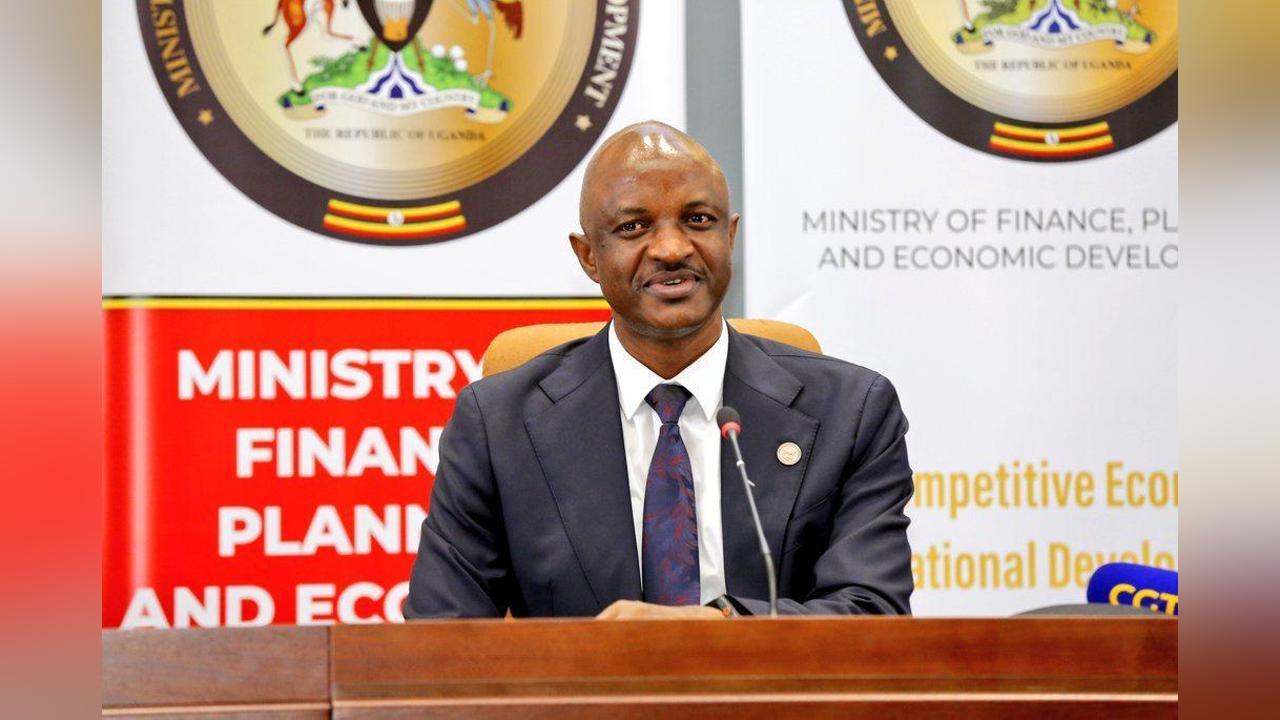
Africa-Press – Uganda. Uganda’s economy is showing strong resilience, recording accelerated growth in the first half of the 2025/26 financial year despite ongoing global and regional uncertainties.
According to the Permanent Secretary and Secretary to the Treasury, Ramathan Ggoobi, preliminary data indicates that the economy expanded by 8.5 percent in the second quarter, up from 5.4 percent during the same period last year.
“The economy is holding firm and gaining momentum despite external shocks,” Ggoobi said, noting that average growth for the first half of the financial year reached 6.7 percent, compared to 5.8 percent in FY 2024/25.
He attributed the performance to strong domestic fundamentals, including rising demand, increased investment, and improved export performance.
“This growth is being driven by robust aggregate demand, increased investment and exports, which are translating into higher production across all major sectors,” he explained.
The expansion has been broad-based, covering key sectors such as agriculture, industry, and services—an indicator of growing economic depth and resilience.
The industrial sector emerged as a key driver, registering 9.1 percent growth, up from 6.4 percent last year, supported by increased activity in manufacturing, construction, and electricity production.
At the same time, aggregate demand surged by 15.2 percent, while investment grew by 14.4 percent, reflecting rising business confidence and economic activity.
Ggoobi also highlighted productivity improvements across small, medium, and large enterprises as a key factor sustaining growth momentum.
Looking ahead, the government projects GDP growth to reach about 7.0 percent this financial year, up from 6.3 percent previously. Uganda’s economy is expected to expand to approximately 68.4 billion US dollars by June 2026.
“This translates to an average income of about 1,399 US dollars per Ugandan annually, roughly Shs 5 million,” Ggoobi noted, while cautioning that the figure does not reflect income distribution.
The outlook is supported by several government initiatives, including the Parish Development Model and Emyooga, alongside continued infrastructure investment and increased foreign direct investment, particularly in the oil and gas sector.
Macroeconomic stability remains intact, with inflation averaging 3.3 percent, below the government’s 5 percent target.
“Our low and stable inflation is supported by a relatively strong Ugandan shilling and easing global inflationary pressures,” he said.
The local currency has remained stable, trading at approximately Shs 3,762.6 per US dollar by the end of March 2026, backed by strong foreign exchange inflows and prudent fiscal management.
Uganda’s external position has strengthened, with foreign exchange reserves rising to 5.9 billion US dollars, equivalent to 4.1 months of import cover, driven largely by foreign direct investment—especially in the oil sector.
In addition, diaspora remittances exceeded 807 million dollars in the first half of the financial year, further supporting economic activity.
Ggoobi noted that investor confidence remains high, with both local and foreign investors maintaining interest in Uganda’s economy even during an election period.
“This reflects strong political and economic certainty, as well as attractive investment opportunities,” he said.
With the anticipated start of oil production later this year, the government expects even stronger growth.
“Once oil production begins, we expect double-digit economic growth in the next financial year,” Ggoobi added.
As global uncertainties persist, Uganda’s economic performance continues to highlight the strength of its domestic drivers and its ability to sustain growth amid external shocks.
For More News And Analysis About Uganda Follow Africa-Press