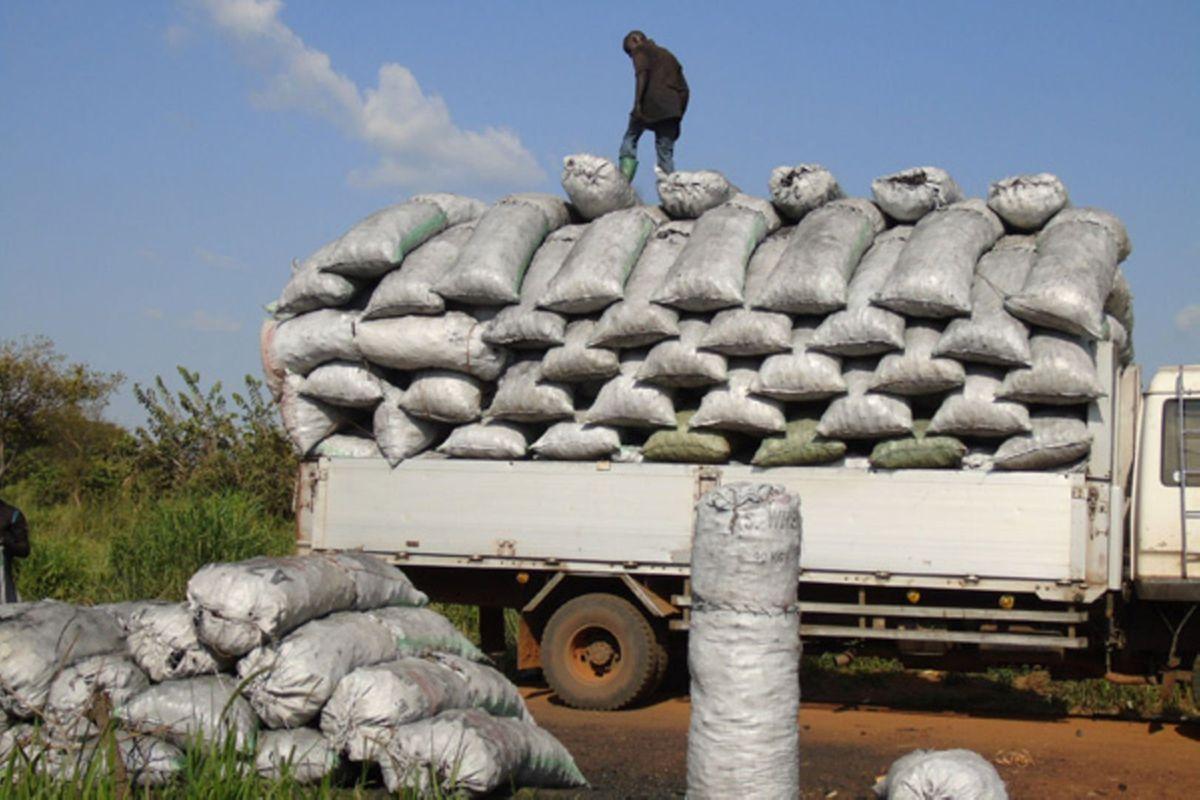
Africa-Press – Uganda. This week, the Tanzanian government announced charcoal and firewood use deadline for institutions in a move to stop the use of energy sources that are hazardous to the health of individuals and the environment.
According to the Minister of State in the Vice President’s Office (Union and Environment), Dr Seleman Jafo, all institutions that serve not less than 100 people must stop using firewood and charcoal by January 31, 2024, while those institutions serving 200 people and above will stop using the energy source on January 31, 2025.
Data from the Tanzanian government shows that last year use of charcoal, firewood, and crop residues were having damaging effects on people’s health, leading to about 33,000 deaths annually. This is not to mention the hundreds of thousands of trees the country loses monthly to sustain the energy use.
The declaration by the Tanzanian government comes as good news because it could set an example to other members of the East African Community, especially Uganda whose illegal charcoal production and timber logging has led to environmental degradation.
According to the Uganda Bureau of Statistics, Uganda’s total forest land area was 4.93 million ha in 1990, but this decreased by 60 per cent to 1.95 million ha in 2015, and Ministry of Water and Environment officials say it would require every Ugandan to plant at least 11 trees for the country to restore its forest cover.
This is not to mention its contribution to air pollution and its resultant effects. Kampala, for example, ranks among the world’s most polluted cities, with pollution levels up to seven times higher than the World Health Organisation’s safe standards, according to the 2021 World Air Quality Report.
We need to save our trees for many reasons, among which is to absorb not only the carbon dioxide that we breathe out, but also for heat-trapping greenhouse gases that human activities emit. Recently, the World Bank said deforestation in Uganda is among the worst in Africa.
Uganda has made strides in improving both air quality and forest cover, but the tough stance Tanzania has taken could take us even a step further.
A lot of our institutions, such as schools, that prepare meals for millions of learners every day should be compelled and incentivised to transition to more clean energy.
It is only by taking a tough stand and setting deadlines like Tanzania that we shall protect our forest cover and improve our air quality.
For More News And Analysis About Uganda Follow Africa-Press