Africa-Press – Uganda. Many developers in urban centres across the country have continued to erect buildings and facilities which are unaccessible to persons with disabilities (PWDs) despite the establishment of the Building Control Act 2013.
The law guarantees that any person has access to a public place, service, and can participate in its activities with dignity, independence, and safety.
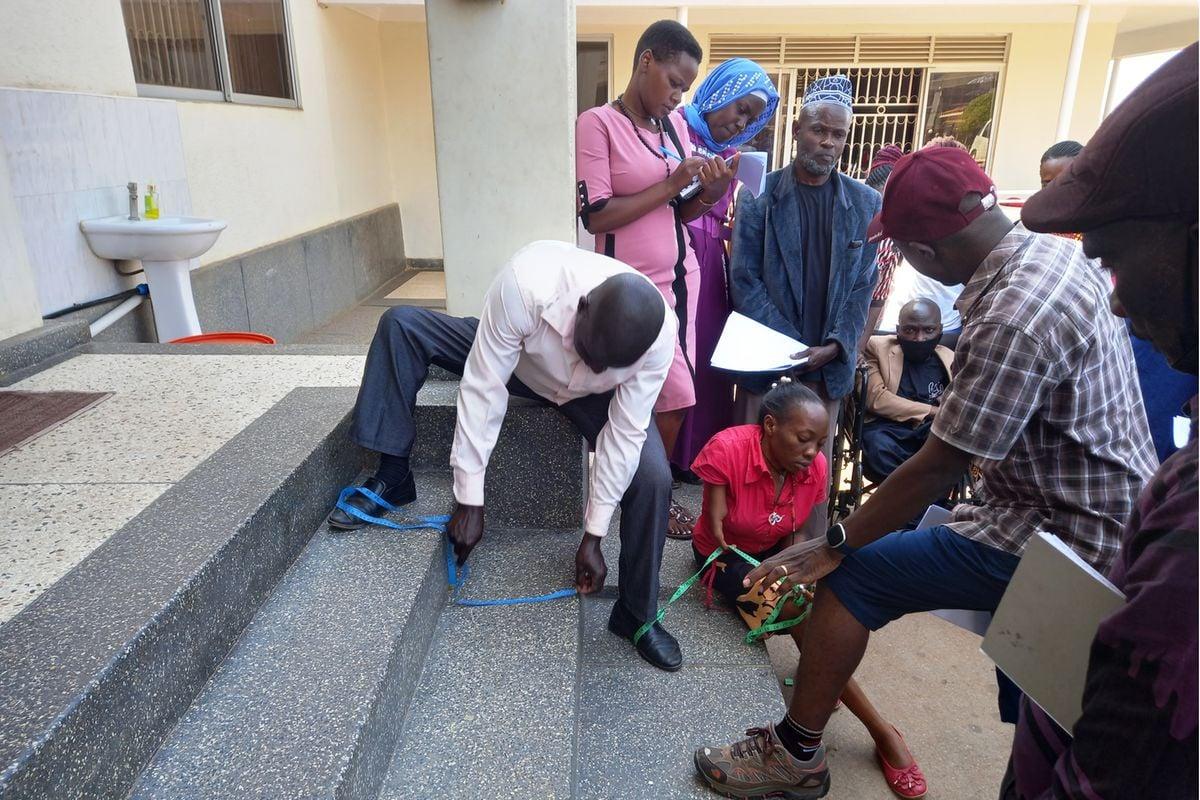
But many buildings still lack ramps, squat toilets with grab bars and tactile markers to guide PWDs.
According to Mr Oscar Walukhu Wakooli, the secretary of Foundation for Education and Empowerment of Young Disabled Persons of Uganda, the Building Control Act 2013 puts in place the National Building Review Board to ensure compliance with standards.
“The law establishes the building committees at district level, which are mandated to monitor and evaluate compliance of the buildings constructed within a particular locality, but we rarely see such committees doing their work,” he says.
Mr Wakooli adds that the Persons With Disabilities Act 2020 stipulates that accessibility is a right for PWDs.
Section 54 of the Building Control Act 2013 states that buildings that are not in compliance with this law should be destroyed, but the owners should be notified to modify the structures within a particular timeframe.
The section also notes that before erecting a building, a plan must be approved by the district engineer and the district building committee and owners must obtain a building permit.
However, Mr Wakooli says laxity and corruption have frustrated enforcement.
“When buildings don’t meet the standards that have been set under the Act, persons who are aggrieved by such buildings can sue the owner in public interests for violation of human rights and accessibility,” he says.
Mr Sam Ssekyewa, a lawyer in Masaka City, faults the building committees at the district level, saying their composition breaches the Act .
“The Building Control Act spells out the qualification of people who should be on the building committees, but most committees are made up of politicians who may hardly know technical evaluations on buildings,” Mr Ssekyewa says.
However, he adds that there is some progress compared to two decades ago because the government and NGOs have begun to employ the concept of accessibility assessment and auditing.
According to Mr Ssekyewa, the challenge still lies on modifying buildings to fit the required standards.
“The Building Control Act 2013 establishes building control officers to be appointed in every district to assist in enforcement, but they have never been appointed 10 years later and this limits the implementation of the law,” he says.
On many occasions, PWDs have tasked political leaders and district civil servants to prioritise accessibility services.
Mr Mudasiru Baale, the chairperson of persons with disabilities in Masaka District, who is also a councillor in Kyesiga Sub-county, says both public and private facilities hardly comply with the law.
“Many public places such as health centres, courts, media houses are inaccessible, with barriers limiting persons with disabilities. This demeans our dignity and rights of accessibility as well as hindering PWDs from getting services,” he says.
Ms Alice Nanungi, the chairperson of Masaka City Building Committee, notes that the government delayed to implement the law.
“Ever since the committee was constituted in Masaka City, there is some level of compliance although there are some few cases due to few enforcement officers, but we shall soon close that gap,” she says.
She, however, notes that it is difficult to implement the law in cases where some buildings were erected before the legislation came into force.
The city engineer, who is also a member of the city building committee, Mr Augustus Turibarungi, says very few districts in greater Masaka sub-region have fully constituted building committees and consider accessibility a priority.
“There is a serious need to sensitise all relevant authorities in line with implementing the law (Building Control Act 2013), especially on what they are supposed to do,” he says.
Standards
A 2007 Building and Construction report by the Ministry of Works and Transport revealed that 95 percent of the buildings in Kampala, Mpigi and Wakiso were not easily accessible by PwDs. Such infrastructure leaves PWDs more vulnerable because they are less likely to depend on others to access a school, healthy facility, place of work, markets and banking halls.
The World Health Organisation states that approximately 10 percent of the population is disabled and only 5.8 percent of that needs to be provided with services. The United Nations Standard Rules on Equalisation of Opportunities for PwDs (1991) urges all nations to show a strong commitment to the equalisation of opportunities for PWDs.
For More News And Analysis About Uganda Follow Africa-Press