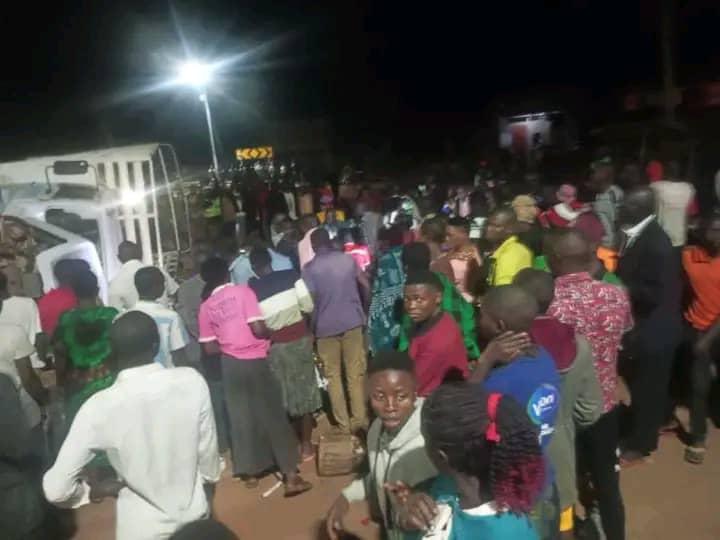
Africa-Press – Uganda. Some good can come out of the deadly traffic accident which occurred at Kufu in Manafwa District on Wednesday, leaving one dead and more than 100 pupils and their teachers seriously injured. The manner of this tragic incident is emblematic of the social crisis that is public transport in Uganda today.
The unfortunate young souls of Nakhupa Primary School wouldn’t have suffered this fate if they were travelling aboard a bus, and not illegally crammed into a rickety truck. As rightly stipulated in our traffic laws, trucks are designed for the transportation of assorted cargo, not human beings. The safety features ideally found in passenger vehicles, like buses offer relatively better protection of persons.
But there is a genuine, though unfortunate, reason why many Ugandans resort to risky means of travel. It has to do with the unacceptable lack of an affordable and safe mass transport system. And it is upcountry where the absence of a dependable means of passenger movement is more acutely felt. It is an intolerable national embarrassment that we do not have a regulated mass transport system.
Mass transportation infrastructure is one area where progressive governments, including in domains where the liberalisation of the economy is almost total, are still invested — mainly because the private sector cannot be relied upon. Private operators are profit motivated, and usually charge extortionate rates. That is why the vast majority of our urban poor walk to work.
It is more embarrassing because decades ago, Uganda had public transport companies with regular buses plying routes between major towns. There is no reason why we cannot resurrect those long-dead enterprises. The duo-service passenger and goods trains were a good complement to this essential service. It was a cheaper and unmatched option for decongestion of the roads while assuring safety of public locomotion. We are heartened to note that the government is investing billions into restoring train operations for goods in transit, and partly for limited passenger transportation using light rail in larger urban areas like Kampala. We should grab this opportunity and comprehensively address the vexed question of intra-city mass transport system.
Kampala has been overrun by the boda boda menace. The mindless recklessness of boda boda cyclists has plunged the city into traffic chaos and contributed to the rise in otherwise avoidable traffic accidents. Long a fixture on Kampala’s roads the taxi vans, whose drivers were just as notorious for the abuse of traffic rules, are being phased out by a combination of a government policy banning older models, and higher taxes on newer models. The few stragglers that remain are simply inadequate to meet public demand.
Now, two years after the Kampala Capital City Authority promised to have a public city bus service in place is enough time to wait. Let’s fix mass public transport.
For More News And Analysis About Uganda Follow Africa-Press