Africa-Press – Uganda. Maternal deaths in Kabale District have been attributed to a lack of affordable ultrasound scan services at health centre IIIs and failure by pregnant women to routinely attend antenatal care.
The assistant district health officer-in-charge of maternal and child health, Mr Paddy Mwesigye, at the weekend said as a result, 400 babies of seven days and below have died in one year.
“Since June last year to date, we have lost about 400 babies in Kabale due to maternal child health-related complications. We have now amplified health education to ensure that pregnant mothers get the right information about the risks involved in the failure to attend antenatal clinics,” Mr Mwesigye said.
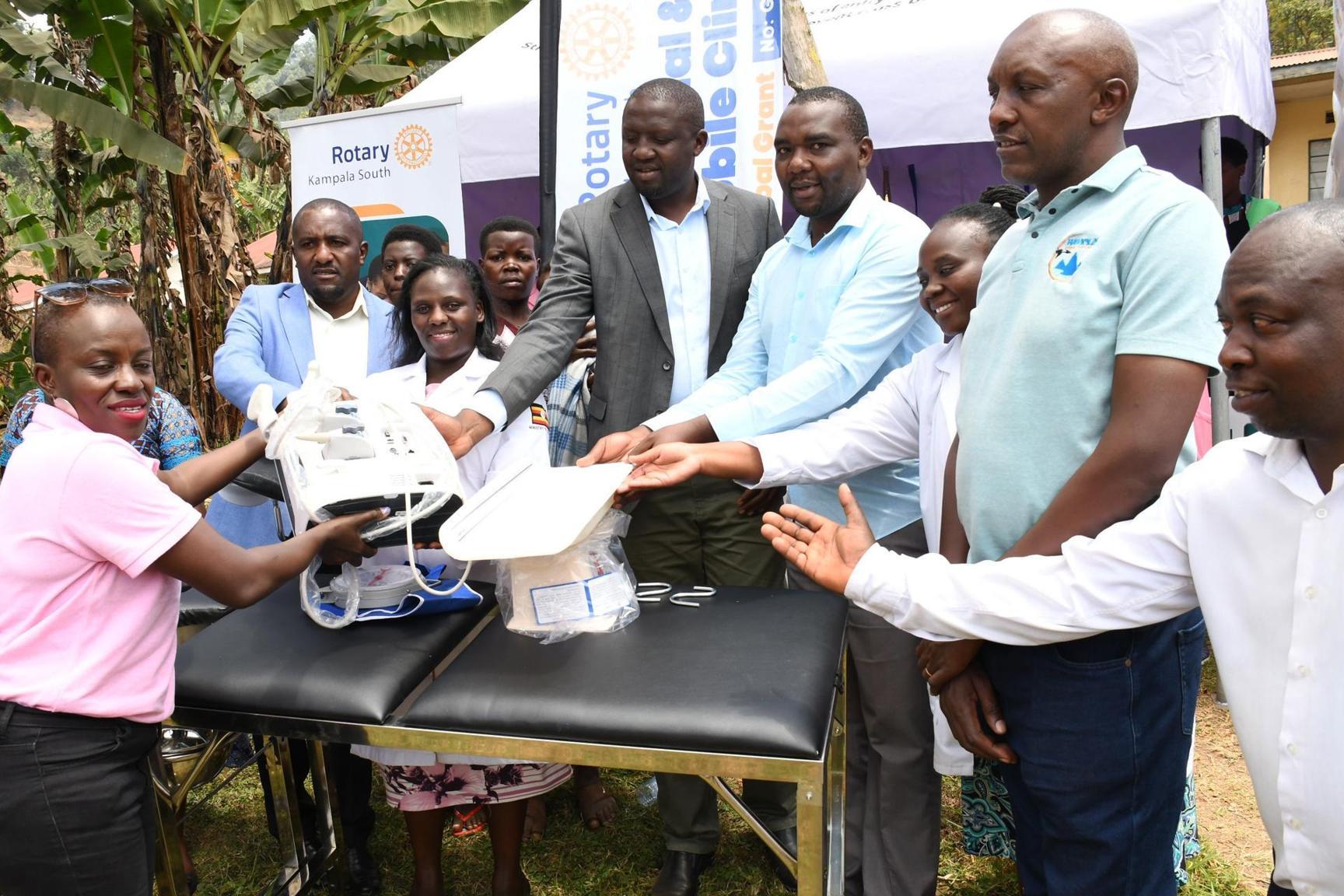
He made the remarks after receiving maternal health equipment worth Shs100 million from the Rotary Club of Kampala South with support from its international partners at the weekend.
The club delivered assorted equipment to Kamuganguzi Health Centre III to address the problem in the district and the neighbouring villages in Rwanda since it is located at the border.
The president of the Rotary Club of Kampala South, Ms Tinka Mbabazi, said: “The donated health equipment includes a mobile ultrasound scan fitted with software that will always monitor and remind pregnant mothers through their registered mobile phone numbers about their maternal health routine schedules besides their scheduled dates of giving birth to avoid delays.”
She added: “Other equipment include delivery and examination beds. This has been done after a survey indicated that cases of child mortality in the area were on the rise.”
Ms Mbabazi said the donation was done through their maternal and child health (MCH) global grant project with specific objectives of improving the health status of women and children through improved access and quality reproductive and child health services, especially in the vulnerable communities.
“Under this project, we are promoting positive health-seeking behaviour among the community members, particularly in the reproductive age bracket, improved antenatal and postnatal checkups, besides offering health education to about 10,000 adolescents on family life matters and promoting menstrual health,” Ms Mbabazi said.
Mr Mwesigye welcomed the donation, saying it is timely.
“I am sure the pregnant mothers in this area will now enjoy the subsidised costs to access the ultrasound scan services brought nearer to them and this may also help us in reducing child mortality,” Mr Mwesigye said.
Charges
Mr Innocent Agaba, the service projects director at Rotary Club of Kampala South, said pregnant women in Kabale will be required to pay Shs5,000 for ultra sound scan services at Kamuganguzi Health Centre III instead of Shs20,000 they pay at private clinics.
The officer-in-charge of Kamuganguzi Health Centre III, Ms Janet Twesigomwe, said the facility has a catchment of 11,425 people with about 1,000 outpatients and 40 deliveries recorded every month.
“We have been referring pregnant mothers requiring ultrasound scan services to Kabale Regional Referral Hospital or private clinics because we did not have such a machine at our facility. Now that we have this machine, it will help us in offering timely maternal health services to the patients,” Ms Twesigomwe said.
Residents who attended the ceremony, lauded the Rotarians for the equipment.
“I am so grateful to the donors for the well thought idea of donating an ultrasound scan machine to our facility. The subsidised costs of Shs5,000 to access ultrasound scan services is affordable. We have been guessing the positions of babies during pregnancy but the machine will now do this work for us,” Ms Betty Kyomuhangi said.
Trend
Uganda registers up to 30 infant deaths per 1,000 births, a number several times higher than four deaths per 1,000 births registered in developed countries, according to a 2022 World Population Data Sheet released in September by Population Reference Bureau (PRB), a global research organisation.
According to the World Health Organisation, Uganda’s doctor to patient ratio is 1:25,000 while the nurse to patient ratio is 1:11,000. This, WHO, says is far below the recommended doctor-patient ratio of 1:1000.
For More News And Analysis About Uganda Follow Africa-Press