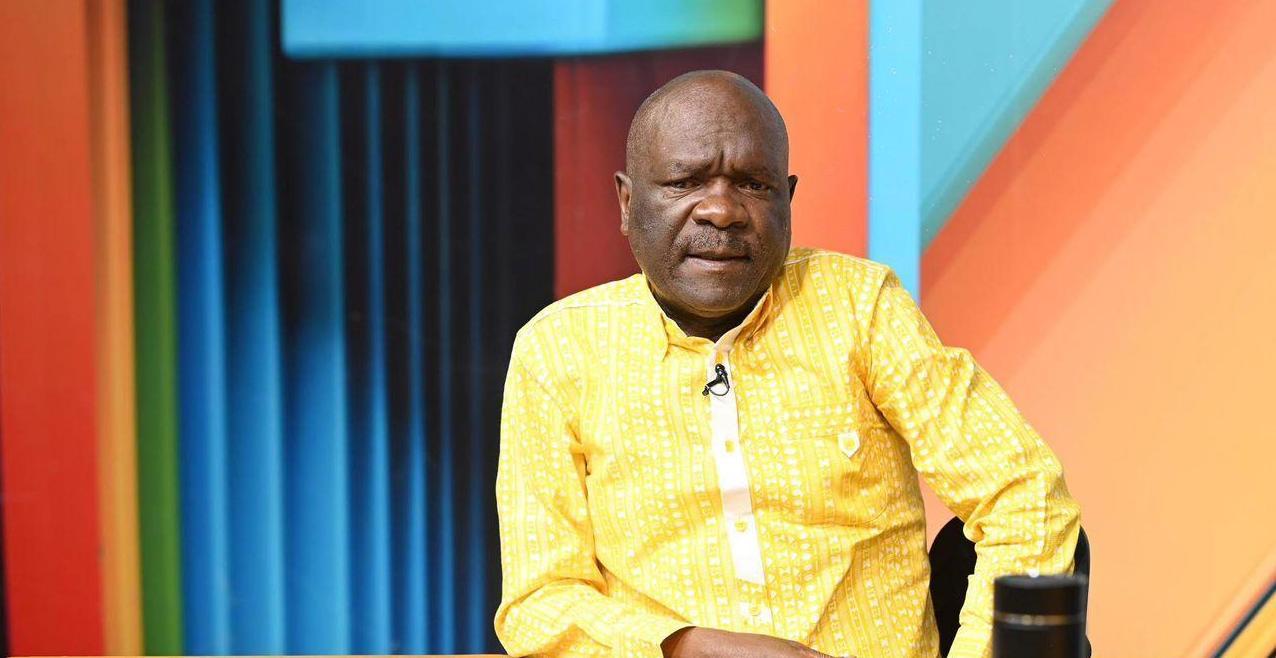
Africa-Press – Uganda. Outgoing Mawokota South Member of Parliament Yusuf Nsibambi has endorsed the proposed Protection of Sovereignty Bill, describing it as a necessary legal framework to safeguard Uganda’s independence and reinforce national stability.
Speaking during Sanyuka Morning Xpress on Monday, Nsibambi, who recently left the Forum for Democratic Change to join the National Resistance Movement, cited his academic and legal background in support of the legislation.
“I have taught law at Makerere University for 25 years and trained many people who stand for justice. After reviewing this bill, I believe it is good and important for the country,” he said.
Nsibambi emphasized that the proposed law is intended to strengthen Uganda’s sovereignty by ensuring that both internal and external actors operate within clearly defined legal boundaries.
“Around the world, people respect the law, but here, when discussions are held, people resort to noise instead of constructive engagement,” he added.
His remarks come amid growing national debate surrounding the Protection of Sovereignty Bill, 2025, a legislative proposal aimed at regulating foreign influence and affirming Uganda’s autonomy across multiple sectors.
Supporters of the bill, particularly within the NRM Parliamentary Caucus, argue that it is a critical step toward protecting state institutions and ensuring that national decision-making processes remain free from undue external interference.
Early provisions indicate that organizations operating in Uganda would be required to disclose foreign funding within 14 days of receipt. The bill also proposes expanded powers for the Minister of Internal Affairs to monitor and regulate foreign financial involvement in activities considered potentially harmful to national interests.
Government Chief Whip Hamson Obua, speaking after a caucus meeting at State House Entebbe, defended the bill as both necessary and aligned with international practices.
“We were colonized by the British; the UK had similar legislation. So, we are not reinventing the wheel. The proposed bill seeks to regulate foreign financial inflows—those inflows coming into Uganda must be for legitimate reasons and not harmful reasons,” he said.
Obua added that the government’s objective is to fully secure Uganda’s sovereignty through legal means.
“We want sovereignty 100% and we want to secure that through this law,” he said.
However, the bill has attracted criticism from civil society actors, who argue that it mirrors previous attempts to regulate non-governmental organizations, particularly regarding foreign funding. Critics say the proposals risk tightening control over NGOs and expanding ministerial powers.
Analysts note that similarities between past regulatory efforts and the current bill—such as mandatory disclosure timelines and increased oversight—have raised concerns about the potential impact on civic space and organizational independence.
Observers also question whether the legislation represents a new policy direction or a continuation of existing regulatory ambitions under a different framework.