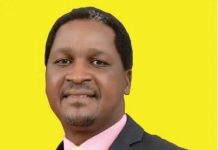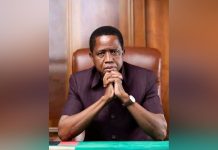

Africa-Press – Zambia. When Dr. Fred M’membe appeared on Prime TV’s Oxygen of Democracy on Monday night, he spoke with unusual candour. His diagnosis of the opposition was blunt, unsparing, and revealing. In his own words, opposition alliances collapsed because of “personal ambition” and an inability to agree on who should lead. What he described was not sabotage from outside, but implosion from within.
“That formation has disintegrated,” M’membe said of the United Opposition Front. “Primarily, it’s even how to choose a flag bearer, when to choose a flag bearer, how to choose that flag bearer… those disagreements became nasty.”
This admission matters. It confirms what has been evident for months.
Zambia’s opposition does not suffer from a lack of ideas or platforms. It suffers from a presidency complex. Too many leaders. Too many presidential ambitions. Too little willingness to subordinate personal projects to a collective strategy.
The geography of this ambition is not accidental. A large proportion of opposition presidential hopefuls emerge from the northern circuit, areas where the Patriotic Front performed strongly in 2021. This concentration alone guarantees vote fragmentation before the ruling party even enters the race.
Multiple opposition candidates fishing in the same electoral waters inevitably dilute each other’s support.
Against this backdrop stands an uncomfortable arithmetic the opposition rarely confronts honestly. The UPND enters the 2026 race with a solid, loyal base that does not fluctuate with coalitions or press conferences. Electoral Commission of Zambia data from past elections and current parliamentary representation show consistent UPND dominance in Southern Province, Western Province, North-Western Province, and large parts of Central Province.
These regions have remained reliably RED across election cycles.
Based on the updated voters’ roll projections nearing eight million registered voters, traditional UPND strongholds account for close to 2.5 million voters. This figure represents a minimum floor, not a ceiling. It excludes Lusaka, the Copperbelt, and urban swing constituencies where UPND continues to compete aggressively and where incumbency provides organisational and logistical advantages.
This is the structural reality Dr. M’membe gestures toward but does not fully interrogate. A fragmented opposition facing a ruling party with a consolidated base is not an even contest. It is asymmetrical politics.
M’membe himself explains why unity keeps failing. “Personal ambition, personal agenda is driven much to the background,” he said, before correcting himself: in practice, ambition is placed at the forefront. He likened opposition negotiations to a casino, where every entrant believes they can leave with more than they brought in.
“Whoever stands, even if it’s a frog, will win,” he said, describing a dangerous illusion that elections are automatic rather than earned.
This illusion is costly. It encourages maximalism instead of compromise. It delays difficult conversations about flag bearers, structures, and ground strength. It produces what M’membe accurately calls “happenstance unity” rather than a strategic alliance anchored in numbers, regions, and voter behaviour.
The contrast with the ruling party is stark. UPND has its alliance intact and seemingly with oiled financial machinery. It relies on arithmetic and voter loyalty built over two decades. President Hakainde Hichilema understands fragmentation because he survived it for fifteen years in opposition. He knows that unity is not declared. It is enforced through structure.
None of this absolves the government of scrutiny. Opposition criticism remains essential in a democracy. But elections are not won on critique alone. They are won by coalitions that reduce internal competition, not multiply it. Unfortunately, the opposition doesn’t have this for now.
Fred M’membe’s interview was valuable precisely because it stripped away comforting myths. Unity is desired, yes. But desire without surrender of ego produces nothing. Until opposition leaders confront the presidency complex head-on and align ambition with electoral math, 2026 will not be decided by slogans or studio interviews.
It will be decided by numbers the opposition keeps postponing and a voting bloc the ruling party already owns.
For More News And Analysis About Zambia Follow Africa-Press