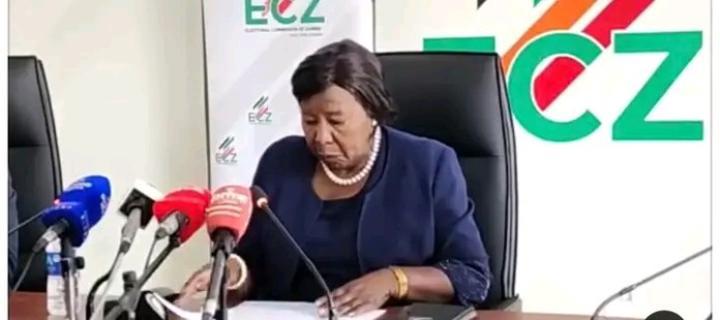
Africa-Press – Zambia. The roadmap released by the Electoral Commission of Zambia for the 2026 general elections may appear orderly and well-structured on the surface, but beneath that neat presentation lies a dangerously tight, and potentially exclusionary, framework that should concern every serious political player in the country. This is not merely a timetable; it is a pressure mechanism. If not rigorously interrogated, it risks becoming a silent tool for disqualifying opposition candidates on technical grounds rather than through the will of the people.
The most glaring red flag lies in the nomination timelines, particularly for presidential candidates. The calendar compresses critical processes into a narrow window at a time when many political parties are still struggling to organize internal structures, hold conventions, and finalize their candidates.
These are not minor administrative exercises, they are foundational democratic processes that demand time, consensus, and strict legal compliance. By forcing them into such a limited timeframe, the calendar effectively sets a trap: only those already fully organized, resourced, and aligned can meet the threshold, leaving others vulnerable to elimination before the race even begins.
It must be clearly understood that while many steps in the roadmap are framed as administrative, the consequences of failing to meet them are strictly legal. By the time nominations are filed, there is no margin for error, no grace period, and no second chances. Every requirement must be met in full, and any shortfall—no matter how minor, can result in outright disqualification.
This creates a dangerous environment where technicalities override democratic choice, and where paperwork, timelines, and procedural hurdles become more decisive than public support or political credibility
Political parties must wake up to the reality that they are not merely competing against each other, they are racing against time and against a system that may not forgive even the smallest misstep. Failure to properly file nomination papers, delays in verifying supporters, confusion over evolving guidelines, or incomplete compliance with legal requirements could all be used to knock candidates off the ballot. In such a scenario, elections risk being decided long before voters ever step into a polling booth.
Equally troubling is the broader context in which this calendar has been introduced. There are ongoing discussions and allegations about changes to the electoral process that could potentially restrict independent presidential candidates from appearing on the ballot, effectively limiting participation to those backed by political parties. If such measures are indeed being pursued, then this roadmap begins to resemble less a neutral administrative guide and more a coordinated framework designed to narrow the democratic space under the guise of reform. That would set a dangerous precedent for any democracy.
The silence or passivity of stakeholders in the face of this document would be a grave mistake. This calendar is a public instrument and must be subjected to constant scrutiny, rigorous questioning, and, where necessary, legal challenge. The Electoral Commission must be compelled to provide clarity where ambiguity exists, to justify timelines that appear unrealistic, and to guarantee that administrative procedures will not be weaponized to unfairly exclude candidates Without sustained pressure, there is a real risk that these processes will proceed unchecked, with far-reaching consequences for political diversity and electoral fairness.
What is most alarming is that many opposition parties appear to be moving at a routine pace, as though time is abundant, when in reality the window is rapidly closing. The truth is harsh but unavoidable: those who are not fully compliant by the time nominations open will simply not be allowed to participate. It will not matter how popular they are, how compelling their message is, or how much support they command. They will be disqualified, not by the people, but by procedure.
This moment demands urgency, discipline, and above all, unity among opposition political parties. Fragmentation and internal battles will only make it easier for these administrative traps to take effect. There must be coordination, sharing of legal expertise, and a collective approach to monitoring and challenging every aspect of this process. Standing alone, parties risk being picked off one by one through technical disqualifications. Standing together, they stand a far better chance of safeguarding transparency and fairness.
Time is not on anyone’s side. The clock is ticking relentlessly toward the nomination deadlines, and every day lost to complacency or internal wrangling is a step closer to potential exclusion. This is not a theoretical concern, it is a real and immediate threat that demands action now. If political parties fail to prepare, fail to question, and fail to act with precision, they may find themselves watching the election from the sidelines, not because they were rejected by voters, but because they were eliminated by a system they did not challenge in time.
For More News And Analysis About Zambia Follow Africa-Press