ByOllus R. Ndomu; Gathering —Mwape Nthegwa; Verifying —Francine Lilu
Africa-Press – Zambia. Debate on Bill 7 has entered a volatile phase after the First Deputy Speaker told the House that the executive has instructed Parliament to resume scrutiny of the Bill.
“I have received communication from the Minister of Justice that the House must immediately resume consideration of the Bill,” Hon. Attractor Chisangano announced Tuesday.
The Select Committee was activated on the spot. The move triggered a new wave of political heat, sharpened by accusations, counter accusations and a restless electorate watching their MPs with suspicion.
Inside the House, tension sharpened Wednesday when Home Affairs and Internal Security Minister Jack Mwiimbu rose on a point of order, questioning whether Hon. Given Katuta was in order “to undermine the Bill 7 Committee of Honourable Members based on information circulating on social media.”
The Deputy Speaker refused to rule, stating that “the House has never relied on social media information.” The response did little to calm the storm because names of MPs thought to be appointed to scrutinise Bill 7 had already circulated widely, fuelling partisan outrage outside Parliament.
Hon. Katuta responded publicly saying, “Looking at the composition of this committee, I can only tell Zambians to pray harder for divine mercy.”
The Select Committee list has become a lightning rod. It contains UPND frontliners such as Garry Nkombo for Mazabuka, Sibeso Sefulo for Mwandi, Brian Kambita for Zambezi East and Stanley Kakubo for Kapiri Mposhi.
It also contains Independent MPs Emmanuel Banda for Serenje and George Kandafuila for Muchinga. It brings in PF MPs Sibongile Mwamba for Kasama, Elias Daka for Msanzala and Davies Mung’andu for Chama South. It further adds two minor-party MPs Simon Banda for Petauke representing NCP and Imanga Wamunyima for Nalolo representing NUP.
Their presence has provoked fury in PF ranks because these are the very MPs the PF base accuses of drifting towards the ruling bloc.
Away from Parliament, the arithmetic is shifting with quiet force. UPND commands 89 elected MPs. The party also controls 8 nominated MPs. That puts its operational strength at 97 without counting the known PF and Independent MPs who regularly vote with the executive. If even a fraction of PF MPs support the Bill, the opposition risks a devastating split.
A PF source told our correspondent, Mwape Nthegwa, saying, “MPs across both sides are tempted to support the Bill because new constituencies reduce competition. Creation of new seats is a lifeline for those fighting for political survival.”
This sentiment is spreading across the benches and has complicated the PF’s internal strategy.
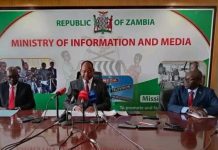
Government Spokesperson Cornelius Mweetwa intensified the narrative battle at a morning briefing. He warned that leaving Article 52 in its current form is a “direct risk of a constitutional crisis in 2026,” arguing that last-minute withdrawals could derail ballot printing and hand unfair advantage to any incumbent.
“Those saying Bill 7 gives President Hichilema more powers lack seriousness and need to introspect,” he said.
He further reminded the nation that MPs from all parties once agreed to amend non contentious clauses before PF disruptions stalled progress in 2023.
Inside PF territory the reaction is sharp and accusatory. Activists have circulated unverified lists of MPs purported to have been bribed with “three million kwacha.”
They have placed Independent MPs such as Warren Mwambazi for Bwana Mkubwa, Joe Chibuye for Roan and Misheck Nyambose for Chasefu under a microscope. PF MPs such as Anthony Mumba for Kantanshi, Elias Daka for Msanzala and Davies Mung’andu for Chama South have been targeted with hostility from their own grassroots.
Emmanuel Mwamba inflamed the temperature further when he declared the alleged Select Committee list “Pro Hichilema.”
The mounting pressure reveals the real battlefield: numbers. UPND believes it stands within striking distance of the two thirds threshold. PF fears an internal rupture if its MPs defect on the vote. Independents hold the swing space.
Rural constituencies want new boundaries. Urban elites are pushing legal objections. Parliamentary survival instincts are rising because the creation of 55 new constituencies under Clause 4 is viewed as political oxygen. For many MPs, the vote is no longer ideological. It is existential.
As scrutiny begins, the real contest will not occur during speeches in the chamber. It will unfold in quiet corridors of Parliament, in caucus rooms, on midnight calls and in factional pressure circles. Every clause will be parsed for advantage. Every MP will be watched.
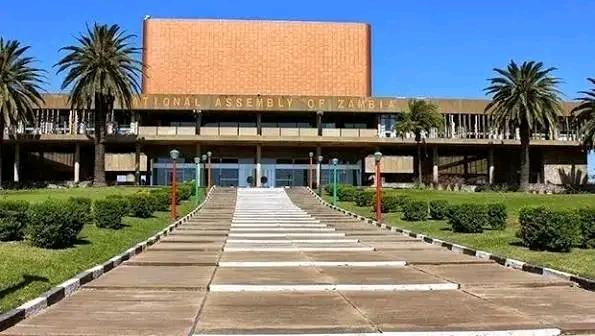
Bill 7 has evolved from a legislative proposal into a referendum on party discipline, political stamina and the future shape of the National Assembly.
Source: The People’s Brief
For More News And Analysis About Zambia Follow Africa-Press