Africa-Press – Zambia. Saturday has closed with Zambia’s social media ecosystem on fire. Not over policy. Not over budgets. But over faith, power and suspicion.
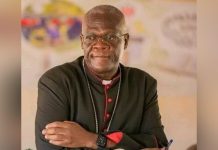
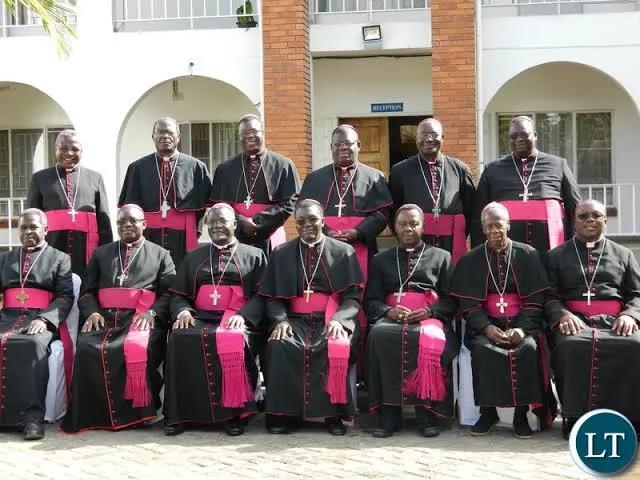
The Zambia Conference of Catholic Bishops (ZCCB) has now formally entered the fray, issuing a strongly worded statement declaring solidarity with Archbishop Alick Banda and framing his summons by the Drug Enforcement Commission (DEC) as persecution and an attempt to silence the Church’s prophetic voice.
“This action is an attempt to suppress his voice as a Shepherd,” the Bishops said, adding that they now “recognize state-sponsored persecution” and calling it “an abuse of authority for the ruling party to utilize state machinery against an individual due to his stance on national governance.”
This is not neutral language. It is political language. And it marks a decisive escalation. Facts and framing matter.
Fact one: Archbishop Alick Banda has been summoned by the DEC’s Anti-Money Laundering Investigations Unit to appear on Monday, 5 January 2026. The summons is issued under the Anti-Money Laundering Act. It is not a charge. It is not a conviction.
Fact two: The DEC has publicly explained the basis of the summons. According to its Director General, Nason Banda, the matter relates to motor vehicles seized during investigations into irregularly disposed Zambia Revenue Authority assets, with Archbishop Banda’s name appearing in court records as a recipient. The vehicles are in DEC custody and verifiable.
“This has nothing to do with politics or the Catholic Church,” the DEC chief said. “We want him to give us his side of the story. Nobody is above the law.”
Fact three: This is not the first time Archbishop Banda has been linked, by investigators and courts, to questions surrounding irregularly disposed state assets. A ZRA-linked Toyota Hilux previously gifted to him was seized in 2023. His name later appeared in court proceedings involving former ZRA officials.
These facts exist independently of sermons, elections or church-state tensions.
The conflict is not really about a summons. It is about interpretation. The Catholic Bishops have chosen to interpret the summons as persecution. They say it is retaliation for criticism of government over cost of living, fuel prices, load shedding and farmers’ payments.
But that framing raises hard questions Zambia cannot avoid.
If a cleric speaks forcefully on governance, does that place them beyond scrutiny under financial crime laws?
If a religious leader publicly mobilises citizens around elections, voter cards and regime accountability, does the state still have an obligation to treat them strictly as a private individual when their name appears in financial investigations?
And most critically: when does prophetic speech cross into overt political mobilisation?
The ZCCB statement does not merely defend Archbishop Banda’s rights. It asserts motive. It declares intent. It accuses the ruling party of persecution without presenting evidence beyond timing and context.
This is a powerful claim. It demands an equally high burden of proof. There is also a dangerous conflation happening online and now, implicitly, in official church messaging.
Archbishop Alick Banda is not the Catholic Church.
Globally, Catholic priests, bishops and even cardinals have been arrested, prosecuted and jailed for financial crimes, sexual abuse and corruption. The Vatican itself convicted Cardinal Angelo Becciu in 2023 for financial crimes. The Church did not collapse. Faith did not end. Accountability proceeded.
To suggest that questioning an Archbishop automatically equals “war on the Catholic Church” stretches logic and history. If a Pentecostal pastor, an SDA elder or a UCZ bishop were summoned over alleged financial irregularities, would Zambia declare persecution of Christianity as a whole? Or is Catholic institutional power now being positioned as untouchable?
There is also an electoral undertone that cannot be ignored. The ZCCB statement explicitly references the 2026 general elections. Clergy statements circulating online urge believers to “protect voters’ cards” and “defend democracy.”
Opposition leaders have openly called for Catholics to escort the Archbishop to the DEC in numbers.
This is political mobilisation.
Once religious leadership enters that terrain, the state will inevitably view actions through a political lens. Not because it hates faith, but because elections sharpen every institution’s sensitivity.
This does not justify abuse of power. But it does explain why neutrality collapses on both sides.
The DEC must remain clinical, lawful and restrained. No theatrics. No intimidation. No selective enforcement. Due process only.
The Church, equally, must resist the temptation to sanctify an individual case into a civilisational battle. Moral authority is strongest when it is careful with facts and cautious with accusations.
Truth is not defended by slogans. Justice is not served by crowds. And accountability is not persecution simply because the person questioned wears a collar. If Archbishop Banda has nothing to hide, the law will clear him. If questions exist, they must be answered, not spiritualised.
This is the uncomfortable but necessary line in a constitutional democracy.
Faith must remain
© The People’s Brief | Ollus R. Ndomu
For More News And Analysis About Zambia Follow Africa-Press