Africa-Press – Zambia. Zambia enters into the new year with an old tension resurfacing: where does the Church’s prophetic role end, and where does partisan politics begin.
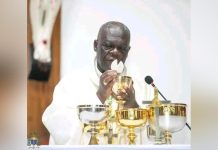
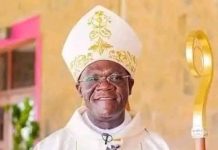
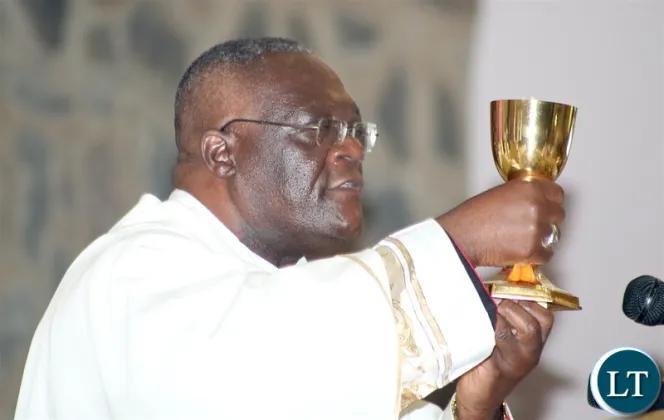
At the centre of the storm is the Drug Enforcement Commission’s decision to summon Lusaka Archbishop Alick Banda over an allegedly irregularly acquired vehicle linked to the Zambia Revenue Authority. The DEC insists the move is procedural, investigative, and non-political. Opposition figures and sections of the Catholic clergy say otherwise.
⚫ What was Said, and Why it Matters
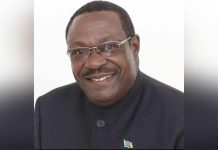
Rev. Fr. Augustine Mwewa, President of the Local Catholic Clergy, has taken the strongest public position so far. He framed the summon not as an isolated legal matter but as part of a broader pattern of intolerance by the UPND government toward the Catholic Church.
“This is not just about a vehicle,” Fr. Mwewa said. “This is about intimidating the Church for speaking truth to power… a declaration of war against the Catholic Church.”
He went further, urging citizens to “protect their voters’ cards” and warning of shrinking democratic space as the country approaches the 2026 general elections.
This language is significant. Once a religious leader moves from moral critique into electoral mobilisation, the line between prophecy and politics begins to blur.
⛔ The State’s Position
The DEC has been consistent in its response. Director General Nason Banda has said the summon relates to a specific individual named in official records, not to the Catholic Church as an institution. He has stressed that it is not a charge, that vehicles linked to the case are already in DEC custody, and that the process is meant to allow explanations before conclusions are drawn.
In short, the State is arguing law, not doctrine.
The Unresolved Gap
What remains unanswered publicly is the substance. The debate has shifted quickly from what happened to what it represents. Very little has been said about how the vehicle was acquired, under what authority, or whether procedures were followed. Until that factual gap is filled, both sides will continue to speak past each other.
Are Some Priests Calling for Regime Change?
Not explicitly. But undertones matter.
When a senior cleric links an investigation to “war,” urges citizens to guard voters’ cards, and frames the moment as a democratic struggle ahead of elections, the message inevitably takes on political colour. In many jurisdictions, such statements would place the speaker squarely in the political arena, even if wrapped in religious language.
This does not invalidate the Church’s right to speak. It does, however, change how the State is likely to interpret the posture. Governments tend to treat overt political mobilisation, even from pulpits, as opposition activity rather than neutral moral guidance.
Historical Context Zambia Cannot Ignore
Zambia has walked this road before. Churches played a decisive role in the transition from Kaunda to Chiluba, and later in moments of constitutional crisis. But history also shows that when religious leaders are perceived to align too closely with partisan causes, their moral authority fractures along political lines.
Globally, Catholic clerics have been investigated, prosecuted, and even jailed without it being framed as persecution of the Church itself. Locally, Pentecostal leaders have faced courts and prisons without triggering claims of Christianity under siege. This inconsistency is now part of the public debate.
Where This Leaves the Country
This episode sits at the intersection of law enforcement, faith, and election-year politics. The risk is escalation: investigations framed as persecution, accountability recast as oppression, and faith mobilised as a political shield.
The test for institutions is restraint and clarity. The test for the Church is whether it can defend its prophetic voice without collapsing into partisan campaigning. And the test for citizens is to separate evidence from emotion.
As Zambia inches toward the elections, this will not be the last collision between law and politics. How this one is handled will set the tone for those to come.
At The People’s Brief, we will continue to track facts, interrogate gaps, and provide context over slogans.
For More News And Analysis About Zambia Follow Africa-Press