
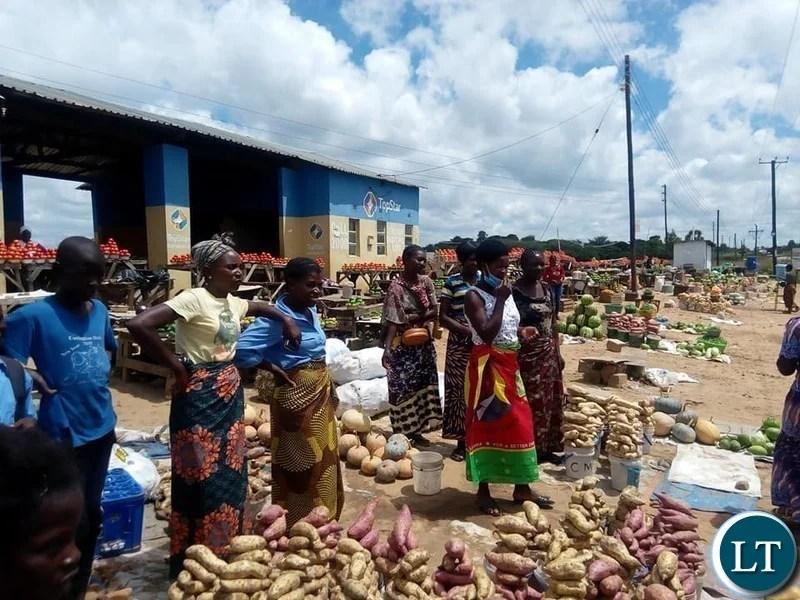
Africa-Press – Zambia. The National Food and Nutrition Commission (NFNC) has urged households in the country to consume edible traditional seasonal foods in order to boost their system against non-communicable diseases.
NFNC Communication and Advocacy Specialist, Gerald Kaputo in a statement made available to media yesterday, noted that there is a strong relationship between non-communicable diseases and poor dietary habits.
He said most recently, the country has seen a steady increase in obesity and nutrition related non-communicable diseases such as type 2 diabetes, hypertension, heart diseases and some forms of cancer.
Mr Kaputo explained that all forms of malnutrition are endemic in many parts of Zambia and pose a real threat to the well-being of the local population, hence the need to consume edible seasonal foods.
He pointed out that in a typical Zambian household, the classic staple diet is predominantly refined maize meal especially in the form of nshima which is consumed with very little relish, limiting dietary diversity.
Mr Kaputo said that at the same time, the country is undergoing a nutritional transition with a shift from predominantly unprocessed traditional foods such as wild and locally produced fruit and vegetables, roots and tubers, nuts and seeds to a diet consisting mainly of ultra- processed food and drinks especially in the urban and peri-urban areas.
‘’Foods made from ultra-processed ingredients such as meat pies, pizza, fried potato chips, shawarma, burgers to mention a few are high in sugar, salt and fats or oils and very low in dietary fibre thus increases the risk of nutrition related diseases.
The potential of traditional Zambian foods to alleviate all forms of malnutrition has been neglected. Foods such as edible mushrooms, edible insects such as inswa, crickets, nshonkonono, and caterpillars and different indigenous vegetables are not only more affordable but have a high nutrient value and can protect against a number of diseases,’’ he said.
Mr Kaputo further added that it has been proven that edible insects are rich in proteins and oils that are essential for the growth and development of infants, young children, women and adults.
‘’Apart from that, they also contain minerals such as iron which prevents anemia in children and women of reproductive age, Zinc for a healthy immune and reproductive system, and vitamins B1 and B2 for efficient functioning of bodily processes as well as dietary fibre which is significant for a healthy digestive system.
Equally, mushrooms are rich in vitamins B and D, have cancer fighting properties, are immune boosters and help to lower cholesterol in the body. Caterpillars too are highly pronounced to be rich in proteins,’’ he said.
Mr Kaputo also noted that these foods must be preserved and stored correctly if they are to provide the above mentioned nutritional benefits and avoid the negative effects of contaminations by mycotoxins such as aflatoxins when poorly grown, preserved and stored.
For More News And Analysis About Zambia Follow Africa-Press