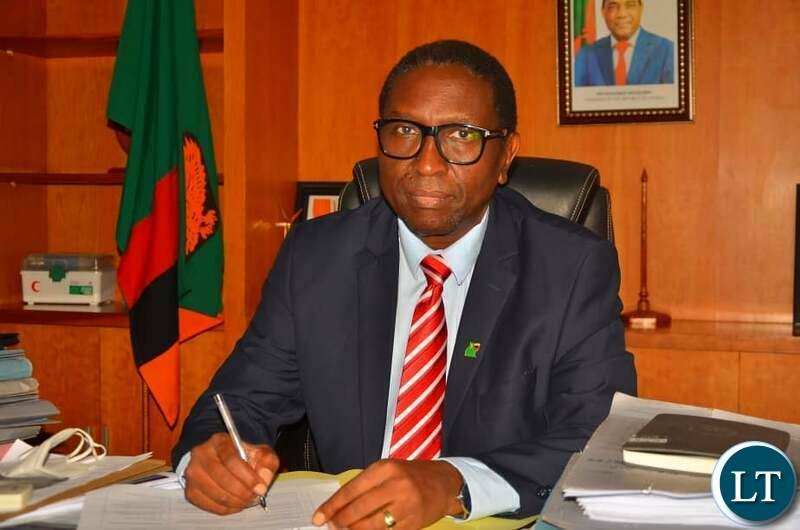
Africa-Press – Zambia. Energy Minister Peter Chibwe Kapala says ZESCO will buy poles, associated electric materials and equipment from international and primary sources and not from middlemen.
He says ZESCO is being driven by the urgent need to dismantle the backlog of 60,000 customers pending connections by end of the year. He has admitted that the approach to buy from South African and Zimbabwean primary sources may inadvertently disadvantage local entrepreneurs, middlemen and enterprises.
He says this is because ZESCO will not participate in political or empowerment schemes of growing local businesses. He says that ZESCO will also not be available to be used to meet political objectives. He says buying poles from abroad will serve trees in Zambia and mitigate against climate change. Below is MR. Kapala’s statement
AVOIDING MIDDLE-MEN IN PROCUREMENT IN THE ENERGY SECTOR
The New Dawn government is committed to ensuring universal access (100% coverage) to electricity for our people. To achieve this goal by 2030, ZESCO and the Rural Electrification Authority (REA) have to double their efforts in connecting people to the national grid and mini-grids. This means dismantling the backlog of connection applications that have been pending and building up for years.
Even though we need more power generation to cater for future demand and even new connections, the current installed capacity is adequate in the short term. The areas that need urgent attention and work in the short and medium term are the transmission and distribution of electricity to the end user.
Our plan is that all 60,000 pending connections have to be cleared by ZESCO by the end of this year. This means that ZESCO needs to have all materials needed to make this happen. The national power utility is therefore in the process of procuring treated poles, insulators, earthing materials, cross arms, transformers, cables, etc so that when our people apply for connections they are not simply placed on a waiting list but are connected upon paying the fees and meeting all conditions as per guidelines. Based on the ever-rising numbers of pending connections necessitated by years of no or few connections being made, the quantities of poles and other materials to be procured will be very high. This effort to procure these materials will cost a lot of money and it is prudent for ZESCO and REA to procure their materials – including treated poles – from manufacturers and primary sources as opposed to getting them from middle men, whether Zambian or not. In procuring from the source, ZESCO may be seen not to be empowering the Zambian middle-men and not helping these to increase their entrepreneurial capacity. However, the strategic objective here is not to grow Zambian businesses through ZESCO procurement but to connect as many Zambians as possible through the efficient and effective use of the budget available for this exercise by buying materials, equipment and tools at factory costs. The New dawn Government believes that ZESCO has to stick to its core-business and not being used to meet political objectives. Our government will ensure that politics remain in the political arena.
The long term gain from this approach is a serious reduction in cutting down of trees for making charcoal and hence the slowing down of deforestation in Zambia at a time we are facing effects of climate change. This effort will reduce dependence on charcoal and also speed up the economy as many business premises that have been awaiting power connections will come online and start contributing to the GDP in earnest.
Further, my office is also working with other arms of government to see how best to respond to the new world order that has changed the way the petroleum products are now being bought and marketed. Whereas we are not going back to subsidies in the face of increased international prices of oil products, we plan to do bulk buying from June 2022 onwards. Government will work to ensure that we accurately calculate the shipping costs, mark-up on transport, and other costs to get the pump price and avoid the end-user having to pay even higher costs. The full details and modalities of how we shall work with the Oil Marketing Companies (OMCs) and how we shall package these bulk purchases will be communicated to stakeholders and the public as we approach the month of June this year. Suffice to mention that the policy direction remains that INDENI will become an OMC to manage, among other things, government fuel depots, blend fuel, undertake fuel marking and possibly produce ethanol to be used in blending and in the manufacturer of medicines. It will not be used for bulk crude oil purchasing and processing.
As part of the reforms in the energy sector, we commit ourselves to ensuring efficiency and effectiveness in the supply chain. Lastly, we shall continue to work towards having large storage capacity for oil products to always ensure we can withstand shocks when unforeseen circumstances lead to disruption in the supply chain.
For More News And Analysis About Zambia Follow Africa-Press