Africa-Press – Zambia. The European Union Election Observation Mission described Zambia’s electoral process as technically well-managed but marred by unequal campaign conditions, restrictions on freedoms of assembly and movement, and abuse of incumbency.
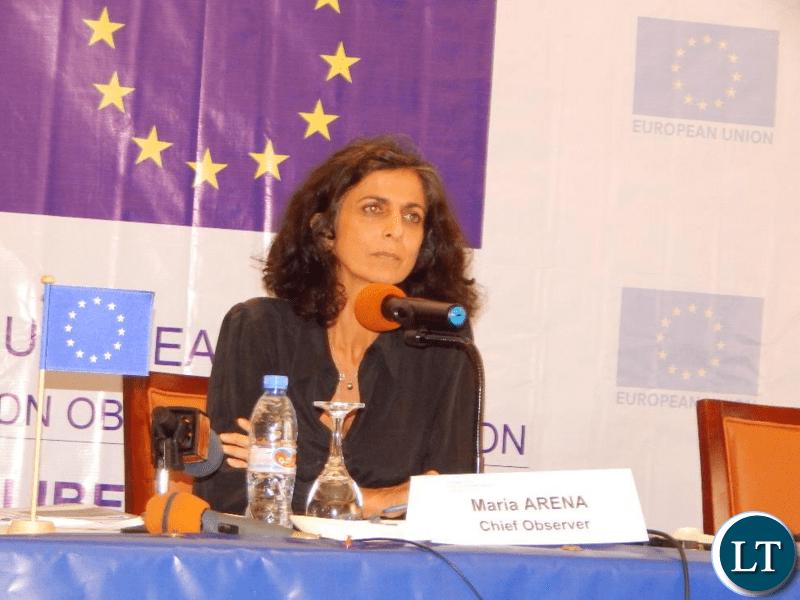
Chief Observer, Ms Maria Arena, said the election day was largely calm and generally well-administered despite long queues, which showed the devotion of the Zambian people to exercise their right to vote. She noted that the campaigns took place in a highly competitive environment, however despite the legal framework providing a reasonable basis for the conduct of democratic elections, selective application of laws and regulations, misuse of state resources and one-sided media reporting meant that a level playing field was not achieved.
Ms Maria Arena said political communication online featured divisive rhetoric during the campaign. Disinformation and tribalism pervaded the online debate to the detriment of voters. On election day, social media platforms such as Twitter,Facebook and Instagram as well as messaging applications including WhatsApp were restricted without the ICT regulator explaining neither the reason nor the duration of such actions.
The Chief Observer called on all stakeholders to ensure that the electoral process is completed in a peaceful manner: “I urge political parties, candidates and citizens to await the announcement of the results calmly and peacefully. In addition, it will be important that any possible challenge to the results are handled in line with due process and as established by law.”
Below is the full press statement
A technically well-managed electoral process marred by unequal campaign conditions, restrictions on freedoms of assembly and movement, and abuse of incumbency
Upon the presentation of the preliminary statement, the Chief Observer, Ms Maria Arena, said: “Election day was largely calm and generally well-administered despite long queues, which show the devotion of the Zambian people to exercise their right to vote. On behalf of the mission, I want to express our sincere condolences to the family and relatives of the party official who lost his life on election day. Elections should be occasions of peaceful participation.”
Against the background of the COVID-19, the Electoral Commission of Zambia carried out its work professionally under challenging circumstances. In the preparation of the elections, technical aspects of the process were well managed.
Concerning the campaign, the Chief Observer noted: “The campaign took place in a highly competitive environment. Whereas the legal framework provided a reasonable basis for the conduct of democratic elections, selective application of laws and regulations, misuse of state resources and one-sided media reporting meant that a level playing field was not achieved.”
Political communication online featured divisive rhetoric during the campaign. Disinformation and tribalism pervaded the online debate to the detriment of voters. On election day, social media platforms such as Twitter, Facebook and Instagram as well as messaging applications including WhatsApp were restricted without the ICT regulator explaining neither the reason nor the duration of such actions.
In her concluding remarks, the Chief Observer called on all stakeholders to ensure that the electoral process is completed in a peaceful manner: “I urge political parties, candidates and citizens to await the announcement of the results calmly and peacefully. In addition, it will be important that any possible challenge to the results are handled in line with due process and as established by law.”
It is important to note that, at this moment, critical stages of the process remain. In its preliminary assessment,the EU EOM is only commenting on observation undertaken up untill now. The EU EOM will stay in the country untill tabulation is completed and results are announced and will also accompany potential adjudication of petitions. The EU EOM will issue its final report, with recommendations for improving the electoral framework for future elections, at a later stage.