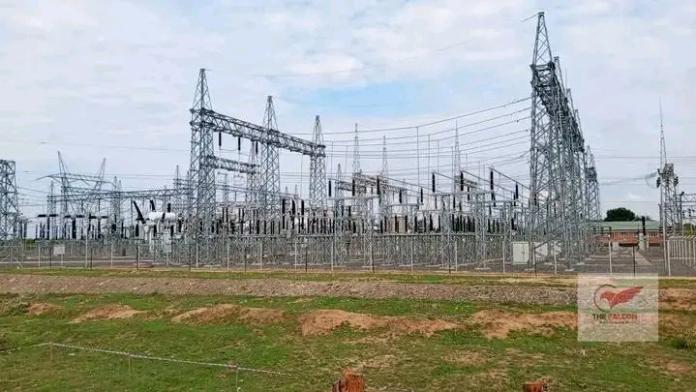
Africa-Press – Zambia. The expected groundbreaking ceremony for the 25-megawatt photovoltaic power plant in Choma and the 330kV Muzuma–Kafue transmission line marks one of the most strategic energy interventions in Southern Province since independence. The project, officially unveiled through UPND Media, is not an isolated development stunt. It sits within the government’s broader 1,000-megawatt energy expansion pathway intended to stabilise Zambia’s power supply after years of hydroelectric vulnerability driven by climate shocks.
Choma’s selection is not accidental. As the provincial capital of Southern Province and a fast-growing urban and agricultural hub, the city has endured persistent power instability that affects milling, irrigation, cold storage, hospitals, schools and SMEs.
The planned 25-megawatt solar plant introduces a decentralised clean-energy source that reduces over-reliance on long-distance hydro transmission lines. Once operational, the plant will directly feed the Southern grid while easing pressure on the national system managed by ZESCO Limited.
Equally critical is the 330kV Muzuma–Kafue transmission power line. This high-voltage line is not a side project. It is the backbone that will evacuate electricity efficiently from generation points in the southern energy corridor into the national grid. Without this line, even new power plants would remain stranded in isolation. With it, Southern Province becomes structurally plugged into Zambia’s long-term energy security architecture.
This is grid logic, not political theatre.
Energy data from the past decade explains why this project matters. Zambia’s heavy dependence on hydropower has left the country exposed to drought cycles that collapse reservoir levels at Kariba and Kafue Gorge. In peak crisis years, national deficit exceeded 800 megawatts, crippling production across agriculture, mining and manufacturing. Solar energy, unlike hydro, is not hostage to rainfall. It peaks when demand peaks, during hot daylight hours. That is why this project is not symbolic.
It is corrective.
The Choma solar plant also signals a policy shift under the Ministry of Energy from emergency power imports toward domestic diversification. Over the last four years, Zambia has added grid-connected solar projects in Central Province, Lusaka Province and parts of Luapula.
Choma’s entry into this energy map completes a regional balance that had long excluded the area from direct renewable generation.
Beyond megawatts, the political economy of the project is equally relevant. Construction phase employment will absorb engineers, artisans, technicians, drivers and suppliers. Operations will demand grid controllers, security, maintenance teams and local support services.
For a town whose youth economy is heavily dependent on seasonal agriculture and informal trade, this is structural employment, not casual labour.
Transmission infrastructure also carries long-term land value effects. Every grid corridor raises industrial appetite along its path. The Muzuma–Kafue line alone repositions Southern Province for agro-processing, cold-chain logistics, cement manufacturing and large-scale irrigation schemes.
Power availability does not just light homes. It rearranges land use, capital movement and population density.
Politically, the Choma project arrives at a moment of intense national contestation over development credibility. For the ruling party, this is visible infrastructure tied directly to household experience.
For the opposition, it narrows rhetorical space around claims that government has “done nothing.” Power projects are binary. They either connect or they do not. When they connect, denial evaporates.
What makes this project unusually significant is its sequencing. Generation and transmission are being rolled out together. That coordination has historically been Zambia’s weakness, where plants were built without evacuation lines or lines built without sufficient generation to justify capacity.
This dual rollout indicates systems planning rather than reactive engineering.
From a national security lens, the 1,000-megawatt pathway that Choma feeds into is not only about lighting homes. It is about stabilising mining output, defending currency through export reliability, cushioning food supply through irrigation resilience and reducing dependence on emergency regional power imports that drain foreign reserves.
This project also lands at a time when Zambia’s international profile has stabilised after debt restructuring. Infrastructure signals matter to financiers. A country that can plan transmission before crisis invites cheaper capital than one that builds turbines in panic. Choma benefits from that timing.
In simple terms, the Choma photovoltaic plant and the Muzuma–Kafue transmission line are not constituency projects. They are grid-level interventions with national consequences. When the switch finally turns on, the impact will not be measured in political slogans but in load-shedding schedules that disappear quietly, factory shifts that extend into the night, and boreholes that stop failing when the sun sets.
This is not promise politics. It is engineering politics. And engineering, unlike rhetoric, eventually either works or collapses in public view.
For More News And Analysis About Zambia Follow Africa-Press