Africa-Press – Zambia. The Jesuit Centre for Theological Reflection (JCTR) has called for effective implementation of the proposed 2023 National Budget in a bid to improve the welfare of Zambians.
Minister of Finance and National Planning Dr. Situmbeko Musokotwane on 30th September 2022 presented the proposed 2023 national budget to Parliament under the theme “Stimulating economic growth for improved livelihoods”.
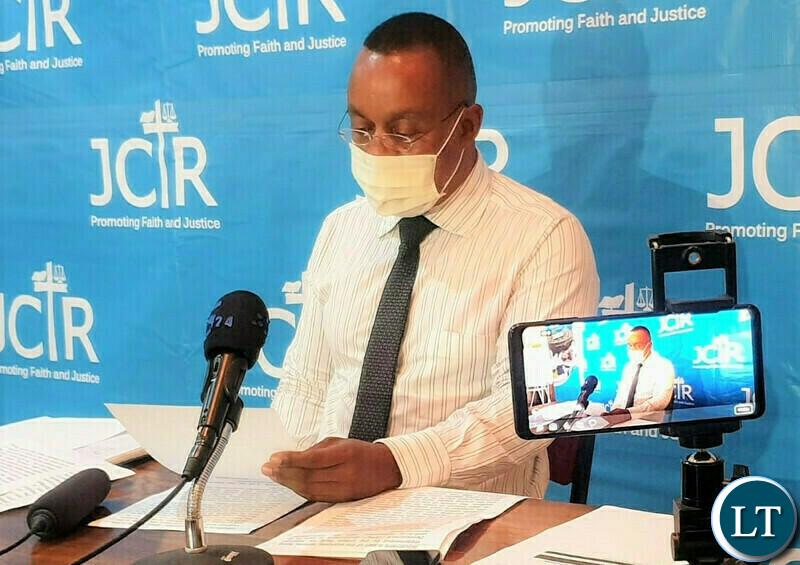
JCTR Executive Director Fr. Alex Muyebe, S.J said pronouncements in the 2023 budget if well implemented, will result in improved livelihood and welfare for the Zambian people. Fr. Muyebe said the 2023 budget provides an opportunity for growth and development through a people-centered strategy.
He added that the budget has demonstrated increased efforts to reduce developmental inequalities by increasing the Constituency Development Fund (CDF) from K25.7 million to K28 million per constituency.
“Government proposes to spend K167.3 billion or 31.4 percent of GDP. In order to support this expenditure, K111.6 billion or 20.9 percent of GDP will be raised as domestic revenue; K1.7 billion or 0.3 percent of GDP as grants from Cooperating Partners and K54.0 billion or 10.2 percent of GDP as financing. Accounting for amortization of K13.1 billion or 2.5 percent of GDP, financing translates into a fiscal deficit of K40.9 billion or 7.7 percent of GDP. The Minister made a number of pronouncements in this budget that, if well implemented, will result in improved livelihood and welfare for the Zambian people.The Jesuit Centre for Theological Reflection (JCTR), as an organization whose work is to enhance justice and equality for all, and particularly for the poor and vulnerable, has analysed the 2023 national budget with a focus on the social sector as this has a direct bearing on the livelihoods of the citizens,” Fr. Muyebe said.
“The 2023 budget provides an excellent opportunity for growth and development through a people-centered strategy. Government’s Economic Transformation Programme will focus on job creation, value addition in key sectors such as mining, agriculture and manufacturing. The budget has also demonstrated increased efforts to reduce developmental inequalities by increasing the Constituency Development Fund (CDF) from K25.7 million to K28 million per constituency, which entails directing more resources to the grassroots, which should be applauded,” he said. Fr. Muyebe hailed the planned reintroduction of student meal allowances, hiring of 256 extension officers and the scaling up of Social Cash Transfer.
Fr. Muyebe, however, said the government needed to allocate more funds to the social sector to ensure the inclusion of people living with disabilities, especially in education and social protection sectors.
He added that JCTR bemoans the lack of adquate funding to the Agriculture and Health sectors. He further called for consistent and timely disbursement of the proposed funds if they are to serve the intended purpose.
“It remains important for the government to ensure consistent and timely disbursement of the proposed funds if they are to serve the intended purpose. More importantly, qualifying citizens must have equal access to these funds. In that vein, it is important for the government to enhance domestic resource mobilization to ensure that more revenue is collected for social protection spending. Therefore, efforts to curb illicit financial flows, tax evasion and corrupt public procurement processes must be pursued,” Fr. Muyebe stated. On water sector allocation, Fr. Muyebe said JCTR is disappointment that expenditure on water and sanitation has decreased by K 82, 753, 664.
“JCTR notes with disappointment that expenditure on water and sanitation has decreased by K 82, 753, 664 a reduction of approximately 3.5%. This proposed decrease in allocation to water and sanitation has the potential to negatively impact on the water and sanitation projects, and therefore will have a negative impact on the communities especially the poor and vulnerable. Access to clean and safe water is an important aspect of economic, social and cultural rights that must be prioritized in the delivery of social services.Generally, in reflection of the 2022 budget performance that has been satisfactory thus far as revenues have so far exceeded the targets that government had set to achieve while expenditures have been contained within the target. JCTR notes improved budget credibility for the nation. If implemented well through a high degree of credibility and certainty in release of funds, the 2023 national budget aligned with aspirations that aim to deal with the challenge of unemployment and low incomes levels, can deliver for the Zambian people especially the vulnerable,” Fr. Muyebe said.
The Government has proposed to spend K167.3 Billion in 2023 representing 31.4 percent of the Gross Domestic Product (GDP) of the country. The Finance Minister said the Budget will be funded from both external and internal sources such as grants, loans and revenue through tax collections.
For More News And Analysis About Zambia Follow Africa-Press