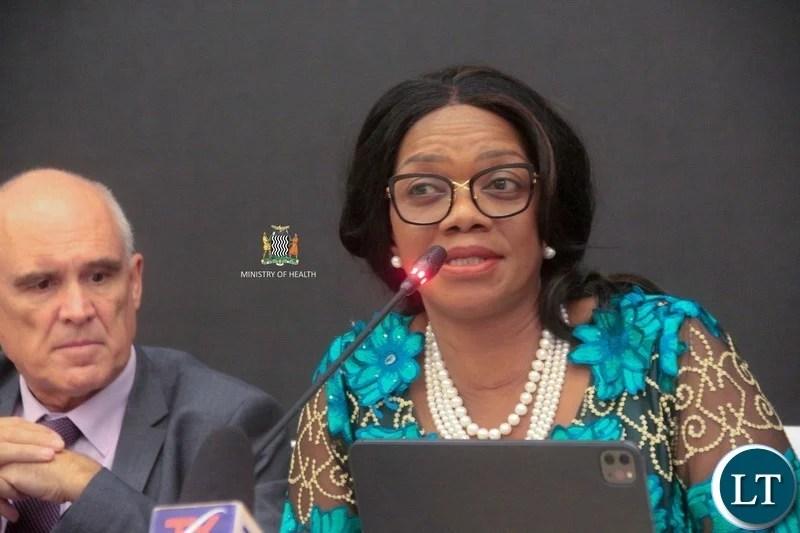
Africa-Press – Zambia. The Minister of Health Sylvia T Masebo has called for the strengthening of the local pharmaceutical manufacturing industry in order to help Zambia attain universal access to affordable efficacious and safe medicines.
Officiating at the launch of the Zambia Pharmaceutical Manufacturing Initiative (ZPMI), Ms. Masebo said the promotion of local Pharmaceutical Manufacturing Industry is key to the attainment of universal access to affordable efficacious and safe medicines.
She said a vibrant local pharmaceutical manufacturing industry will greatly contribute to the attainment of Universal health coverage and Sustainable development goal number three: “health for all at all ages for the country, Leaving No One behind.”
Ms. Masebo said the local production represents between 10-15 percent of the demand for pharmaceuticals in Zambia due to the low capacity of the pharmaceutical industry to satisfy demand for medicines and medical supplies.
She added that the Zambian pharmaceutical companies fall short of World Health Organisation (WHO) prequalification and are struggling to meet the Good Manufacturing Practices (GMP) standards even if they possess local pharmaceutical licenses.
“In ensuring effective and quality production of pharmaceutical products, affordable finance, access to technology and appropriate policies and legal framework are fundamental requirements for pharmaceutical manufacturing in Zambia to upgrade our production to international quality standards, such as Good Manufacturing Practices (GMP), and to gain access to local and international markets. Zambia needs strengthened partnership mentorship programmes to help the local pharmaceutical manufacturers to best prepare themselves for partnerships with international pharmaceutical firms, financial institutions and development partners. This will stimulate growth of local pharmaceutical manufacturing through partnerships with established firms and to assist a cohort of promising local manufacturers in finding advanced technologies and/or finance partners and be mentored. Arising this gap, the government of the Republic of Zambia held its first ever EU-Zambia economic forum in May, 2022 in an effort to foster major partnerships in health and particularly the pharmaceutical sector with well-established EU manufacturing companies,” Ms. Masebo said.
“Another important component of enhancing local pharmaceutical manufacturing is skilled human resources. The pharmaceutical industry in Africa has been hampered by the limited numbers of scientists working in advancing pharmaceutical production. However, addressing this constraint would be a serious game changer in the pharmaceutical industry. The industry requires highly skilled labor to lead the production of much-needed medicines and medical supplies. In order to address the human resource gap, universities and Colleges should partner with the pharmaceutical industry in order to build capacity in this sector. Driven by the desire to address this specialized human resource gap in the pharmaceutical manufacturing sector, governments working closely with the University of Zambia have initiated the training of masters in pharmaceutical manufacturing. So far, ten (10) students enrolled and their practicum sites have been identified through local manufacturers such as Yash Life Sciences, among others,” she said.
The Launch of the Zambia Pharmaceutical Manufacturing Initiative (ZPMI) Ms. Masebo disclosed that there are ten (10) registered pharmaceutical manufacturing companies in Zambia, seven (7) of which are undertaking full manufacturing while three (3) are involved in repackaging of finished pharmaceutical products.
“Permit me to provide a brief overview of our Zambia local pharmaceutical landscape as follows:There are ten (10) registered pharmaceutical manufacturing companies in Zambia, seven (7) of which are undertaking full manufacturing while three (3) are involved in repackaging of finished pharmaceutical products. The seven (7) companies are mostly engaged in the manufacturing of generic small and large volume parenteral, oral solid dosage forms, liquid dosage forms, powders, external preparations and medical supplies. It is estimated that the local production represents between 10-15 percent of the demand for pharmaceuticals in Zambia. This could be attributed to the low capacity of the pharmaceutical industry to satisfy demand for medicines and medical supplies. Our pharmaceutical companies fall short of WHO prequalification and are struggling to meet the Good Manufacturing Practices (GMP) standards even if they possess local pharmaceutical licenses,” the Minister of Health said.
Ms. Masebo announced the government’s plan to review the National Drug Policy of 1999 to ensure that it suits the current trend in local pharmaceutical manufacturing including providing for necessary incentives to boost the industry.
“The National Drug Policy of 1999 is due for review to suit the current trend in local pharmaceutical manufacturing including providing for necessary incentives to boost the industry. Notwithstanding, the Zambian pharmaceutical market has shown potential in recent years. The pharmaceutical sector in Zambia was worth nearly 133 million U.S dollars in 2012 and reached over 240 million U.S dollars in 2014 (WHO, World Health Report: 2014). The growth was attributed to the high disease burden, increase in population and a growing economy. The COVID-19 pandemic has further exposed Zambia’s vulnerability in ensuring access to vital medicines and medical supplies, vaccines and health technologies. In this regards, most African countries Zambia inclusive, view the supply of safe, effective and affordable medicines and vaccines as a national security issue,” Ms. Masebo said.
She observed that the COVID-19 pandemic has further exposed Zambia’s vulnerability in ensuring access to vital medicines and medical supplies, vaccines and health technologies.
“For example, during this COVID 19 pandemic situation Zambia had to delay the vaccine roll out program due to lack of local production of vaccines. Therefore, stimulating local production of medicines, medical supplies and vaccines will provide an opportunity for the country to have access to cost effective, efficacious and safe medicines and medical supplies as opposed to the current situation where medicines are imported at a greater cost. In order to improve resilience and efficiency in our Pharmaceutical supply chain, the President of the Republic of Zambia, Mr. Hakainde Hichilema on the 9th of September, 2022, during the official opening of the Second Session of the Thirteenth (13th) National Assembly, called for strengthening of the local pharmaceutical manufacturing in order to contribute to a number of the country’s economic, social and environmental development priorities,” Ms. Masebo said.
“As I Conclude, may I state that promotion of local Pharmaceutical Manufacturing Industry is key to the attainment of universal access to affordable efficacious and safe medicines and medical supplies and as a ministry we remain committed to ensuring that this is attained as it will greatly contribute to the attainment of Universal health coverage and Sustainable development goal number three: health for all at all ages for the country, Leaving No One behind,” she concluded.
For More News And Analysis About Zambia Follow Africa-Press