Dr. Sishuwa Sishuwa
Africa-Press – Zambia. For Zambia, the problem is not and has never been the currency in which mining taxes are paid, so there is absolutely nothing to get excited about here. The real problem, one that cuts across successive governments since 2008 when the windfall tax was abolished, is the notoriously low public earnings from the mining sector resulting from the infectiveness of the Zambia Revenue Authority, low taxes, transfer pricing and poorly negotiated development agreements between mining companies and the government. Our very own patriot @joseph_kalimbwe has repeatedly made this important point, but the mining companies pay more attention to him (obviously for self-serving reasons) than the government!
One of the major downsides of the current extractive industry ownership structure is that it is made for corruption and for as long as the State does not have a decisive ownership stake in the strategic mining industry, (i.e. more than 50% as is the case in countries like Botswana, Norway, Sweden, China etc.), Zambians will also have limited means to public accountability for stolen resources. This is because a limited ownership structure (even with greater taxation) gives leverage for the majority shareholders to hide profits and obscure minority shareholders. In effect, accountability is increased where a publicly owned state enterprise exists.
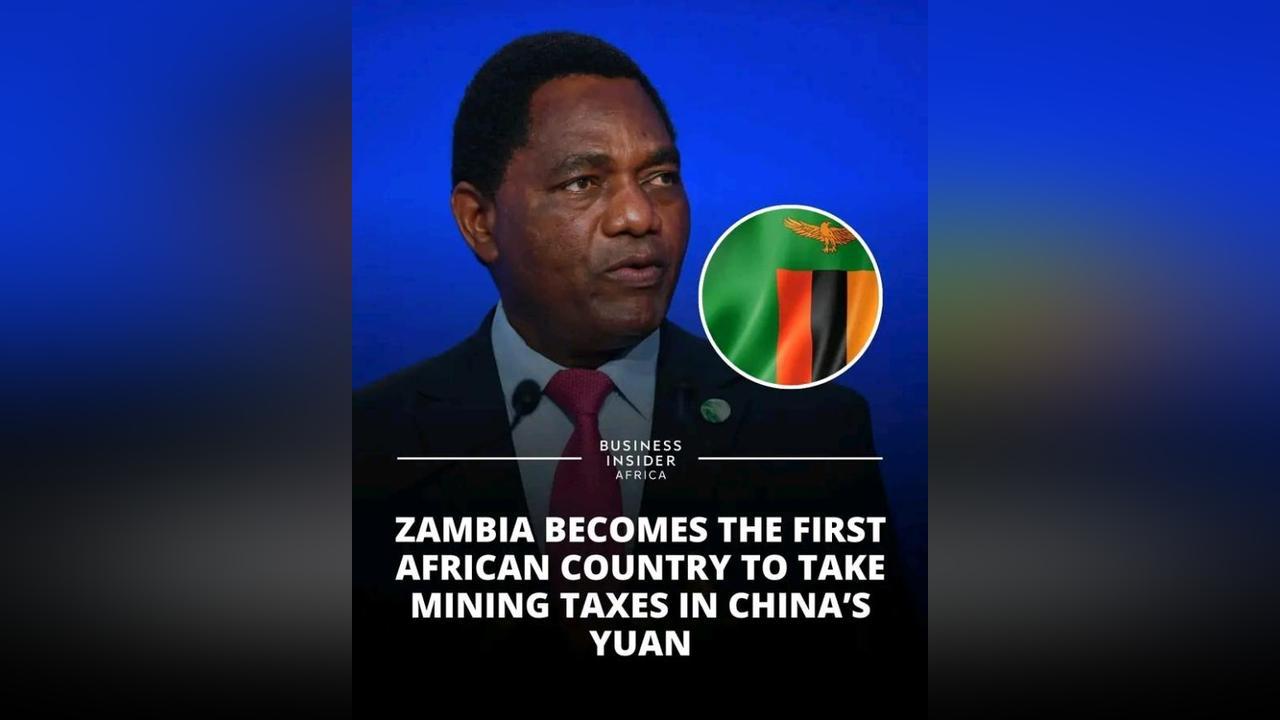
So please reject the diversion on “Zambia to accept Chinese currency for mining taxes” (in fact, Zambia has been doing this since October 2025) and focus instead on the real issue: the paltry revenue collected from Zambia’s jewel and the lopsided ownership structure in the industry. Think of it this way: If Zambia gets 2 percent in mineral royalty rates from the mines, another 2 per cent import duty on copper concentrates and a 4 per cent export duty on precious metals, it does not matter whether this money is paid in dollars or yuan. It is still negligible.
The truth is that in real terms, Zambia gets far less from the mines today than it did in the early years of independence, particularly following the Mulungushi economic reforms of 1968 that increased the national stake in the sector. Zambian miners also get far less today in purchasing power parity and social benefits from the industry. The mining companies have devised various methods for ensuring that most of the value of the copper is collected by their shareholders and the company management, and very little goes to local workers or the Zambian government. There are various tricks for maintaining this system, such as giving kickbacks to government officials, employing foreign companies as contractors, using expensive expatriates for management positions (despite Zambia having had a School of Mines for over fifty years!), and by transfer pricing.
But perhaps the main method for expropriation of value is to keep local taxation low, both as profits tax and mineral royalty tax. The main strategy that mining companies deploy to maintain low taxes is to threaten government that they will reduce mining operations, or even move out of Zambia altogether if taxes are increased. These are credible threats for two main reasons. First, any pulling out, or even reduction of expansion programmes, will affect employment in Zambia and reduce tax revenue, thus the government may be ‘cutting its nose to spite its face’ if it tries to increase taxes.
Secondly, the threats are credible because the mining giants are truly global multinational corporations, and they can fairly easily move their operations in the direction of a country where production costs are cheaper, taxation rates are lower, and bribing of government officials is even easier (the Democratic of Republic Congo, for instance, would arguably fit all three of these criteria).
In other words, a large rich multinational is in a strong position to bully a weak African state such as Zambia, and has a large influence over government policies to support the mines by tax holidays, lower taxation rates, providing subsidies (such as cheap electricity), degrading the trade unions, overlooking environmental degradation, and so on.
That said, our consistent national problem since the days of Levy Mwanawasa and Ng’andu Magande is the tragic lack of an incorruptible, patriotic, visionary, courageous, and enlightened leadership. It is a scandal what is happening in Zambia’s mining industry. The collusion between mining companies and our political elites continues to produce shadowy deals that produce terrible policies and sustain a subject that is at the heart of the activism of @FMwenge: our extreme national poverty.
The truth is that the benefit of keeping minerals in the ground, or banking them for the future, far exceeds the economic, environmental and social costs of a bad deal. So if mining companies threaten to leave because of the proposed small tax increments, Zambia would do well to pave the road for them. It is time we looked to longer-term strategies rather than short-term expediency. Banking our resources until such a time that we are in strong negotiating position or there is broader scarcity for metals that would enable us set improved terms for ourselves is better than emptying our underground wealth to mostly benefit foreign commercial interests.
It is worth noting that the basic economic position is that, for almost a hundred years, mining companies in Zambia have been milking our riches and engendering poverty and destitution. Our feet walk on copper, yet we remain absolutely poor, thanks to inept leadership from a succession of corruptible political leaders who pawn off the country for a few trinkets at a time, accumulate through brazen theft of public resources and the massive sale of Zambian assets to so-called investors, and strut around with self-importance when they are nothing but the disposable playthings of even bigger global kleptocrats.
Our mineral wealth has been and continues to be taken from us, and when they have taken the whole lot, we shall remain with nothing and probably be the poorest country on Earth, with all our wealth transported to Geneva, Beijing, New Delhi, Ottawa, London and New York.
Source: The Zambian Observer – The Zambian Observer
For More News And Analysis About Zambia Follow Africa-Press