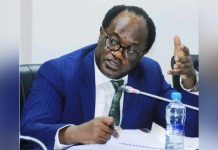

Africa-Press – Zambia. Makebi Zulu’s recent media interventions offer a clear window into how sections of the opposition are reading the road to 2026. At the centre of his argument is a firm belief that President Hakainde Hichilema is heading into a difficult re-election bid, despite constitutional changes, incumbency, and institutional control. It is a narrative anchored less in electoral arithmetic and more in political conviction, frustration, and distrust of state power.
Makebi’s core claim rests on the presidential threshold. He insists that the President cannot secure the constitutionally required 50 plus one of valid votes cast, arguing that the erosion of living standards has hollowed out the goodwill that carried Hichilema into office in 2021.
“As things stand it is impossible for President Hakainde to get 50 plus one votes,” he said, framing the coming election as a referendum on unfulfilled promises around mealie meal prices, fuel costs, electricity supply, and jobs. In this reading, Bill 7 and the expansion of constituencies do not alter the presidential contest itself, because the head of state is elected on a national tally, not parliamentary arithmetic.
Zulu dismisses suggestions that the revised electoral map guarantees a second term, calling that assumption politically lazy.
From the opposition’s perspective, the expansion of constituencies serves a different purpose. Zulu portrays it as a defensive move designed to protect sitting MPs within the ruling party from internal competition and independents, rather than a decisive presidential strategy. This interpretation reflects a broader opposition belief that the UPND is managing risk within Parliament while remaining vulnerable at the presidential level.
Whether this distinction holds in practice remains contested, but it explains why opposition rhetoric continues to focus on the presidency rather than parliamentary numbers.
The deeper anxiety in Zulu’s remarks, however, lies with the Patriotic Front itself. He openly acknowledges the possibility that PF may not appear on the 2026 ballot in its current form. Court cases, leadership disputes, and regulatory exposure have forced the opposition to contemplate contingencies.
“We are really prepared that we are going to move together with the people of Zambia on a vehicle that we dare not disclose at this particular time,” Zulu said, signalling the existence of a parallel political platform designed as insurance against deregistration or legal paralysis.
According to Makebi, the secrecy is deliberate, framed as protection against what he describes as state pressure and victimisation of office bearers.
This strategy reflects a defensive posture rather than electoral dominance. Preparing an alternative “vehicle” is not the language of a movement confident in its institutional strength. It is the language of survival. Zulu himself concedes that the opposition will continue to fight for PF, but “not oblivious” to the risk that it may be structurally weakened before nominations open. This admission places opposition confidence in a narrower frame.
The belief in regime change coexists with acknowledgement of serious organisational vulnerability.
On unity, Zulu strikes a conciliatory tone while revealing the scale of the problem. He admits that the passage of Bill 7 damaged public trust, not only in government but in opposition MPs who voted with the ruling party. Rebuilding that trust, he says, is now central to opposition strategy. The emphasis is on substance rather than personality, with a return to cost of living, power shortages, and economic pressure as the core campaign message.
This mirrors sentiments expressed by other opposition figures, including Fred M’membe, who recently acknowledged that ego and personal ambition have repeatedly undermined opposition alliances.
Zulu’s framing of the current political environment as sliding toward authoritarianism further explains the opposition’s posture. He describes a state increasingly reliant on cyber laws, surveillance, and public order enforcement to manage dissent, arguing that these tools are being deployed because the President is insecure about his record.
This belief underpins the opposition’s conviction that elections remain winnable despite institutional headwinds. In their view, popular discontent will override structural disadvantage.
What emerges from Zulu’s position is not a unified opposition strategy, but a shared belief. This belief holds that incumbency is brittle, economic pain is decisive, and constitutional engineering cannot manufacture legitimacy. It is a belief reinforced by internal conversations, not yet by electoral tests under the new system. The opposition’s confidence, therefore, is aspirational rather than empirical.
The gap between belief and outcome will be closed by numbers, organisation, funding, and voter mobilisation. As it stands, the opposition speaks with certainty about presidential weakness while simultaneously planning for legal exclusion, fragmentation, and secrecy.
This tension defines the opposition mood heading into 2026. Confident in diagnosis, cautious in execution, and still searching for a structure that can carry belief into ballots.
For More News And Analysis About Zambia Follow Africa-Press