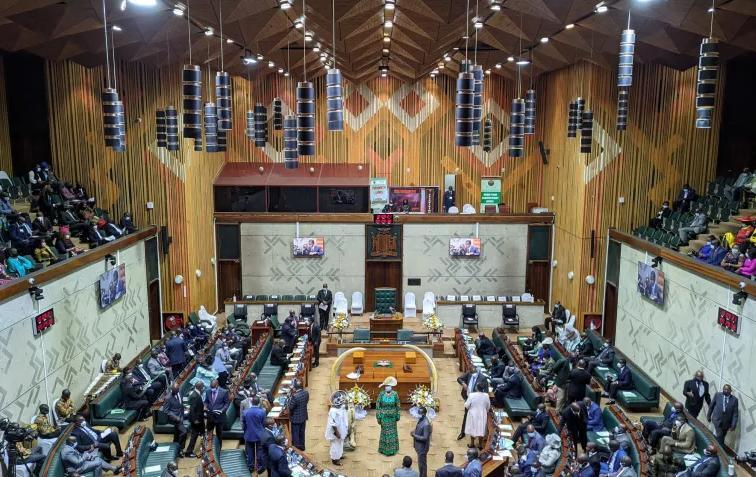
Africa-Press – Zambia. The decision to dissolve Parliament in Zambia on Friday, May 15, just under three months before the presidential elections scheduled for August 13, has sparked widespread concern among the opposition and civil society organizations, which deemed the move surprising and called for further clarification regarding its background and timing.
This development follows a controversial end to the last parliamentary session, which saw the passage of 73 laws in just one week, an unprecedented occurrence in terms of speed and legislative density, according to activists and observers.
These laws cover sensitive areas including cybersecurity, regulation of public gatherings, and monitoring mechanisms, prompting human rights and civil organizations to warn that they may pose a direct threat to civil liberties and freedom of expression.
Austin Kayanza, director of the Media Institute of Southern Africa, expressed his astonishment at the manner in which these legislations were passed, stating in a media interview that the motives behind enacting such a large number of laws in a short timeframe remain unclear, especially since Parliament had five full years to discuss and refine them. He added that civil society organizations had raised serious concerns about some of these laws at the beginning of the parliamentary session, but they received assurances that there would be no push to reintroduce them in this manner, only to see them included again and passed quickly in Parliament.
Questions are increasing in political and civil circles regarding the reasons for this specific timing, particularly with the elections approaching, and whether there are political considerations behind the expedited approval of these legislations.
Kayanza believes that citizens in Zambia should have been given more time to review these laws, discuss them, and provide feedback before their approval.
The law regulating public gatherings is one of the most controversial within the recent legislative package, as critics argue that it recalls old restrictions on public freedoms.
Kayanza explains that this law may impose strict limitations on holding meetings, gatherings, and exchanging ideas, which some view as a regression from previous democratic gains, resembling the public order laws that were supposed to be replaced by new reforms.
In conclusion, Kayanza expressed hope that the Zambian president, Hakainde Hichilema, would refrain from enacting some of these laws in their current form, allowing for an additional opportunity to reconsider them and opening the door for broader community dialogue that ensures citizen participation in discussing legislations that affect their public lives and fundamental freedoms.