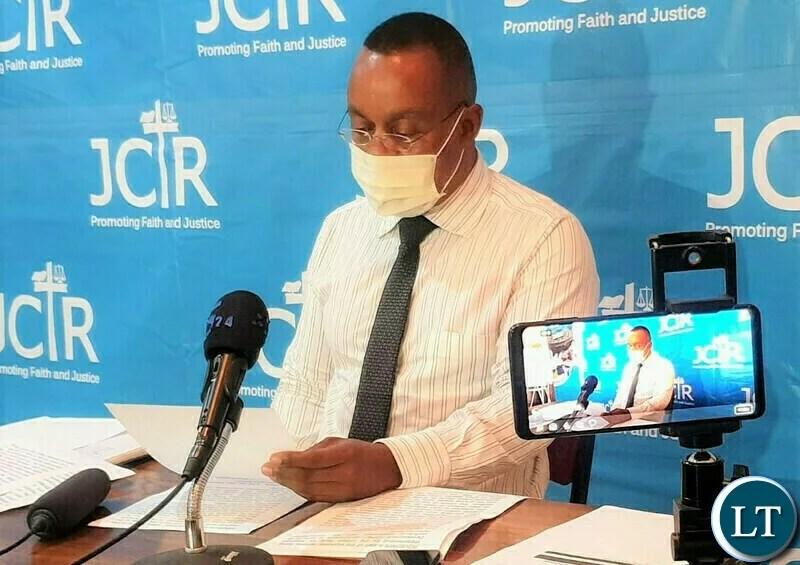
Africa-Press – Zambia. The Jesuit Centre for Theological Reflection (JCTR) has proposed that the Government through various ministries implements some measures aimed at reducing the high cost of living in the country.
The JCTR Basic Needs and Nutrition Basket (BNNB) for the month of July 2022 in Lusaka stood at K9, 332.82 showing an increase of K31.36 increase from the K9, 301.46 recorded in June, 2022.
The center says the upward movement in the food basket is attributed to price movements in items such as charcoal, fruits but acknowledged notable reductions in items such as 6kg tomatoes which went down by K39.00 from K111.36.
JCTR said the Government through the Ministry of Finance and National Planning should consider waiving or reducing import duty for edible oils to help reduce the cost of production for items such as cooking oil in a bid to reduce the cost of living.
JCTR Executive Director Fr. Alex Muyebe said increased budget allocation to the livestock sector in the 2023 national budget particularly for the growth of animal feed inputs such as soya beans and sunflower could also reduce the cost of living.
Fr. Muyebe said the Ministry of Agriculture should also continue working towards sustained expansion of irrigation support in the 2023 national budget.
“The cost of living trends recorded for the month of July 2022 could be attributed to a number of developments. These include; fuel pump price increments recorded at the beginning of July 2022 that may have had an impact on the cost of production for items such as cooking oil, seasonality as seen in the price increase recorded for charcoal and reduced prices for various food items; tomatoes, vegetables, onion, cassava flour among others. Another notable factor could have been the appreciation of the kwacha against major currencies such as the US dollar that may have led to a lower cost of feed imports for the production of food items such as eggs and milk. Further examination of the cost of living for July 2022 is taking place against a backdrop of notable policy developments. The month of July saw the historical recruitment of 30,497 teachers and 11,200 health workers,” Fr. Muyebe said.
“Additionally, through the approved supplementary budget of K22 billion arising from financial prudence and lower debt servicing expenditure in the first half of the year, government has redirected resources to selected budget lines including; K4.7 billion to the agriculture sector, K280 million to support secondary schools, K6.5 billion to dismantling arrears, K752million to strengthen domestic resource mobilisation through the Zambia Revenue Authority and K2billion to critical roads. Further, on 30th July the Creditor Committee for Zambia under the Common Framework for Debt Treatments issued a statement agreeing to negotiate debt restructuring for Zambia. The possibility of debt restructuring has the potential to spur investment necessary for growth and poverty reduction impacting on the cost of living. JCTR recognises that the above interventions are a step towards responding to the cost of living challenge. The interventions in the education and health sectors, not only provide a platform for improving service delivery but ultimately cushions close to 42,000 households with potential impact to improve living conditions for at least 200,000 persons,” he said.
Fr. Muyebe said the cost of living for an average family of five as surveyed by the JCTR stands way above the national average incomes pegged at K4391 according to the 2020 Labour Force Survey.
For More News And Analysis About Zambia Follow Africa-Press