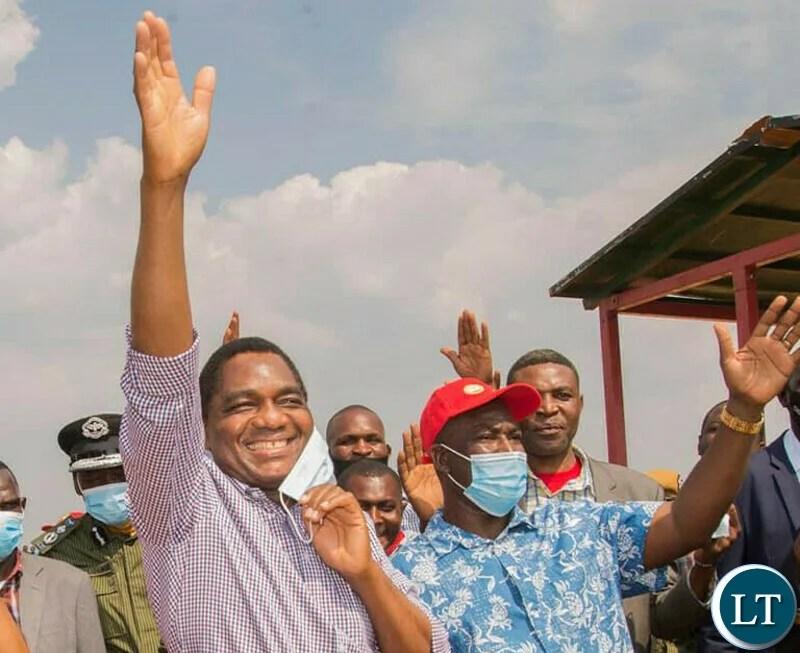
Africa-Press – Zambia. Psychologists have long identified the concept of “projection”– that is, attempts by individuals to unconsciously attribute their own traits to other people as a justification for their shortcomings. As the weight of the Presidency takes a toll on HH, so is his vocabulary growing. In addition to the “clique of thieves,” the President has added two more demeaning words to characterize his political opponents, “hegemonists, and tribalists.” Are these three words the lens through which President HH engagement with his opponents occur? But could projection explain this tendency? A thief is quick to assume everyone is a thief; a tribalist is quick to see everyone as a tribalist, and the hegemonist assumes everyone is one; just as a cheating husband thinks the wife is doing the same.
The UPND Party: While the UPND is older than the PF, the leadership has been hegemonic and thereby undemocratic–both Anderson Mazoka and HH are of one tribe. The PF, however, moved from Sata to Lungu. This pattern is similar in the MMD. Chiluba though Bemba was replaced by Mwanawasa, who was also replaced by Banda. Could this trait be behind the President’s projection of tribalism and hegemonism on his opponents?
Besides the hegemonic tradition is at play in the Ministry of Lands, and the Ministry of Agriculture. In these two Ministries, certain tribes call the shots–and against President’s own assumptions of tribalism, the power holders are not from Northern, Luapula or Muchinga Provinces. If the President wants to see how both hegemonism and tribalism work, he must audit these two Ministries senior positions. Many are the Bembas who have been denied promotions or simply forced out because of their last names.
Thieves and President HH’s Businesses: How many Zambians really know the President’s business Empire? We all know he is the richest man in the nation, but do we know his companies? These questions have huge moral implications. They may even explain why the President is preoccupied with “thieves.” Is this an attempt to insulate himself from accountability and public oversight? Is he employing a preemptive attack so as to control the narrative should questions arise about his corrupt business activities?
99 % of the people who voted for the President, his supporters, and those reading this OpEd don’t know anything about the President’s business dealings to know how ethical our President is. So when he calls others thieves, what makes us think he is not a thief? Simply because he tells us so? Moreover, it is critical to understand the relationship between the business practices of the President and the kinds of policies he is promoting. It is even more critical to know who is partnering with our President and the deals he is making with the so-called “investors.” Corruption is not just about stealing hard cash, but also making deals and economic policies that benefit one’s businesses or partners. It is for this reason that President HH must be transparent about his riches–playing hide and seek is an act of corruption in itself. Zambians need to know everything about their businesses to ensure that he is not using his office to make money on our backs. We should not think that our President cannot steal simply because he calls others “thieves”.
The “Clique Stealing ..”from” or “since” independence: I have listened to President HH about the clique and I don’t understand where the debate is. The President used “from” independence, but the context justifies the use of “since” because he was referring to the period as opposed to an object — thus the two words can be used interchangeably and the meaning remains the same. Stealing “from independence” assumes independence is a “person” from whom people can steal. How can one steal from “independence”? That would be misrepresenting the President. Regardless, there’s a need to question how the President can fight corruption if he is not transparent about his own business practices. I understand many people believe him, but he is human too.
I hate citing dead white men, but Lord Acton’s words to Bishop Creighton may help: “Power tends to corrupt and absolute power corrupts absolutely. Great men are almost always bad men, even when they exercise influence and not authority: still more when you superadd the tendency or the certainty of corruption by authority.” Our love for Bally should not blind us from holding him to account.
For More News And Analysis About Zambia Follow Africa-Press