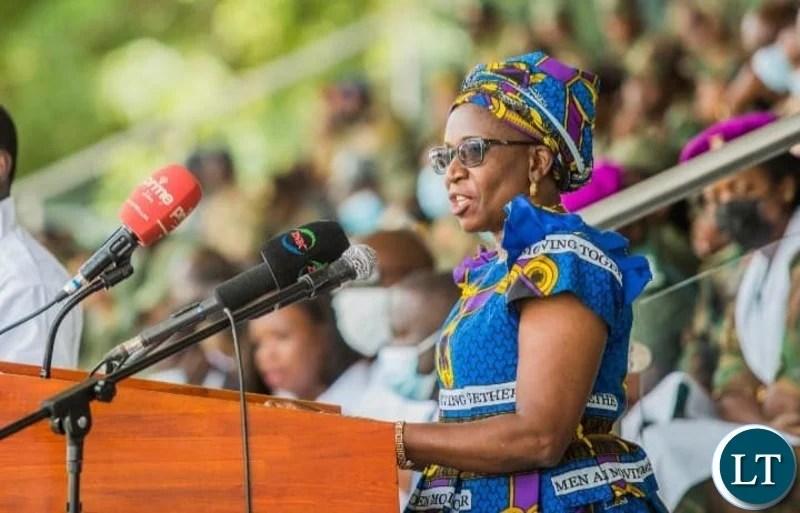
Africa-Press – Zambia. The Women’s movement in Zambia has demanded urgent action towards creating a gender equality and equity environment in the country. A consortium of civil society organisations that advocate gender equality has issued a joint statement in which it has expressed concern with the alleged inadequate national institutional framework for promoting gender equality in Zambia.
These organisations include NGOCC, Zambia National Women’s Lobby, Forum for African Educationists of Zambia (FAWEZA), Generation Alive, Young Women in Action, Plan Zambia and Oxfam have bemoaned gender imbalances in governance. Below is the full joint statement released a day after International Women’s Day. We Demand Gender Equality and Equity Now and Not Tomorrow!
The Women’s movement in Zambia is concerned with the inadequate national institutional framework/arrangement for promoting gender equality undermining the prospects for a sustainable Zambia tomorrow. The lack of operationalised gender machinery in Zambia exerts moral imperative and social justice concerns on the government for an urgent action towards creating a gender equality and equity environment.
The Women’s movement is elated by this year’s International Women’s Day theme entitled “Gender equality today for a sustainable tomorrow.” Inherently, this theme recognizes and reminds all of us of the great contribution of women and girls around the world, particularly in our country Zambia. The evidently growing and inspiring works and participation of women and girls in securing sustainable development in Zambia is vastly evident in their relentless involvement in initiatives on climate change especially in terms of adaptation, mitigation, and response. Women and girls have definitely taken a leading and tough role to build a more sustainable future for all in Zambia.
As a diverse group of civil society organizations united by our keen determination to safeguard this invaluable role of women and girl children in pursuing sustainable development through the adoption of approaches that put at the center the importance of environment management, we are greatly concerned about the prevailing sidelining, exploitation and degradation of the women and girl children in the country.
Firstly, the abrupt overhaul of the previous national gender machinery coupled with the sluggish reconstruction of the new institutional mechanism i.e. the Gender Division, which has been characterized by lack of clarity and clear commitments on ensuring its functionality is a definite indication of the current government’s questionable interest in promoting a gender-equal Zambia that will see male and female citizens unite in the quest of achieving climate change responsive sustainable development for the country. Apart from the issuance of the Government Gazette No. 7039 which lists gender as a subject falling under the Executive Branch of the Office of the President and the subsequent appointment of the Permanent Secretary from the Gender Division, the government is yet to provide a clear roadmap of how the Gender Division will be operationalized, when the Gender Equality and Equity Commission will be established and who will be responsible for championing the gender agenda at cabinet level. It is important to remind the government that without a functional institutional mechanism for gender equality, it will remain impossible to pursue sustainable development within a context characterized by gross gender inequalities and inequities.
Secondly, the existing gender imbalances in governance immediately and directly entail that one gender, namely the male, is dominating the decision-making and power-holding positions as well as processes. This means that the national decisions made, including those on matters relating to climate change, reflect the voice and interests of the male gender. This is against the democratic principle of governance that Zambia has been aiming to consolidate since 1990. Succinctly put, the government is potentially on the verge of reversing the massive progressive changes that the women and girl children have worked severely hard to attain, like the establishment of the Ministry of Gender, which was abolished by the New Dawn government in 2021.
Thirdly, the existing gender inequalities are already and will continue to entrench and worsen the socio-economic inequalities between men and women in Zambia. As the case stands, poverty, climate vulnerabilities, economic and financial disempowerment including social vulnerability is more pronounced among women and girls than men and boys in the country. Given that women and girls have been left out of the “decision-making” processes, it also means that these two groups have limited opportunities to participate and determine how public resources are allocated and accessed. The state of employment where the majority of productive female citizens are unemployed or located in the informal sector expose more women to very harsh working conditions and with little prospects for transforming people’s livelihood. Clearly, by not paying attention to the imperativeness of gender equality and fostering silence on the urgency to correct the imbalances implies that the commitment of the New Dawn Government to see “gender equality for sustainable development tomorrow” remains to be seen.
Women and girls are more susceptible to climate change, as they remain in the vulnerable groups. It remains imperative for the government to devise mechanisms which can cushion the climate vulnerability of women and girls, as it was witnessed with the devastating effects of cyclone Anna and the prevailing droughts the country has experienced. As the country desires to develop economically through extractive industries, much cognizant of taking into consideration the plight of women and girls should seriously be considered.
Therefore, as we commemorate the first International Women’s Day under the New Dawn administration, we wish to recommend the following: 1. Government must, with a sense of urgency, put in place a functional national gender management machinery with genuine/accountable representation at the highest level of decision-making on national matters, namely at Cabinet.
2. Government must, in line with the existing Constitutional Provision in Article 259 (b) and (c)(…that fifty per cent of each gender is nominated or appointed from the total available positions, unless it is not practicable to do so; and equitable representation of the youth and persons with disabilities, where these qualify for nomination or appointment), adhere to the provision of ensuring 50-50 consideration of the male and female gender in making appointments to public offices
3. Government must develop and present to the public within the next three (3) months a clearly articulated roadmap on the establishment of the Gender Equality and Equity Commission (GEEC)
To the rest of our fellow Zambians, internal and external supporters of gender equality and equity, we would like to encourage you to continue demanding for a gender balanced democratic Zambia. Mobilize and stand up against gender imbalances of all forms now!
Based on these observations, we would like to implore the ruling regime to rescind its decision of relegating gender, gender equality and equity, to the sideline of Zambia’s national governance and development. Instead, gender equality and equity must be at the center of all governance and development processes. We would like to reiterate that without gender balance, sustainable development, including the much-desired economic growth based on a green economy approach will remain elusive, unresponsive, and ultimately, unattainable.
For More News And Analysis About Zambia Follow Africa-Press