
Africa-Press – Zambia. Zambia is not endowed with large proven reserves of fossil-fuel resources such as coal, oil or natural gas. Currently all petroleum products in Zambia are imported which leaves the country at risk to global energy shocks. The vast majority of the electricity supply (83%) is dependent on hydro sources which have become prone to effects of climate change in the form of uncertain rainfall patterns and increasingly frequent droughts. Recent electricity supply deficits in 2015 and 2020 have had a detrimental effect on economic growth and poverty reduction. This is a picture of a country with too narrow a range of energy sources and too dependent on imported fuel.
The bulk of primary energy used in Zambia is obtained from biofuels with 73% coming from this source in 2019. This consists mainly of solid biomass such as firewood and charcoal. The large reliance on biomass is not sustainable and has negative consequences for local environments in the form of increased deforestation and pollution. Oil and other imported petroleum products make up 12% of the energy supply. There is increased local production of bioethanol for blending with petrol at a ratio of 1:10 which would slightly reduce the dependence on oil. Hydro-electric power contributes only 10% of the energy supply despite its economic importance. The variation of primary energy supply sources in Zambia between 1990 and 2019 is shown in the figure below.
Figure 1: Total primary energy supply by source, Zambia 1990 – 2019 [1]To increase energy resilience and security of supply the Zambian energy sector needs to diversify where and how it sources its energy. The recent shocks to world fuel prices caused by the Russia-Ukraine military action have brought into sharp focus the need for energy self-reliance in many countries. To reduce energy supply risks and the amount of foreign exchange spent on importing fuel, more of the energy used in Zambia needs to be obtained from sustainable local sources.
Increasing use of renewable energy sources for electricity and the development of battery technology for transportation are transforming the energy landscape. This change presents itself as an opportunity for countries such as Zambia which have abundant water, sunshine and wind resources but an underdeveloped energy sector.
Hydrogen has been touted as the fuel of the future in the energy transition from fossil fuels to low carbon energy. Many technological innovations are being made to ensure that hydrogen is a safe and cost-effective product to generate, store, transport and use. According to projections, the global final energy mix will rapidly shift towards electricity and hydrogen, with one estimate that the two technologies will represent 32% of the global energy mix by 2035 and 50% by 2050. This trend is shown in the figure below. Figure 2: Projections for the global final energy consumption mix until 2050 [2]
Hydrogen is a high energy density carrier with 3 times the energy density of petrol. It can be used as a feedstock in industries that are dependent on expensive imported petroleum fuels. Hydrogen can act as energy storage for excess or intermittent electricity generation from renewable energy solutions. Strategies to attain universal energy access in Zambia could use hydrogen as leapfrog technology in areas with low energy access. For example, bottled hydrogen may be used to provide low carbon cooking solutions in difficult to electrify rural areas. As a locally produced fuel, hydrogen would have the potential to transform the energy sector in the country.
Green hydrogen is created using renewable electricity in an electrolyser by splitting water into its constituent parts. Green hydrogen can be used to link renewable electricity generation with sectors that are difficult to electrify such as heat for industry and as a fuel for large vehicles.
Because of its physical location and suitable natural resources Zambia is predicted to be able to produce green hydrogen that would be competitive in price on the world market as shown in the figure below. According to this assessment southern and western parts of the country should be able to produce hydrogen at a price less than $2.2/kg at some point between 2030 and 2050. This estimated future hydrogen price is compared with current energy prices in the table below.
Figure 3: Hydrogen costs from hybrid solar PV and onshore wind systems in the long term [3] Table 1: Comparison of projected hydrogen price with current energy prices for similar fuels in Zambia Fuel price Calorific value Density Price of energy $/kg or $/litrea MJ/kgb kg/litre $/MJ 2.2 120 8.9 x 10⁻⁵ 0.24 1.48 43 0.85 0.53 2.5 46 0.54 0.69
The technology necessary to successfully deploy clean energy is largely imported into Zambia. A new technology and innovation ecosystem needs to be developed in which industry, academia and government work together to select and develop the most appropriate technology needed to solve local problems and generate wealth in the country. One technology that could be of benefit to Zambia is the development and manufacture of electrolysers.
Electrolysers use electricity to convert water into hydrogen and oxygen. Electrolysers come in three main types: alkaline, polymer electron membrane (PEM) and solid oxide. Alkaline electrolysers are the most used type in industrial settings. They use electrodes made of iron, nickel and nickel alloy sometimes with cobalt catalysts which would make this technology relatively accessible for sourcing materials in Zambia. By contrast PEM electrolysers require more exotic rare materials like iridium and ruthenium. Both alkaline and PEM electrolysers operate at relatively low temperatures ( Figure 4: Schematic and properties of alkaline electrolyser [4]Figure 4b chematic and properties of alkaline electrolyser [4]
Hydrogen can be used to store energy when there is an excess of renewable electricity supply and for transportation to difficult to electrify locations. Many rural areas have low population densities in which the economics do not support extending the national electric grid to these locations. Stored hydrogen fuel offers an alternative to battery storage technology and liquefied petroleum gas (used extensively in some countries such as India and Brazil) to provide energy to remote areas or for cooking purposes. Compressed ammonia gas is an effective means of storing and transporting hydrogen and could be deployed for both small and large-scale energy storage needs. It is noted that for short term storage needs such as diurnal cycles, batteries would provide a more efficient means of energy storage whereas hydrogen would be more suited to longer duration storage. The figures below demonstrate this.
Figure 5: Energy capacity vs storage duration for hydrogen and other storage technologies [4]Figure 6: Relative efficiency of electricity generated from battery and hydrogen stored energy [4]Fertiliser Manufacture
Green hydrogen can be used as a feedstock for industrial processes. Hydrogen when combined with nitrogen from the air forms ammonia which is a precursor to nitrogen-based fertiliser (urea and ammonium nitrate) manufacture. Current methods of ammonia and fertiliser production are energy intensive and use natural gas (methane) as a feedstock. The natural gas is reformed at high temperatures using steam to obtain hydrogen and carbon dioxide. The figure below shows how the process to create fertilisers from green hydrogen might work.
Figure 7: Green ammonia and low carbon fertiliser production [5]Zambia imports fertiliser at great cost though there are attempts to increase local fossil fuel-based fertiliser manufacture. Between 1972 and 2015 Sable Chemicals in Zimbabwe used electrolysers powered by hydro-electric energy to produce green hydrogen and ammonia for fertiliser manufacture. Ammonia production was stopped in 2015 due to a persistent country-wide energy deficit and increased electricity tariffs. Zimbabwe now imports ammonia gas from South Africa.
Green hydrogen can also be used as a source of heat for industrial processes. In the Zambian context the most notable industrial use would be steel manufacture.
Replacing coal with hydrogen is a promising option still in development for decarbonising the steel production process. The main Zambian steel manufacturing facility, UMCIL Kafue Steel, uses a coal-based direct reduction process for the conversion of iron oxide ore to direct reduced iron. Green hydrogen can be used to replace coal as a reducing agent.
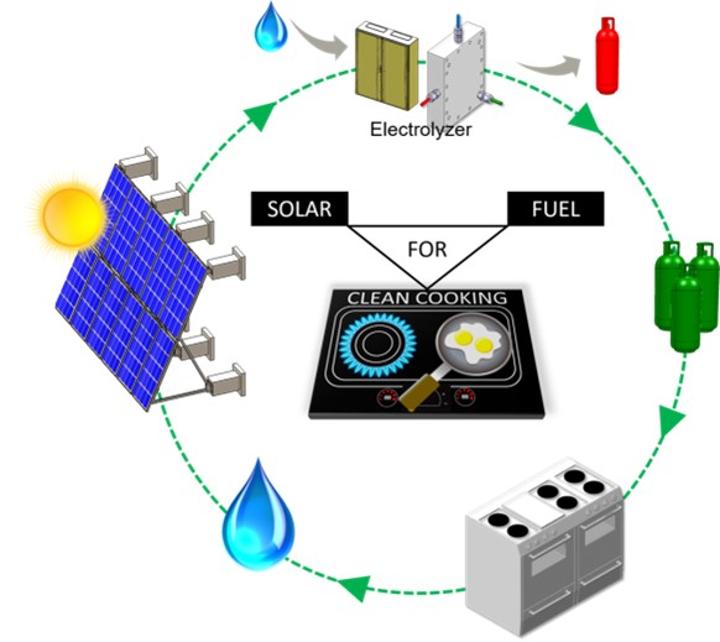
Clean energy solutions are required to reduce the dependence on biofuels such as charcoal and firewood. Indiscriminate use of such fuels causes deforestation, damages ecosystems and exacerbates climate change. Additionally, many people exposed to the pollution of these fuels experience poor health outcomes. Green hydrogen offers an alternative cooking fuel in places that are difficult to reach with conventional grid or off-grid solutions. Combining bottled hydrogen with hydrogen gas cookers could be the way to solve the energy deficit in remote areas.
Figure 8: Hydrogen cooking solutions [6] Whilst electric batteries have taken a lead in decarbonising the passenger vehicle sector, alternative clean energy solutions are needed for heavy goods and larger passenger vehicles. Currently electric vehicle battery technology does not provide the power or range requirements for larger vehicles. Hydrogen offers a potential solution with the development of fuel cell or synthetic fuel technology.
Fuel cells work like batteries but combine hydrogen and oxygen to create electricity, which is opposite to what an electrolyser does. Recently, Anglo American unveiled the world’s largest hydrogen-powered truck weighing 220 tonnes at a platinum mine in South Africa in an aim for the mining company to be carbon neutral by 2040, as shown in the figure below.
Figure 9: South Africa Launches world’s biggest hydrogen-fuelled truck [7]Alternatively, synthetic fuels can be made from the combination of green hydrogen and carbon dioxide to form a man-made liquid fuel similar to petrol, diesel or kerosene.
In late 2021 the Namibian government announced plans to invest $9.4 billion over 40 years in green hydrogen production in collaboration with German consortium Hyphen Hydrogen Energy. The factors in favour of this investment are the abundant solar and wind energy resources in Namibia, proximity to the sea and significant reserves of platinum and iridium required to manufacture polymer electrolyte membrane electrolysers. The level of proposed investment is all the more remarkable considering that Namibia’s GDP in 2020 was $10.7 billion. The initial project phase worth $4.4 billion would create a 2 GW renewable energy electricity plant due to open in 2026. Further expansion at the end of the decade would generate a total of 5 GW of renewable energy capacity and 3 GW of electrolyser capacity.
A diversity of energy sources reduces risks to security of supply and increases the resilience of a country’s energy sector. Since Zambia imports all of its petroleum products, transitioning to an energy type that can be generated locally is important to establishing energy security, for wealth creation and improving balance of payments.
Manufacture of hydrogen electrolysers would provide an opportunity to create value-added industries using locally available minerals such as nickel and cobalt. Further development of much needed local industry, such as the manufacture of fertilisers and steel, can be enhanced using cheaper locally sourced fuels.
It is vital that appropriate research and development is undertaken to own technologies that are likely to form part of the future energy mix. Close collaboration is required between industry, academia and government to achieve the necessary technological upgrading and the transition to innovation-based economic growth.
The array of potential energy technologies that could be developed in Zambia include solar PV, concentrated solar thermal power, wind turbines, electric vehicle batteries, electrolysers, fuel cells, green hydrogen and synthetic fuels. A systems analysis approach would be necessary to determine which are the most optimum technologies to develop further within the Zambian economy.
The direction of the future global energy mix, abundance of renewable energy sources and water in Zambia, and the strategic and economic benefits of having a locally sourced fuel provide a strong case for the development of hydrogen technology solutions.
For More News And Analysis About Zambia Follow Africa-Press