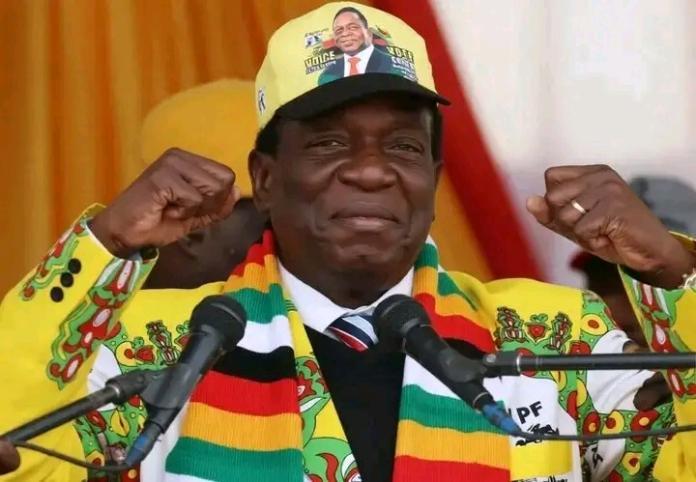
Africa-Press – Zambia. Zimbabwe’s government has approved sweeping constitutional amendments that opposition figures say could clear the path for President Emmerson Mnangagwa to remain in power until 2030, deepening concerns about democratic backsliding in Southern Africa.
Cabinet on Tuesday endorsed proposals that would extend the presidential term from five to seven years and introduce a major structural shift by allowing Parliament, rather than voters, to choose the president.
The changes come as Mnangagwa, now 83, approaches the end of his current mandate under the existing 2028 limit.
Mnangagwa rose to power in 2017 after a military-backed move that removed longtime leader Robert Mugabe, who had ruled for three decades. Zanu-PF has since signalled its intention to keep Mnangagwa in office beyond constitutional term boundaries, with party officials openly discussing succession control and continuity.
Opposition leaders have warned that any attempt to alter presidential tenure or electoral rules must be subjected to a national referendum, arguing that changes of this magnitude cannot be driven solely through parliamentary processes.
The proposed amendments, if implemented, would mark one of the most significant reconfigurations of Zimbabwe’s post-independence political framework, reviving fears of a return to personalised rule and entrenched incumbency.
For the region, the move carries wider implications. Southern Africa has repeatedly faced debates over term limits, succession, and constitutional manipulation, with Zimbabwe’s trajectory now being watched closely as another test of whether liberation-era parties can transition into accountable democratic governance.
The reforms are expected to face intense political resistance, legal scrutiny, and renewed pressure from civil society as Zimbabwe enters a sensitive phase of institutional contestation.
For More News And Analysis About Zambia Follow Africa-Press