By Reason Wafawarova
Africa-Press – Zimbabwe. Zimbabwe is once again at a critical inflection point where political outcomes will be determined less by formal declarations than by the contest of narratives that shape legitimacy, resistance, and national direction. At the centre of this moment lies a troubling paradox: just as a coherent constitutional resistance to executive overreach was consolidating, a competing opposition narrative emerged that effectively neutralised it.
This essay examines, analytically and without sentiment, the political meaning and consequences of Nelson Chamisa’s sudden re-entry into active politics under the banner of Agenda 2026, particularly in relation to the Constitution Defence Platform (CDP) and the aborted attempt to extend the presidential term beyond 2028 without a referendum.
The Collapsing of the 2030 Agenda:
By late 2025, the project to extend President Emmerson Mnangagwa’s term to 2030 was visibly faltering. An attempt to engineer a legal precedent through a contrived constitutional challenge—fronted by a hired civic activist and politically anchored by Justice Minister Ziyambi Ziyambi—collapsed when the weakness and orchestration of the case were exposed. The strategic objective had been clear: to secure a court ruling that would pre-emptively foreclose future constitutional challenges to term extension.
That effort failed.
Subsequently, plans to introduce a constitutional amendment Bill on 23 December were abandoned. Leaks, civic mobilisation, and fierce internal resistance within ZANU PF—particularly from factions opposed to the 2030 agenda, including those aligned to Vice President Constantino Chiwenga—rendered the move politically untenable.
At this point, the term extension project had lost momentum, legitimacy, and coherence.
The Emergence of Constitutional Resistance:
In the aftermath, opposition parties, civic organisations, and constitutional activists coalesced around a singular, intelligible axis: defence of the 2013 Constitution. The Constitution Defence Platform (CDP) was formed with a clear purpose—to resist constitutional vandalism, protect the 2028 electoral timetable, and anchor political struggle within the existing legal framework.
This was not merely symbolic politics. It was strategic consolidation. For the first time in years, fragmented democratic forces converged around a defensible centre grounded in law, institutional legitimacy, and measurable violations.
It is precisely at this moment—when constitutional resistance began to gain traction—that Nelson Chamisa re-entered the political arena.
Agenda 2026: A Narrative Intervention:
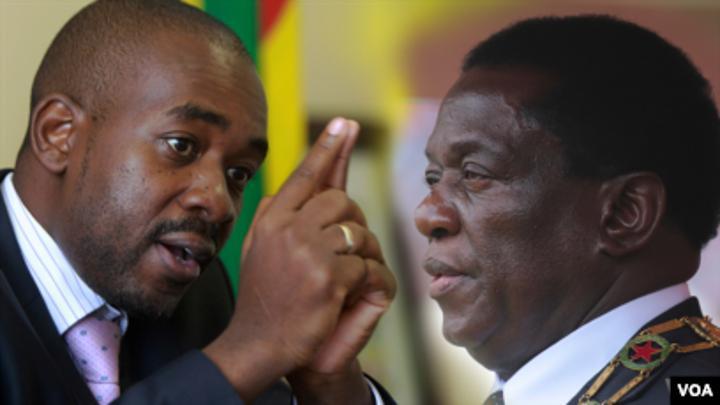
Two days after the launch of the CDP, Chamisa announced his return from a self-imposed two-year sabbatical and unveiled Agenda 2026. The timing was not incidental; in politics, timing often communicates more than content.
Agenda 2026 was framed in expansive and emotive terms: reclaiming stolen elections, reclaiming Zimbabwe, renewing leadership, confronting dictatorship. Yet conspicuously absent were any references to the immediate constitutional crisis. There was no mention of President Mnangagwa, no reference to the 2030 term extension agenda, no acknowledgement of the aborted Bill, and no engagement with the constitutional violations that had just been halted.
More strikingly, when pressed, Chamisa dismissed the very foundation of the CDP’s struggle, asserting that “there is no constitution in Zimbabwe” and characterising constitutional defence as a “false battle”.
This was not a casual remark. It
a decisive narrative intervention.
The Logic of Constitutional Denial:
The assertion that Zimbabwe has “no constitution” is not merely rhetorical; it carries profound logical and political implications. Democracy is not an abstraction. It is a system defined by rules, limits, procedures, and institutions. Elections derive meaning from the constitutional framework that governs them.
If there is no constitution, then there can be no constitutional violation. If there is no constitutional order, then elections cannot be “stolen”—they can only be seized by force. Yet Agenda 2026 relies heavily on the moral capital of stolen elections while simultaneously denying the legal framework under which such theft is intelligible.
This contradiction is not semantic; it is structural.
A movement that rejects constitutionalism, dismisses elections as inherently meaningless, and proposes to operate without identifiable structures or internal governance mechanisms cannot coherently claim to be defending democracy. At best, it advances a politics of moral aspiration detached from institutional accountability.
Historical Misreadings and Strategic Consequences:
Chamisa’s invocation of the liberation struggle—particularly the claim that Zanla operated without a constitution—does not withstand historical scrutiny. Zanla was a highly structured, hierarchical, and disciplined movement with strict command systems, ideological coherence, and enforcement mechanisms. Its effectiveness derived precisely from its organisational solidity, not its absence.
To deploy liberation history as justification for structural vagueness is to misread both history and strategy.
More critically, Agenda 2026’s abstract framing has the practical effect of de-institutionalising resistance at the very moment institutional defence was gaining ground. By shifting the struggle from constitutional violation to existential reclamation, the terrain becomes amorphous, timelines become elastic, and accountability dissipates.
Who Benefits from This Intervention?
Political analysis ultimately turns on outcomes rather than declared intentions.
The immediate beneficiaries of the narrative shift introduced by Agenda 2026 are evident:
The 2030 agenda benefits from the weakening of constitutional resistance.
The demand for elections in 2028 is diluted when both government and opposition narratives converge on the claim that elections are either disruptive or meaningless.
Collective platforms such as the CDP are marginalised in favour of personalised political centrality.
This does not require collusion to be effective. Objective alignment of outcomes is sufficient.
On Which Side of History?
The question is not whether Nelson Chamisa is sincere. History does not adjudicate sincerity; it judges consequences. The critical question is this: why, at a moment when constitutional vandalism was being resisted and democratic forces were consolidating, was an alternative narrative introduced that weakened that resistance?
Agenda 2026 may yet evolve. It may yet clarify its institutional commitments and constitutional posture. But as presently articulated, it represents not a reinforcement of democratic struggle, but a diversion from its most defensible front.
In moments of national crisis, abstraction is not neutrality—it is choice. And history will record which narratives defended constitutional democracy, and which inadvertently—or otherwise—made its erosion easier.
decisive narrative intervention.
The Logic of Constitutional Denial:
The assertion that Zimbabwe has “no constitution” is not merely rhetorical; it carries profound logical and political implications. Democracy is not an abstraction. It is a system defined by rules, limits, procedures, and institutions. Elections derive meaning from the constitutional framework that governs them.
If there is no constitution, then there can be no constitutional violation. If there is no constitutional order, then elections cannot be “stolen”—they can only be seized by force. Yet Agenda 2026 relies heavily on the moral capital of stolen elections while simultaneously denying the legal framework under which such theft is intelligible.
This contradiction is not semantic; it is structural.
A movement that rejects constitutionalism, dismisses elections as inherently meaningless, and proposes to operate without identifiable structures or internal governance mechanisms cannot coherently claim to be defending democracy. At best, it advances a politics of moral aspiration detached from institutional accountability.
Historical Misreadings and Strategic Consequences:
Chamisa’s invocation of the liberation struggle—particularly the claim that Zanla operated without a constitution—does not withstand historical scrutiny. Zanla was a highly structured, hierarchical, and disciplined movement with strict command systems, ideological coherence, and enforcement mechanisms. Its effectiveness derived precisely from its organisational solidity, not its absence.
To deploy liberation history as justification for structural vagueness is to misread both history and strategy.
More critically, Agenda 2026’s abstract framing has the practical effect of de-institutionalising resistance at the very moment institutional defence was gaining ground. By shifting the struggle from constitutional violation to existential reclamation, the terrain becomes amorphous, timelines become elastic, and accountability dissipates.
Who Benefits from This Intervention?
Political analysis ultimately turns on outcomes rather than declared intentions.
The immediate beneficiaries of the narrative shift introduced by Agenda 2026 are evident:
The 2030 agenda benefits from the weakening of constitutional resistance.
The demand for elections in 2028 is diluted when both government and opposition narratives converge on the claim that elections are either disruptive or meaningless.
Collective platforms such as the CDP are marginalised in favour of personalised political centrality.
This does not require collusion to be effective. Objective alignment of outcomes is sufficient.
On Which Side of History?
The question is not whether Nelson Chamisa is sincere. History does not adjudicate sincerity; it judges consequences. The critical question is this: why, at a moment when constitutional vandalism was being resisted and democratic forces were consolidating, was an alternative narrative introduced that weakened that resistance?
Agenda 2026 may yet evolve. It may yet clarify its institutional commitments and constitutional posture. But as presently articulated, it represents not a reinforcement of democratic struggle, but a diversion from its most defensible front.
In moments of national crisis, abstraction is not neutrality—it is choice. And history will record which narratives defended constitutional democracy, and which inadvertently—or otherwise—made its erosion easier.
For More News And Analysis About Zimbabwe Follow Africa-Press