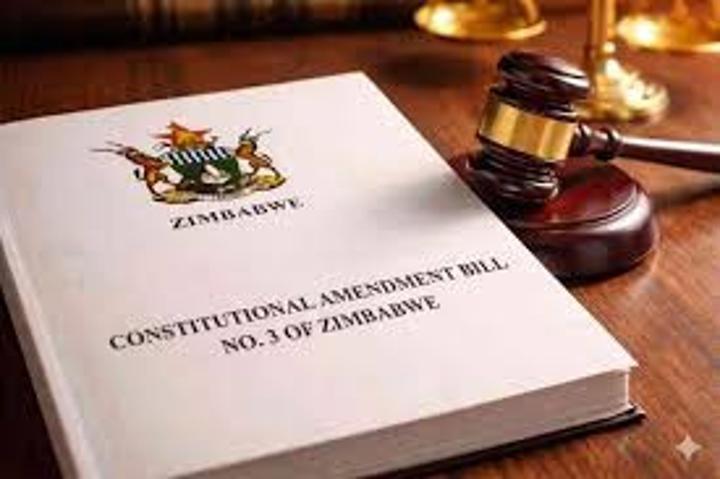
Africa-Press – Zimbabwe. CALLS for a national referendum on the Constitutional Amendment No 3 Bill (CAB3) are gaining momentum, with analysts and opposition figures saying a public vote is the only credible route to capture citizens’ views.
The Bill proposes extending the tenure of the president, Parliament and councillors from five to seven years.
It also removes citizens’ right to directly elect the President, transferring that power to Parliament. Critics argue that such far-reaching changes to the supreme law require the consent of the people through a referendum.
The push for a referendum comes amid chaotic and violent parliamentary public hearings, which many see as an attempt to railroad the amendment without genuine public input.
Opposition groups and civil society warn that if the amendment proceeds without a referendum, it could undermine Zimbabwe’s democratic process and entrench Executive power.
The hearings, which concluded last Thursday, were widely condemned by civil society, opposition actors and independent observers as flawed. In Harare, Bulawayo and other towns, proceedings descended into disorder, with alleged ruling party supporters hijacking events and blocking opposing views.
There were also allegations of bussing of participants, with the same individuals appearing at multiple venues to present identical pro-government submissions, according to observations by The Standard during the hearings.
Journalists and perceived dissenters were harassed, while some participants reported being intimidated or prevented from speaking.
The disturbances have cast serious doubt on the credibility of the consultative process, which is constitutionally required before Parliament can proceed with the amendments. The opposition subsequently withdrew from participating in the hearings.
Political analyst Blessing Vava emphasised that a referendum remains a crucial avenue for opposition and civic actors.
“Even if they try to avoid it, the referendum question will not go away,” Vava said.
“That is where the real battle is, ensuring citizens can freely express themselves. The opposition and civil society must begin organising towards that possibility now, building momentum and ensuring people are ready to defend their vote.”
Justice minister Ziyambi Ziyambi previously dismissed calls for a referendum. Under his proposed process, CAB3 will be debated and voted for on in Parliament, where Zanu PF holds a two-thirds majority.
“What we need is a united front to apply pressure. Peaceful protests and mass resistance can also serve as forms of opposition,” Vava said.
Zanu PF maintains that a referendum is not legally required, arguing that the Bill does not amend sections of the Constitution — specifically chapters 4 and 16 or section 328 — that explicitly trigger a referendum.
Constitutional law expert and opposition politician Lovemore Madhuku strongly disputed this interpretation, insisting a referendum is both necessary and unavoidable.
“We will demand a referendum. We don’t take away a referendum merely because Zanu PF is threatening violence,” he said.
“A referendum is a minimum, a non-negotiable aspect. We have said it clearly, we want a referendum. There is a misconception that these so-called consultations can substitute for a referendum.
“They cannot. What is happening now is under section 141, Parliament consulting the public. That is a different process altogether.”
Madhuku stressed that once Parliament completes its process, the matter must return to the people.
“That stage cannot be skipped. A referendum is unavoidable in that sense. Some are saying a referendum is not necessary, others even say it is prohibited,” he said, describing it as the “strangest argument of them all”.
“The Constitution cannot prohibit the people from expressing themselves on such a critical issue.”
He added that legal avenues remain open if Parliament proceeded without a referendum.
“If they take it to the President before a referendum, we will challenge that,” he said.
“We will seek a determination that such a process is invalid because there was no referendum. A court will have to decide between these competing arguments.
“But I have no doubt — the ultimate destination will be a referendum, either through the courts or through the sheer pressure of the people.”
Political commentator Tendai Ruben Mbofana framed the Bill as part of a broader strategy to consolidate Executive power.
“For them, it’s a life-and-death situation,” Mbofana said.
“That’s why it becomes virtually impossible for the opposition to force meaningful change through conventional means.”
Opposition figures maintain that the boycott was a deliberate strategy to strip the process of legitimacy.
“We are fully aware that Zanu PF is hell-bent on taking Zimbabwe down this dangerous path, but we are equally determined to stop them through people power,” opposition politician Jameson Timba, convenor of the Defend the Constitution Platform, said.
For More News And Analysis About Zimbabwe Follow Africa-Press