Africa-Press – Zimbabwe. A strategic partnership between the SADC Parliamentary Forum (SADC PF) and Deutsche Gesellschaft für Internationale Zusammenarbeit (GIZ) is poised to strengthen democratic governance and regional integration across Southern Africa.
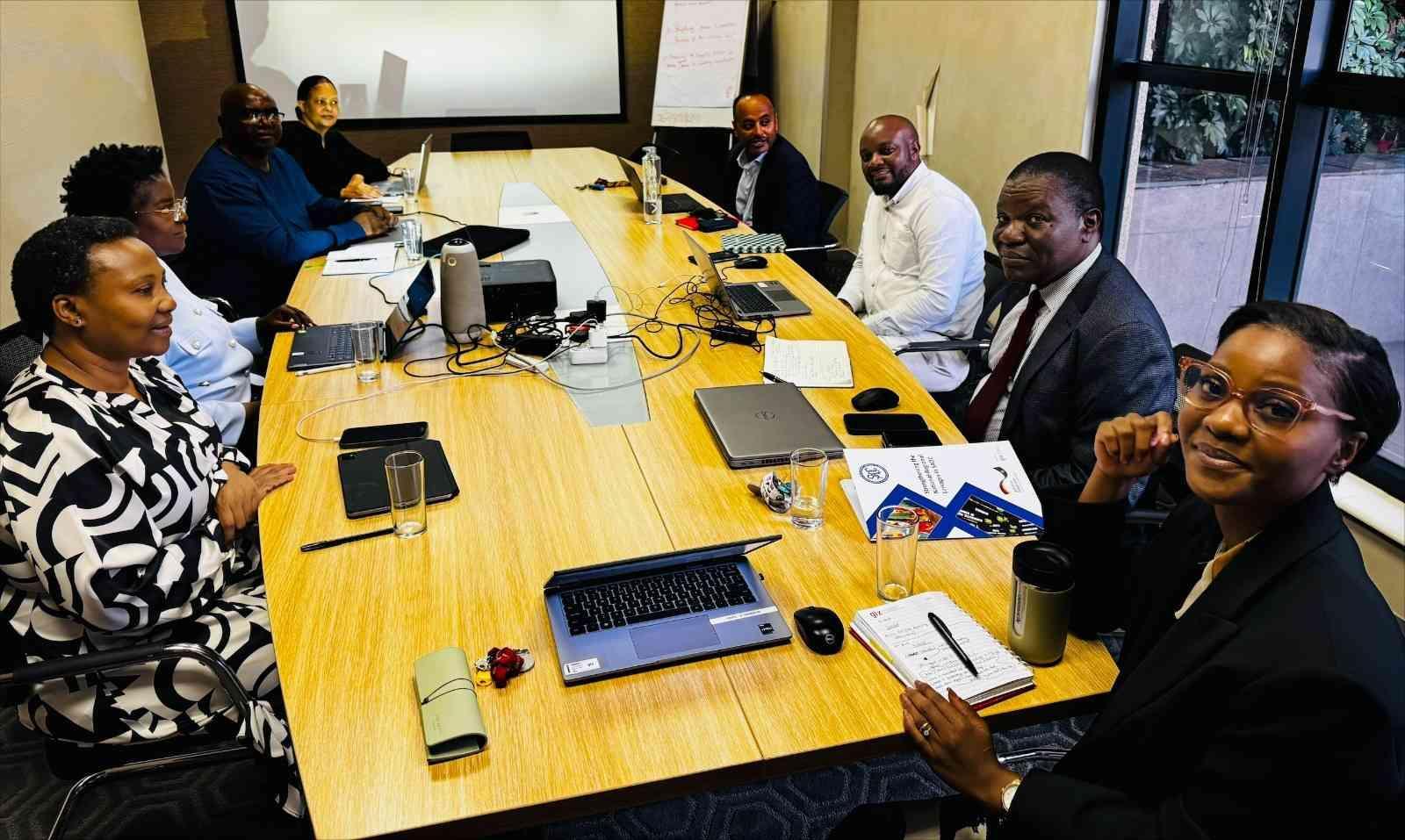
This is according to Mr Robson Chakwana, Project Manager for the Strengthening National-Regional Linkages (SNRL) Programme in SADC, in an interview following a recent review meeting between the two organisations in Botswana.
The initiative is commissioned by the Federal Government of Germany and co-financed by the International Partnership Austria through the Austrian Development Agency and the European Union.
Chakwana underscored the importance of the collaboration, which is anchored in a Memorandum of Understanding and focuses on enhancing parliamentary capacity, strengthening governance systems, and supporting the transformation of SADC PF into a regional parliament.
“GIZ partnered with the SADC Parliamentary Forum because of its strategic role in strengthening parliamentary democracy and regional integration in Southern Africa,” he said.
He added, “As the regional body that brings together national parliaments from SADC member states, SADC PF is uniquely positioned to promote democratic governance, accountability, and oversight across the region.”
Through the partnership, the cooperating partners aim to build institutional capacity, improve parliamentary processes, and promote greater transparency and citizen participation in governance. The initiative aligns with broader efforts by Germany, Austria and the European Union to support democratic institutions and foster regional cooperation.
Chakwana emphasised that strong parliaments are central to democratic systems, given their responsibility for law-making, oversight of the executive, and representation of citizens.
“Parliaments are responsible for making laws, overseeing the executive branch, representing citizens’ interests, and ensuring that government actions remain transparent and accountable,” he said.
He added that regional platforms such as SADC PF play a critical role in fostering cooperation among national legislatures.
“Through peer learning, exchange of best practices, and the promotion of common democratic standards, the Forum helps advance democratic norms across the region,” he stated.
Since its inception, the partnership has recorded notable progress. A key milestone was the conclusion of a grant agreement in September 2025, providing a mechanism to support SADC PF’s transition into a regional parliament.
“In September 2025, we successfully concluded a grant agreement that provides a mechanism for supporting SADC PF’s transformation into a regional parliament,” Chakwana said.
Members of Parliament affiliated with the Forum have also benefited from training on regional integration processes and instruments, while baseline studies have been conducted to assess institutional readiness and track progress of the project.
With two years remaining, the initiative is expected to make a significant contribution to consolidating parliamentary democracy in the SADC region.
The review meeting in Botswana reaffirmed the importance of regular engagements between partners to monitor progress and address emerging challenges.
“The significance of regular project review meetings cannot be overstated,” Chakwana said adding, “these meetings enable both parties to take stock of achievements and identify areas that require attention.”
He noted that such engagements also strengthen trust, promote joint problem-solving, and enhance innovation in project implementation.
A central pillar of the collaboration is support for the transformation of SADC PF into a fully-fledged regional parliament – an initiative Chakwana described as a major milestone for governance in Southern Africa.
“The transformation of the SADC Parliamentary Forum into a regional parliament is viewed by GIZ as a significant step toward strengthening democratic governance and regional integration within the Southern African Development Community,” he said.
According to Chakwana, a regional parliament would provide a platform for elected representatives to deliberate on regional policies and development priorities, while enhancing democratic oversight at the regional level.
Such an institution, he added, would promote transparency and accountability in regional integration processes and contribute to more coordinated policymaking across member states.
He further noted that strengthened regional parliamentary structures would yield tangible benefits for citizens, including improved representation, better oversight of regional programmes, and harmonisation of laws and policies.
This harmonisation, he said, would support cooperation in key areas such as trade, migration, security and sustainable development.
Another key component of the partnership is the development of a SADC Model Law on Rule of Law and Constitutionalism, aimed at strengthening governance frameworks across member states.
“The Model Law on Rule of Law and Constitutionalism is intended to provide a blueprint for strong, clear, agile, and responsive constitutional frameworks,” Chakwana said.
The model law is expected to guide member states in reinforcing principles such as separation of powers, judicial independence, and protection of fundamental rights.
Looking ahead, Chakwana said the partnership will prioritise advancing the model law and scaling up capacity-building initiatives for SADC PF and its institutions.
He expressed confidence that sustained collaboration between development partners and regional parliamentary bodies will help build more resilient democratic systems.
“I am very confident that partnerships like this can contribute significantly to more resilient democratic systems in Southern Africa,” he said.
“By bringing together expertise, resources, and shared commitments, collaborations between development partners and regional parliamentary bodies provide targeted support for strengthening institutional capacity, promoting good governance, and reinforcing the rule of law.”
He stressed that strong democratic institutions are essential for effective governance and sustainable development.
“When democratic institutions are robust, citizens thrive, governance improves, and regional development is strengthened,” he said.
The partnership, backed by Austria, Germany and the European Union, is expected to play a pivotal role in advancing democratic governance and supporting SADC PF’s evolution into a regional parliament.
For More News And Analysis About Zimbabwe Follow Africa-Press