
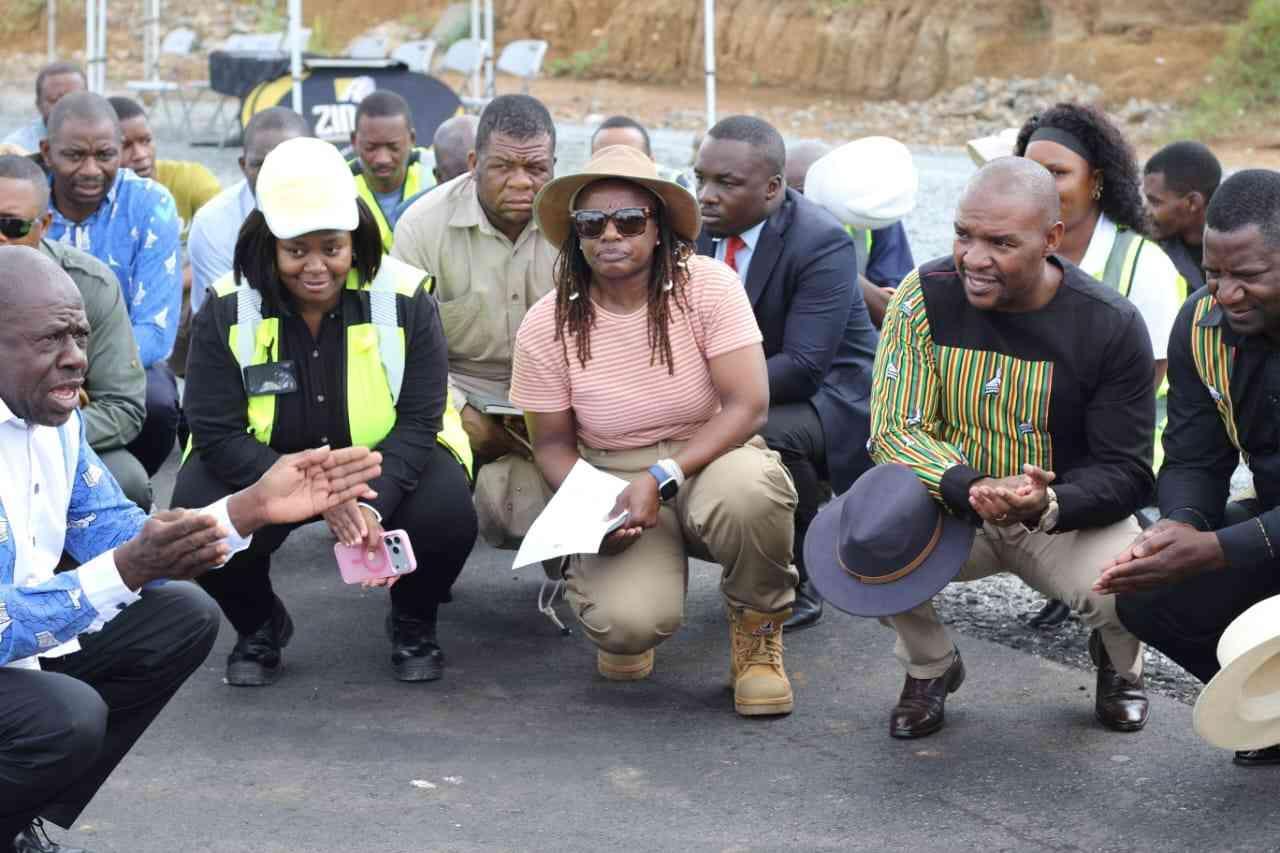
Africa-Press – Zimbabwe. Transport Minister Felix Mhona today officially opened a newly completed stretch of the Harare–Mazowe highway between Christon Bank and Blueridge, hailing it as a key step in restoring one of the country’s most vital economic corridors.
The upgraded section forms part of a broader programme to modernise highways linking Harare to productive northern regions. It is expected to ease congestion, improve road safety and strengthen the movement of goods and commuters along a route central to the country’s agricultural and commercial activity.
“We are happy to witness the opening of the newly completed stretch between Christon Bank and Blueridge, and we will continue with these works to Mazowe. We will also remove the tollgate and move it further,” Mhona said at the ceremony.
The Harare–Mazowe road is more than a commuter route. It is a strategic artery connecting the capital to farming hubs, mining districts and growth points in Mashonaland Central. For years, its deteriorating condition — marked by potholes, bottlenecks and rising accident risks — has frustrated motorists and imposed heavy costs on transport operators.
Completion of the Christon Bank–Blueridge stretch marks a visible turnaround, promising smoother travel, lower vehicle operating costs and improved logistics for businesses that depend on the corridor.
Mhona confirmed that construction will continue further north, signalling that the upgrade is part of a long-term corridor transformation rather than isolated repairs.
In a move likely to resonate with road users, he also announced that the highway’s tollgate — long criticised as a traffic choke point — will be removed and relocated further along the route.
The tollgate has drawn increasing complaints from motorists due to congestion and its proximity to Harare, often turning a key gateway into a daily bottleneck. Its relocation is expected to ease traffic flow while preserving funding for continued road development.
Zimbabwe has in recent years intensified efforts to rebuild its transport backbone after decades of underinvestment left many highways and urban roads in disrepair. Under the Emergency Road Rehabilitation Programme and other flagship highway projects, the government has prioritised major routes, including the Harare–Beitbridge highway, the Harare–Mutare road and critical feeder networks serving farming and mining regions.
Officials argue that improved infrastructure is central to economic recovery, lowering transport costs, strengthening regional trade competitiveness and attracting investment.
The government has also adopted performance-based construction models, emphasising durability and long-term maintenance over short-lived resurfacing.
“The contractor is supposed to construct the road and maintain it so that it lasts,” Mhona said, underscoring expectations that contractors deliver infrastructure built to endure.
Transport analysts note that in a landlocked economy such as Zimbabwe’s, efficient road networks are not a luxury but a foundation for growth — determining how quickly farmers reach markets, how competitively industries move goods, and how effectively the country connects to regional trade routes.
For More News And Analysis About Zimbabwe Follow Africa-Press