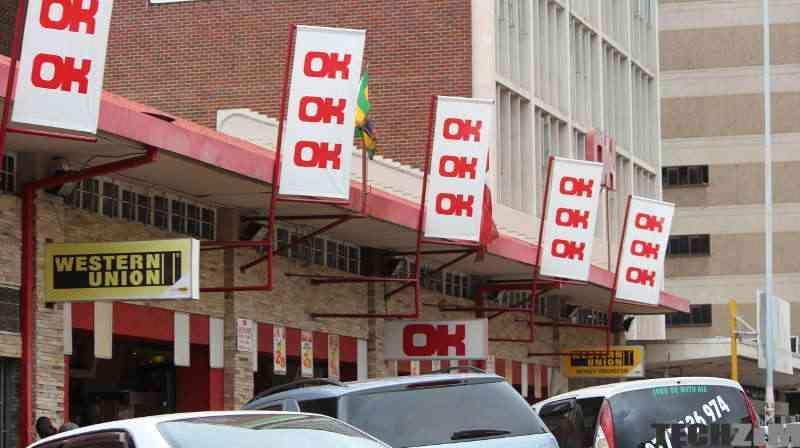
Africa-Press – Zimbabwe. RETAILER OK Zimbabwe Limited is considering selling an additional US$17,2 million worth of properties — on top of the US$10,5 million already earmarked for disposal — as it battles crippling working capital shortages and deepening liquidity pressures.
The liquidity strain has resulted in limited stock availability across key product categories, with constrained supplier trading terms preventing the retailer from rebuilding optimal inventories.
Although supplier engagements have enabled a partial resumption of deliveries, stock cover remains well below required levels, affecting trading performance. This is despite suppliers receiving 50% of their legacy debt through OK’s US$20 million capital raise.
Operational disruptions over the past two years have pushed OK’s debt burden above US$30 million, prompting the capital raise and plans to sell seven freehold properties to raise US$10,5 million — first announced in July. However, the disposal has yet to progress, with management still assessing offers.
“Property valued at US$10,5 million has been identified for disposal, and as at the end of September 2025, offers worth US$7,3 million were under management consideration. All prospective buyers are prepared to enter long-term sale-and-leaseback agreements,” OK said in a statement accompanying its half-year results to September 30, 2025.
“The group has additional owned properties worth US$17,2 million, and these may be disposed of to fund working capital requirements, should it be necessary, and subject to board approval.”
To keep shelves stocked, OK has also turned to supplier-finance schemes where third-party financiers pay suppliers if the retailer misses payment deadlines — leaving OK owing the financiers instead. The company has further secured new banking facilities.
“US$19,6 million in banking facilities have been secured, with US$12,3 million still undrawn at approval,” the company said. “Four key relationship banks have provided formal letters of support [subject to normal conditions], reinforcing confidence in continued financial backing.”
OK’s financial and operational challenges have intensified since last year, with revenue plunging due to supply-chain disruptions, exchange-rate instability, tight liquidity, weakening consumer spending, and intensifying informal-sector competition.
For the half-year to September 30, 2025, revenue collapsed by 84,07% to US$28,26 million, from US$177,43 million in the prior comparative period.
“This substantial decrease was primarily due to a steep decline in sales volumes, which declined by 82,68% from 139,88 million units in the prior period to 24,23 million units,” board chairperson Herbert Nkala said.
He attributed the decline to liquidity constraints affecting inventory replenishment, supplier disruptions, and the closure of underperforming stores under the group’s rationalisation programme.
The group posted a net loss of US$17,81 million, compared to a net profit of US$3,71 million in the same period last year.
Nkala said the deterioration was driven by several factors. “Operating costs decreased compared to the prior period; however, they remained high relative to the reduced sales for the period,” he said. Employee benefits totalled US$9,51 million, while other expenses amounted to US$11,76 million.
Utilities and backup-power costs — which reached US$5,3 million — continued to weigh heavily on operations due to higher tariffs and prolonged electricity outages across several sites.
The retailer’s balance sheet weakened further, with total assets sliding to US$92,2 million as of September, from US$101,83 million in March. The company remained technically insolvent, holding just 47 US cents for every dollar of short-term debt, down from 56 US cents in March.
Nkala said the group would focus on stabilising operations and restoring financial viability.
“Key constraints to recovery remain centred on liquidity needed for product procurement, limited stock availability due to short supplier terms, revenue levels that are still below break-even, and delays in realising property disposal proceeds,” he said.
Nkala said management remains confident that progress on property disposals will unlock the liquidity required to rebuild inventories and improve trading performance.
For More News And Analysis About Zimbabwe Follow Africa-Press