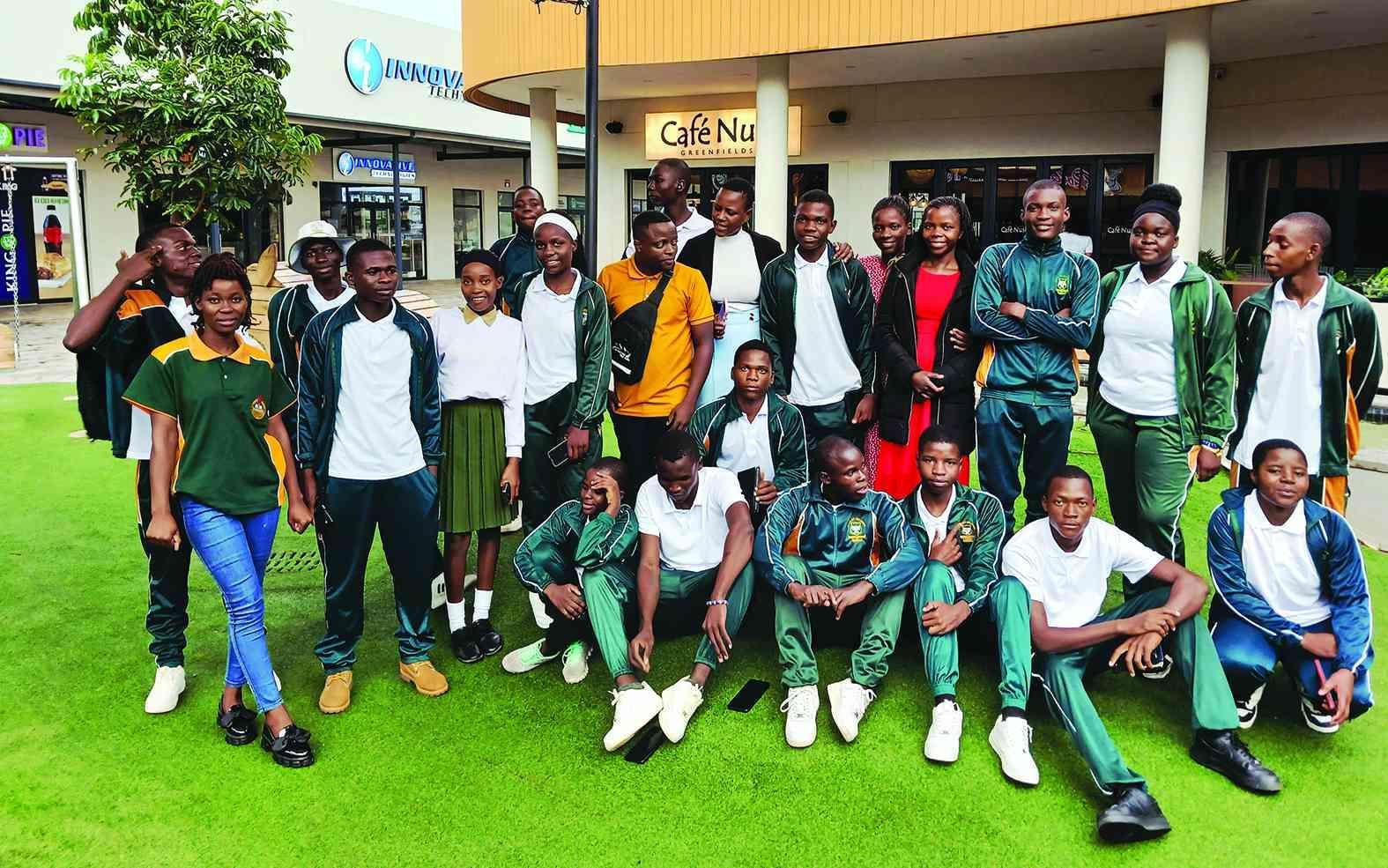
Africa-Press – Zimbabwe. WHEN learners from Kotwa Government High School travelled from the rural landscapes of Mudzi district to compete in the Harare Provincial Debate Competitions, few may have anticipated the deeper significance their journey would carry.
At first glance, their appearance in the semi-finals of a provincial debate competition may seem like a routine academic achievement.
Yet, when examined closely, it becomes a compelling narrative about rural education, leadership, national development and Zimbabwe’s aspirations under Vision 2030.
The competition, hosted at Samuel Centenary Academy in Belvedere, Harare, brought together 23 schools from across the province.
Many of the schools are urban institutions with long-standing traditions of debate culture, abundant learning resources and exposure to competitive academic environments.
For a rural school such as Kotwa Government High School to rise through the ranks and finish fourth overall was, therefore, more than a competitive milestone — it was a powerful statement about the evolving landscape of Zimbabwean education.
Rural schools in the national development conversation
Zimbabwe’s education system has long been recognised as one of the strongest foundations of the country’s social and economic development.
However, disparities between urban and rural schools have historically shaped the opportunities available to learners.
Rural institutions often operate with limited resources, fewer enrichment programmes and reduced exposure to academic competitions.
Against this backdrop, the emergence of Kotwa Government High School on a provincial debate stage offers a symbolic shift in the narrative of rural education.
It highlights a growing recognition that intellectual talent is not confined to metropolitan areas.
Rather, it exists across communities, waiting to be nurtured through opportunity and mentorship.
The success of rural learners in platforms such as debate competitions reflects a broader transformation in Zimbabwe’s educational philosophy — one that increasingly values inclusivity, critical thinking and participation in national discourse.
Debate as a tool for nation building
Debate competitions are often underestimated as extracurricular activities.
Yet, at their core, they are exercises in democratic engagement and intellectual development.
When students debate, they learn to interrogate ideas, analyse evidence, construct arguments and defend perspectives under scrutiny.
These are precisely the skills required for a generation that will contribute to Zimbabwe’s socio-economic transformation.
For learners from Kotwa Government High School, standing on a stage in the capital and engaging with peers from across the province represented more than a competition.
It was an opportunity to participate in national conversations about policy, society and development.
In this sense, debate becomes not merely an academic activity but a microcosm of civic participation.
It cultivates young citizens capable of engaging thoughtfully with the challenges facing their nation.
Education, leadership and rural transformation
The journey to the semi-finals also underscores the importance of leadership within rural educational institutions.
Schools function not only as centres of academic instruction, but also as catalysts for community transformation.
Under the leadership of Makiwa, the headmaster, Kotwa Government High School, has increasingly embraced initiatives that promote intellectual development beyond the traditional classroom environment.
The debate programme itself has been strengthened through mentorship from debate patron Justice Chengeta, of Belvedere Technical Teachers College.
Such collaborations illustrate the vital role played by partnerships between teacher training institutions and rural schools.
These relationships bring new ideas, mentorship and energy into rural classrooms, expanding opportunities for learners who might otherwise remain isolated from national academic networks.
Leadership within schools, therefore, becomes a critical factor in shaping the trajectory of rural education.
When administrators and mentors actively create platforms for learners to engage beyond textbooks, they contribute directly to the intellectual capital of their communities.
Rural education and the national economy
Zimbabwe’s ambition to achieve an upper-middle-income economy by 2030 places education at the centre of national development strategies.
Vision 2030 emphasises the importance of human capital development, innovation and inclusive economic growth.
Within this framework, rural schools hold a strategic position.
More than half of Zimbabwe’s population resides in rural areas.
The intellectual and professional potential of these communities, therefore, represents a significant component of the country’s future workforce.
When rural learners gain exposure to critical thinking platforms such as debates, they develop competencies that extend far beyond academic performance.
They learn communication, leadership, negotiation and analytical reasoning — skills that are increasingly essential in modern economies.
Thus, the presence of Kotwa Government High School in the semi-finals of a provincial debate competition symbolises more than educational participation.
It reflects the gradual integration of rural talent into national intellectual spaces.
In economic terms, such integration strengthens the foundation for inclusive development.
Changing the narrative of rural schools
For decades, public perceptions of rural schools have often been shaped by narratives of limitation — limited infrastructure, limited resources, limited opportunities.
Yet stories like that of Kotwa Government High School challenge these assumptions.
When learners from Mudzi stand confidently in debate halls in Harare, they redefine what rural education represents.
They demonstrate that excellence is not exclusively the product of urban privilege but can emerge wherever determination and mentorship exist.
The significance of this narrative cannot be overstated.
Young learners in rural districts often need visible examples of success that affirm their potential.
Achievements in competitions provide precisely that form of inspiration.
They send a message to younger students: participation is possible, excellence is attainable and rural identity is not a barrier to intellectual achievement.
The broader implications for education policy
As Zimbabwe continues to strengthen its education system, stories like this one provide valuable insights for policymakers.
First, they highlight the importance of supporting extracurricular intellectual activities in rural schools.
Debate clubs, science fairs, innovation hubs and academic competitions all play critical roles in developing well-rounded learners.
Second, they underscore the importance of mentorship networks that connect rural institutions with teacher training colleges and universities.
Finally, they reveal the transformative potential of exposure.
When rural learners travel beyond their districts to engage with peers across the country, they broaden their perspectives and aspirations.
These experiences cultivate confidence, ambition and resilience — qualities essential for the next generation of national leaders.
A symbol of possibility
The semi-final finish of Kotwa Government High School at the Harare Provincial Debate Competitions may not have produced a trophy, but it produced something equally valuable: a narrative of possibility.
It reminded observers that intellectual potential is widely distributed across Zimbabwe’s landscapes — from bustling cities to remote rural communities.
More importantly, it demonstrated that when leadership, mentorship and opportunity converge, rural schools can become powerful contributors to the nation’s intellectual and economic future.
As Zimbabwe advances towards Vision 2030, the voices of learners from places like Mudzi district will increasingly form part of the national conversation.
And if the performance of Kotwa Government High School is any indication, those voices are ready — not only to participate, but to lead.
Justice Chengeta Jr, is an academic writer, teacher by profession and debate patron at Kotwa Government High School.
Coordinated by Lovemore Kadenge, an independent consultant, managing consultant of Zawale Consultants (Private) Limited, past president of the Zimbabwe Economics Society (ZES) and past president of the Chartered governance & Accountancy Institute in Zimbabwe (CGAIZ). Email- [email protected] or Mobile No. +263 772 382 852
Harare, 24/03/2026
For More News And Analysis About Zimbabwe Follow Africa-Press