
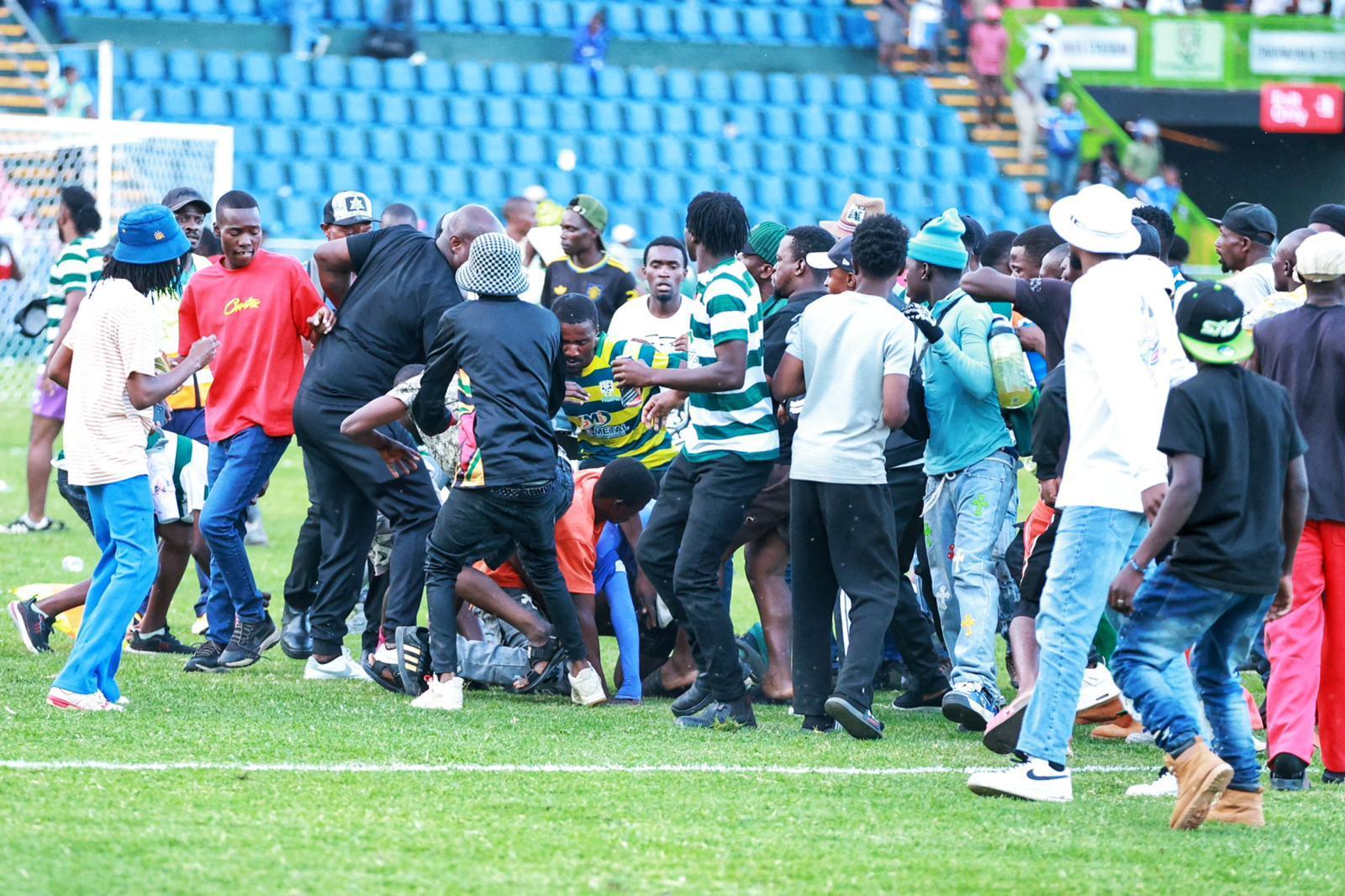
The Zimbabwe Football Association (ZIFA) has expressed concern over the violence and misconduct that caused Sunday’s Castle Lager Premier Soccer League (PSL) match between Hardrock and Dynamos to be abandoned at Chahwanda Stadium.
In a statement on Monday, 25 May, the association said it strongly condemns all violence, intimidation and disorder at football matches.
“Football must remain a safe, family-friendly and unifying space for players, officials, supporters, partners and all stakeholders who continue to invest their time, resources and passion into the growth of the game.
“The Association supports the Premier Soccer League’s decision to await the full reports from the match officials and the clubs involved before the matter is determined in line with the applicable rules and regulations.
‘It is important that due process is followed and that those found responsible for any acts of misconduct face the appropriate sanctions.
“ZIFA wishes to make it clear that there is no place for violence in Zimbabwean football. The progress being made to rebuild confidence in the national game must be protected by all who love football.
“Supporters are encouraged to back their teams with passion, pride and discipline, while clubs are reminded of their responsibility to help promote order, safety and respect at match venues.
“The Association will continue working with the PSL, clubs, security authorities and other football stakeholders to strengthen matchday safety and ensure that football remains a source of national unity, entertainment and pride.”
ZIFA appealed for calm and urged all stakeholders to let the relevant processes take their course.
Related:
Hardrock Condemns Chahwanda Violence As Club Pledges Full Cooperation With Probe
PSL Hails 25,000-strong Harare Derby Crowd, Warns Fans Over Misconduct