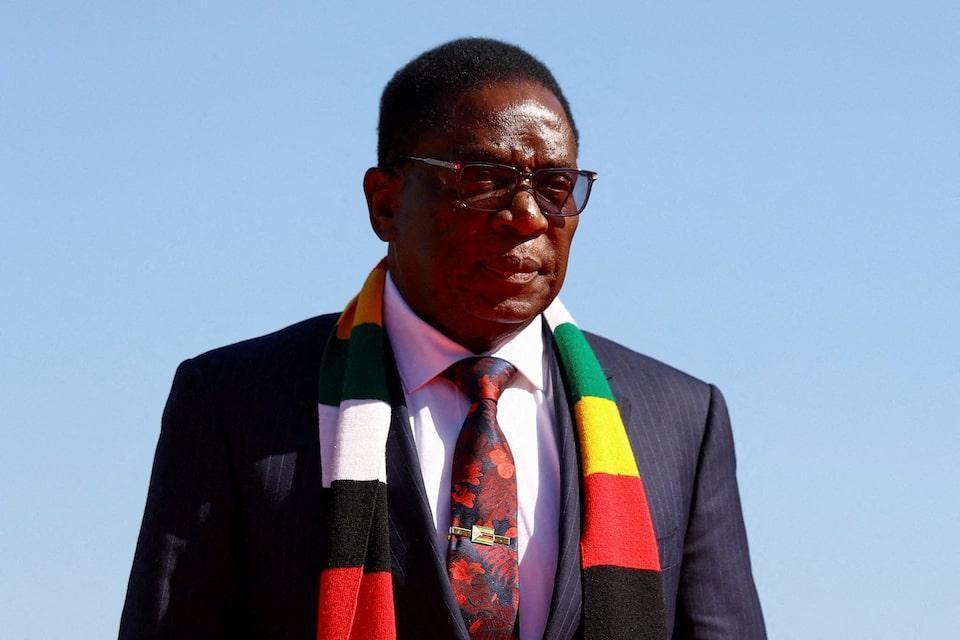
Africa-Press – Zimbabwe. The House of Assembly in Zimbabwe has approved a bill to extend the presidential term from five to seven years, allowing President Emmerson Mnangagwa to remain in power until 2030.
Supporters of the presidential term extension within the ruling ZANU-PF party argue that it will enhance stability, reduce election costs, and enable long-term economic planning.
Their campaign has faced unusual strong opposition from the public and some veterans of the independence war, who have turned against their former ally, accusing him of seizing power.
More than 200 members voted in favor of the bill, surpassing the two-thirds threshold required to amend the constitution. The bill also abolishes direct presidential elections, allowing future presidents to be elected by parliament.
Mnangagwa, aged 83, came to power in 2017 after the ousting of long-time President Robert Mugabe, with military support, and won controversial elections in 2018 and 2023.
The bill is now referred to the Senate, where it is also expected to gain approval before being signed by the president. This represents the culmination of a campaign by the ruling ZANU-PF party, which has been in power since independence in 1980, to amend the constitution and extend the presidential term, a plan that received cabinet approval in February.
The president had previously described himself as a constitutionalist and pledged to respect presidential term limits. During the vote on Thursday, the Speaker of the House announced that 216 members supported the legislation, exceeding the required 187 votes to amend the constitution. In contrast, 42 members voted against it.
The amendment includes several provisions:
– Abolishing presidential elections held since 1990
– Electing the next president by parliament
– Extending the terms of parliament and the presidency from five to seven years
– Postponing the scheduled parliamentary elections from 2028 to 2030
Mnangagwa, whose second and final term ends in 2028, will remain in office until 2030.
Opposition parties, civil society organizations, and constitutional law experts have argued that these fundamental changes should be put to a national referendum rather than being passed solely through parliament.
Initially, supporters welcomed Mnangagwa as a reformer who would restore economic growth and democratic governance, but his presidency has been marked by economic challenges, disputed elections, and increasing concerns about the decline of democracy.
The recent constitutional amendments have intensified the debate over Zimbabwe’s political future, with opponents warning that these changes could weaken democratic accountability, while supporters emphasize their necessity to ensure continuity and stability.
A new constitution adopted in 2013 set the presidential term limit to two terms maximum and stipulated that any move to extend this term requires voter approval in a referendum, and that the current president cannot benefit from any extension without voter approval in a second referendum. However, the country’s constitutional court rejected a legal challenge on Wednesday aimed at preventing the bill’s passage.