Africa-Press – Angola. The Secretary of State for Public Administration stated that the Civil Service Basic Law will reinforce the rights and guarantees of civil servants, introducing the figure of the employment contract as an exception regime to take place only in extraordinary situations for the performance of transitory or occasional needs.
Vânio Americano highlighted that the diploma grants to the employee who temporarily exercises functions in a place or position different from the one in which he is employed, the faculty of opting for the remuneration status due at the origin is recognized.
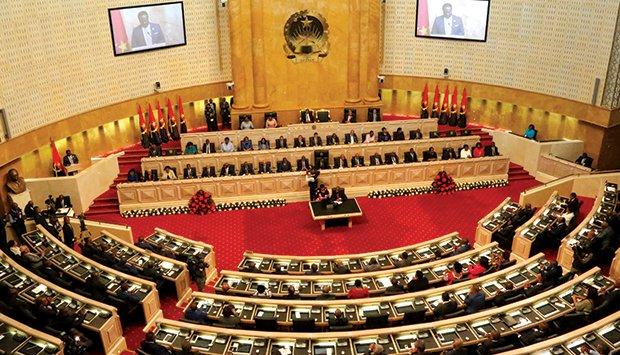
The Basic Law under analysis, he said, reintroduces appointment as the rule for entering the Civil Service, reduces the probationary period from five to one year, as well as prohibits the provision of evidence by contract. The Secretary of State for Public Administration, Vânio Americano, who explained to the deputies at the Monday session, stressed that the Civil Service is governed, among others, by the principles of public interest, equality, legality, justice, proportionality, impartiality, accountability and administrative probity.
The diploma, with 13 chapters and 129 articles, has already received approval in the specialty of four chapters and 37 articles, also prohibits the administrative transition of hired personnel to the permanent staff and eliminates the maximum age of 35 years. Accordingly, it extends the expiry period of the public employment contract by up to 24 months, ceasing, without any formality, the processing of wages and other financial or property benefits at the expense of the State.
In the domain of the Civil Service disciplinary regime, the diploma eliminates the disciplinary penalty of a fine and introduces the disciplinary penalty of temporary salary reduction, between one to six months, the reduction cannot exceed 20% of the basic salary, as well as establishes that the amount of the discounted salary must be deposited in favor of the employee in the Social Security account.
It also introduces the expiry period of 20 days, after knowledge of the infraction and the person responsible for the opening of the disciplinary process and the statute of limitations for the disciplinary infraction from one year to six months.
Public function
The deputies to the National Assembly also addressed the criteria for entry into the Civil Service, with an impact on internal and external public tenders.
The Secretary of State for Public Administration, Vânio Americano, clarified that the public service entry contest aims to fill vacancies for the early career category, which can be internal or external. The internal competition covers employees who have raised their academic level, during the course of their work, and has the power to raise their category.
“The access contest is intended to fill a vacancy in the immediately superior category of the same career, and the transition from one career to the other occurs only in the internal competition”, he said.
Regarding the external competition, Vânio Americano reiterated that it involves citizens with no ties to the Public Administration body or service, which triggers the opening of the competition. The diploma under analysis dictates that the admission of personnel to the public service compulsorily follows a public tender, under the terms of a procedure defined in a specific, simplified, objective and transparent regulation.
The recruitment and selection of personnel obeys the principles of freedom of application, equality of conditions, of opportunity, dissemination of the methods and tests to be used, the classification system, objectivity of the evaluation methods, neutrality and rotation of the jury, as well as the fair and fair competition.
Courts of Appeal establish a list of judges
The deputies specifically approved the amendment to the Organic Law of Courts of Appeal, with a view to establishing the framework of judges of the courts in disagreement with the number of judges of judges in effect, appointed under of Resolution of the Superior Council of the Judiciary.
The diploma states that the research subsidy awarded to judges must not exceed 50 percent of their base salary, without prejudice to their remuneration.
The Courts of Appeal are essentially courts of appeal, which, in the case of judgment, are constituted as collective courts formed by three judges. With the approval of the diploma, the Court of Appeal of Luanda, instead of having 21 judges, will now have 31, while that of Benguela goes from 19 to 24, that of Huíla maintains 17, that of Saurimo de 17 passes to 15 and that of Uíge from 17 passes to 15 judges.
For More News And Analysis About Angola Follow Africa-Press