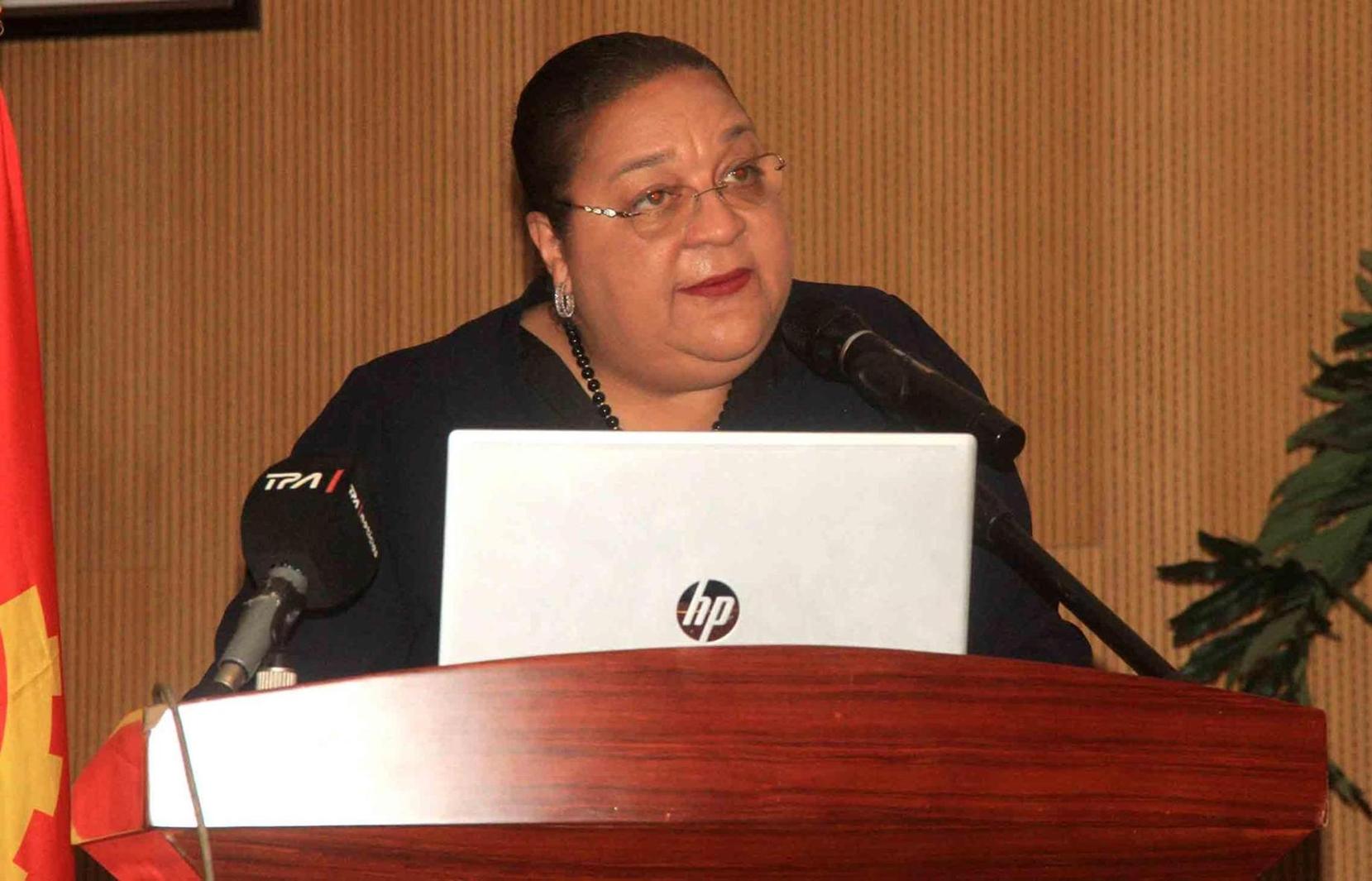
Africa-Press – Angola. The National Directorate of Social Security (DNSS) currently controls 18 mutual associations across the country, said Thursday the Minister of Public Administration, Labor and Social Security, Teresa Rodrigues Dias.
According to the minister, who was speaking at a seminar on the mutual sector and complementary social protection, many of these associations date back to the colonial era, and some are in the process of liquidation, with a large asset universe.
Mutualist associations are designated legal persons governed by private law, of an associative nature, with a limited number of members and equity and variable funds, which may have an indefinite duration.
According to the minister, at the moment, the DNSS has 17 requests for the registration of new associations, which are pending.
“These associations were practically dormant, but now, with the new socio-economic scenario, it is increasingly dynamic. This has put the effectiveness of social security systems to the test, fundamentally with regard to sustainability and its impact on society” , expressed the ruler.
In this sense, he continued, the limitation of traditional social protection systems has conditioned the expansion of coverage of various risks associated with the modernization and competitiveness of the labor market.
Teresa Rodrigues Dias explained that mutualism is configured as an economic and social doctrine, which includes a systematized set of ideas, which reflects attitudes and behaviors of a social movement, with mechanisms and structured organization for a common purpose.
It should be noted that mutual societies are non-profit institutions, which means that their first and last concern is to maximize the well-being of their members.
The seminar served to present Presidential Decree 32/22 February, which establishes the legal regime applicable to the creation, organization and extinction of mutualist associations and their regulations.
“We have no doubt that in social institutions and in particular in mutualist associations, there is a high potential for instruments of innovation, combating poverty, social exclusion and unemployment, which are capable of creating solutions to diverse social needs, however, not yet found answers from public services or from the insurance sector”.
“It is up to us, therefore, to redesign the “path of complementary social protection” and to affirm ourselves as indispensable partners in the reform processes
of this subsystem, giving greater focus to issues related to social security and health”, he concluded.
For More News And Analysis About Angola Follow Africa-Press