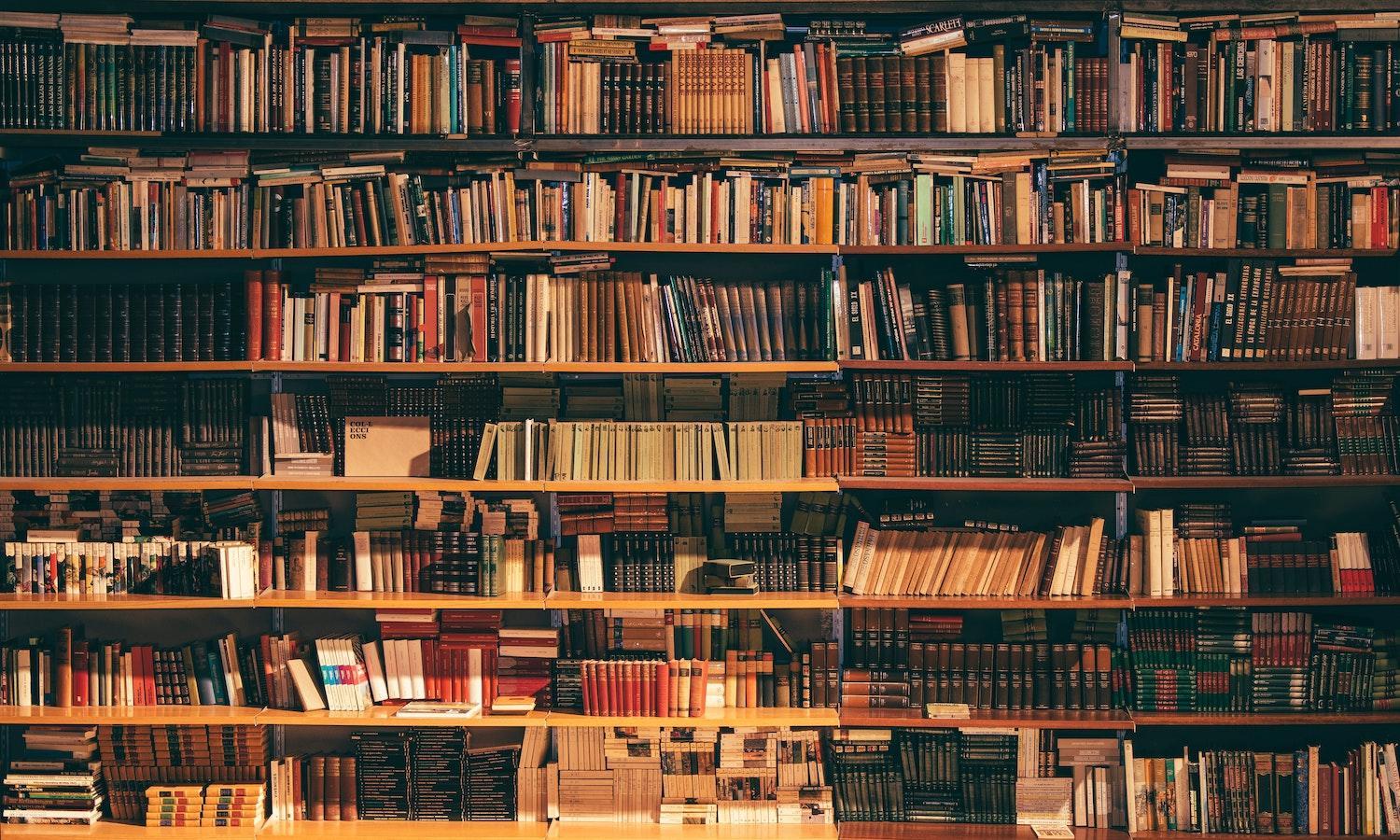
Africa-Press – Angola. According to data, there are more than 70,000 libraries worldwide. In Angola, most of those that exist are struggling with various problems, such as, for example, outdated collection or lack of digitization. In support of World Libraries Day, which is being celebrated, press has toured various libraries and media libraries in the country, articles that have been published for almost a week and will continue to be published, so that the reader can get to know the libraries that we (don’t) have .
World Libraries Day. This date aims to praise the importance of reading in people’s education and training. The UNESCO manifesto on public libraries refers to them as a gateway to knowledge that is central to the cultural development of the individual and of all social groups.
Therefore, today is the ideal time to go to the library and borrow a book or else share the literary work of your life, buy or start assembling your home library.
To commemorate the event, in several countries, activities are carried out to promote reading and cultural development. Among the initiatives, we highlight the itinerant mobile libraries, which allow free access to books, magazines and newspapers in public places, reading sessions and meetings between authors and readers.
In Angola, in particular, various community projects have made it possible to bring books to readers in the most varied parts of the city of Luanda and beyond.
In improvised places, many young people have been very creative in the face of adversity. They set up tables, sometimes improvised, in open spaces, such as under bridges and pedestrian walkways, and make books available to anyone who wants to increase their knowledge.
The Camões Library/Centro Cultural Português, located in Luanda, in the headquarters of the Embassy of Portugal, for example, receives, on average, 60 citizens interested in consulting the variety of books available.
Serving the Angolan public and beyond for 27 years, the library mostly receives students from schools around the Embassy of Portugal, whose age group ranges from 12 to 40 years old.
With a collection of more than six thousand books, the library’s collection is organized according to the Universal Decimal Classification (CDU) and also consists of various types of documents, mostly monographs and thematic dossiers.
The Camões Library consists of a reading room measuring approximately 300 square meters and with capacity for 60 readers.
The director of the Cultural Center said that, initially, upon its inauguration, the library’s immediate objective was to support the activities of a Cultural Center and, more generally, to help in the dissemination of language and culture. portuguese.
“Over time, its format has changed, becoming closer to that of a school library, thus seeking to adapt to the public it serves, as well as to respond to the rapid changes in the country and, in particular, , from the capital”, explained Ana Maneira, adding that two thirds of the collections that make up its collection are aimed at that purpose and at the student public.
Projects
For two decades, the Camões Instituto Português has invested in new information technologies.
According to the director of the Cultural Centre, in this sense, the library has an Internet portal (www.instituto-camoes), where it provides a distance learning platform and a growing number of contents aimed at the dissemination of Portuguese culture and teaching of language.
In terms of technology, the library has eight computers with Internet access. According to Ana Maneira, with the supervision of employees, consultation of other sites and contents that fall within the library’s mission is allowed.
It also has collections on physical support (paper), mostly school, and provides users with resources that meet their learning needs. Access to the services of the Camões Library, he added, is free. “As demand is fundamentally of a school nature, the library has been sensitive to teachers or students”.
Challenges
Despite the difficulties, such as the scarce number of computers, there is an effort to serve more and better, seeking, in this way, to contribute to the educational success of all students who arrive there, as well as to update the necessary information and pedagogical support. to the learning process.
“In a complementary way, efforts have been made to attract another public and make the library accessible to parents and teachers, through visits and guided consultations”, said Ana Maneira.
He explained that, through reader surveys, concerns have been recorded regarding the collection, opening hours and the work of employees. According to Ana Maneira, the community that frequents the library is mostly made up of students, from secondary and higher education, coming from less favored classes and with many difficulties.
reference works
The Camões Library has, in its collection, 100 works, including dictionaries, grammar books, medical records and encyclopedias, 450 related to Philosophy and Psychology, 20 on Religion and Theology, 1,680 on Social Sciences (Sociology, Economics and Law), 700 on Mathematics and Natural Sciences, 500 on Applied Sciences, Medicine and Technology, 150 on Art and Sport, 2,000 on Languages, Linguistics and Literature and 500 on Geography, History and Biographies.
The existing periodical publications are limited to Press, with a fortnightly periodicity, and the irregular reception of some weeklies.
According to Ana Maneira, bibliographic requests are directed towards school subjects and, almost always, at the request or suggestion of teachers. She stressed that, in recent times, there has been an increasing demand for Lusophone literature, history and culture of Angola.
In addition to the collections of the Camões Instituto Português, part of the documents and materials in the bookshop’s collection come from donations from individuals or institutions, such as the Gulbenkian Foundation, Banco de Fomento de Angola (BFA) and the company DST.
The library has also helped in the creation of bibliographies, training, small libraries, especially school ones, inside and outside Luanda. It also has, within the scope of its specificity, the policy for lending works of literature.
Ana Maneira made it known that the technical books are the most requested, and can be consulted in person, due to the reduced number of copies.
access to the enclosure
All users have equal access, with no discrimination of any kind. Its use is shaped by the internal regulation. The library’s mission is to disseminate the Portuguese language and cultures throughout the world.
It is incumbent upon the library to establish and carry out all the operations of the so-called documentary circuit, namely the collection of information through the provision of publications, as well as keeping documentary funds up to date, taking into account the specific needs of its user public.
According to the director of the Portuguese Cultural Centre, the library should have an annual budget for the exclusive purpose of updating its bibliographic collection.
Without advancing values, he explained that the commitment will serve for the permanent development of ties of cooperation and exchange with similar institutions, as well as the acquisition of publications.
It should also serve for document processing, registering, cataloguing, analyzing and indexing the entire library collection, such as monographs, periodicals and other materials. Computerizing the bibliography, developing, encouraging and monitoring bibliographic research with users through new sources of information, disseminating bibliographic data and information on the activities of the Instituto Camões are other challenges for the library.
For More News And Analysis About Angola Follow Africa-Press