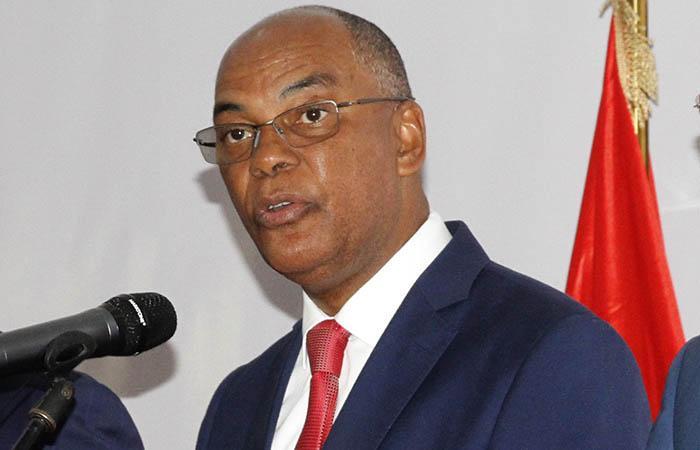
Africa-Press – Angola. The president of UNITA, Adalberto Costa Júnior, defended, this Monday, the increase of economic policies, to encourage domestic production, promote entrepreneurship and diversify the productive sectors.
Speaking at a press conference on the country’s current economic and financial situation, he said it was time to adopt collaborative strategies involving the public and private sectors, civil society and economic experts.
The politician understands that only with a constructive dialogue and
a long-term vision “will it be possible to overcome the crisis and build a prosperous and sustainable Angola”.
Therefore, he considered it necessary to restructure and rebuild
the national economy, “placing people at the center of policies, in order to guarantee a dignified future for all”.
Adalberto Costa Júnior understands that a reorientation of public expenditure towards infrastructure, support for food production, mainly agriculture, livestock and the food processing industry, education and health would have a positive impact on long-term economic growth.
He defended the reduction of public expenditure to enable
tax relief and the creation of a competitive environment in the public procurement market, with a focus on improving transparency, “essential to attract foreign investment and increase domestic demand”.
In his presentation, he once again recommended an audit of Public Debt, Sonangol, Banco de Poupança e Crédito (BPC), Banco Espírito Santo Angola (BESA), Fundo Soberano and TAAG (flagship company).
He noted that government leaders have a responsibility to protect the interests of the Angolan people and ensure transparent and accountable management of the country’s resources.
The UNITA leader also requested explanations from the Executive on the destination given to the “surplus of US$6.3 billion”, referring to the years 2021 and 2022.
Last week, the Angolan Executive announced, among other measures, the reduction of Value Added Tax (VAT) from 14 to 7% on food goods, starting in January 2024.
This government measure is joined by others related to the increase in national production, through financial support for production, tax simplification and improvement of the business environment.
VAT was implemented for the first time on 1 July 2019, with an initial and single rate of 14 percent, for all imports of goods and large taxpayers with revenues in excess of 15 million kwanzas, as well as public companies of large dimension and banking financial institutions.
For More News And Analysis About Angola Follow Africa-Press