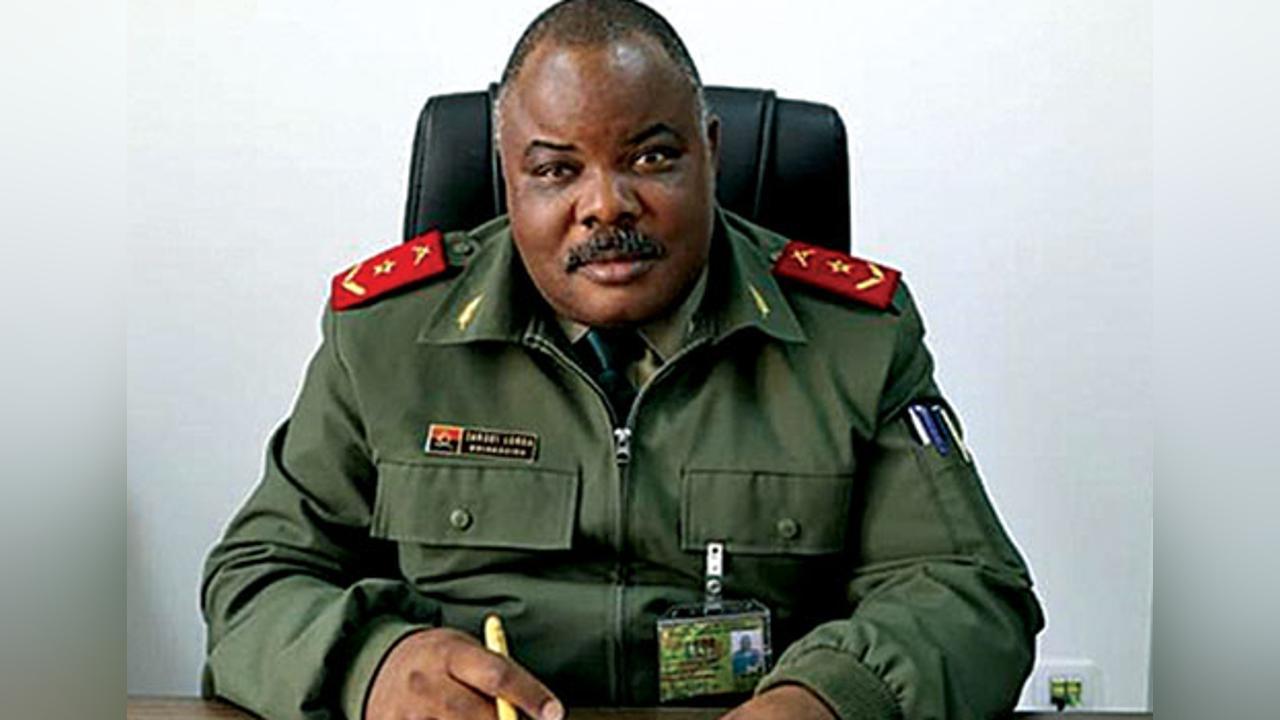
Africa-Press – Angola. The revolt of peasants in the Baixa de Cassanje region against the Portuguese colonial regime, on January 4, 1961, in the former Portuguese-Belgian company of Cotonang, in the province of Malanje, as well as the beginning of the armed struggle, on February 4, 1961. same year, promoted the achievement of National Independence, on November 11, 1975, said, Wednesday, the national director of Preservation of the Military Historical Legacy of the Ministry of National Defense and Veterans of the Fatherland, Brigadier Francisco Hebo Zangui Longa “son of Most High.”
In an interview, the national director of Preservation of Military Historical Legacy said that the 4th of January 1961 was the first rebellion against the Portuguese colonial regime, started by rural workers from Companhia Geral de Algodão de Angola (COTONANG), a Angolan cotton producing company, with Belgian participation.
What determined the revolt, he stressed, was the obligation imposed by the colonial regime to produce cotton crops in the territory of Baixa de Cassanje, in the former Imbangala Kingdom of Cassanje.
“It was the mandatory cultivation of cotton, in a community of peasants who, until then, lived off agricultural production”, explained the head of the Ministry of National Defense and Veterans of the Homeland.
“The workers in Baixa de Cassanje were citizens considered indigenous and who, in addition to handing over a large part of their cotton collection to the colonial authorities, were obliged to pay a collection tax”, he said.
Crime against humanity
Francisco Hebo Zangui Longa, “son of the Most High” recalled that the massacres of January 4, 1961, could be considered a crime against humanity.
“The violent massacre perpetrated by the Portuguese colonial army against the populations of the region that covers the provinces of Malanje and Lunda-Norte, with Nepalm bombs, killed defenseless peasants who were demanding a fair price for the sale of cotton”, he explained.
Thousands of people, including children, women and the elderly, were victims of repression by the Portuguese army. Having highlighted that with that barbaric act, the Angolan people understood that the time had come to take action to free themselves from colonial oppression.
Befitting tribute
The Army brigadier recalled that to pay tribute to the date, several activities are scheduled throughout the country, with emphasis on lectures, political, cultural, sporting and recreational activities, conferences, radio and television debates , interviews, guided visits to historical sites, gatherings and gatherings with former combatants and veterans of the country and families of fallen or perished combatants.
Francisco Hebo Zangui Longa “son of the Most High” reported that among those honored, the name of the nationalist Rosário Neto stands out, one of the great promoters and organizers of the peasants’ revolt in Baixa de Cassanje.
The list also includes Francisco António Mariano and soba Teka Dya Kinda, without forgetting João Francisco Pedro “Karitete” and Filipe Ndala, known as soba Kassanje.
Brigadier Francisco Hebo Zangui Longa, “son of the Most High”, highlighted that the 4th of January 1961 was in honor of the thousands of Angolans massacred on the same date, in 1959, in Leopoldville, now Kinshasa, capital of the Democratic Republic of Congo, which from of that territory, they carried out political actions against the Portuguese colonial occupation.
“Son of the Most High” also considered that the 4th of January 1961 was an action of Angolan nationalism, without political colors or regional, linguistic, religious or racial distinction, but rather a movement of all those who love the country, in order to live in diversity.
“Today, the country is experiencing unique moments of effective peace, after long years of a fratricidal war that ended with neither losers nor winners. The bitter lessons resulting from the fateful armed conflict must keep us united, around a common objective that comes down to sustainable development from Cabinda to Cunene and from Lobito to Luau”, he appealed.
Brief history
The province of Malanje was, in colonial times, the largest cotton producer in the country. Baixa de Cassanje, a region that encompasses the municipalities of Caombo, Marimba, Kunda-dya-Base, Quela and Massango, was notable for the quantity and quality of cotton it placed on the international market.
Until 1961, the region was inhabited by 150 thousand people and the cotton fields had almost 85 thousand farmers and their families, some from other areas, forced to cultivate and sell cotton to Portuguese traders.
According to historians, the revolt in Baixa de Cassanje began in October 1960, when peasants refused to receive seeds to plant in January.
On January 4th, the Cassanje Revolt took place, with the participation of thousands of workers in the cotton fields of the Portuguese-Belgian company Cotonang.
The harsh working and living conditions and constant repression were the main factors that gave rise to the uprising. The workers decided to go on strike and armed themselves with machetes and canhangulos (handmade shotguns). In response, the Portuguese air force launched incendiary bombs causing thousands of deaths.
Memorial in downtown Cassanje
Regarding the construction of a Memorial in Baixa de Cassanje, the national director of Preservation of the Military Historical Legacy said that the studies are well advanced and as soon as the estimated budgets are available, the long-awaited Memorial will be built, in honor to the Angolan nationalists who fell on January 4, 1961.
The construction of the Memorial, he added, is safeguarded in Order No. 0718/2021, of September 13, issued by the Minister of National Defense, Former Combatants and Veterans of the Fatherland, which guides the survey of places and sites of historical-military interest, to Monuments and Memorials are erected in honor of national or foreign figures who gave their best in favor of National Independence and post-Independence.
Celebrations
This year, the commemorations of the 63rd anniversary of the massacre perpetrated by the Portuguese colonial army in Baixa de Cassanje take place under the motto “With the spirit of the 4th of January, Former Combatants united towards the Development of the country”. The central event takes place today, in the municipality of Xá-Muteba, province of Lunda-Norte.
JORNALDEANGOLA
For More News And Analysis About Angola Follow Africa-Press