Africa-Press – Angola. From the city of Cabinda to Belize, via National Road no 100, the Chiloango River, which originates in the Democratic Republic of Congo (DRC), flows into Cabinda and delimits the extensive border with Angola, welcomes us warmly.
We cross the bridge over the navigable flow, from the mouth (Atlantic Ocean), in the municipality of Cacongo, to the confluence with the Luali river, at the entrance to Alto Maiombe.
Before and during the colonial period, the Chiloango River had great importance in the development of the interior, in relation to the transport of people and goods, especially with regard to the flow of wood extracted from the Maiombe forest, before the construction of the road networks.
Along the way, you can see a group of women washing clothes along the river, while boys and girls bathe or do acrobatics in the water.
They disappear underwater for a few minutes and appear smiling on the other side of the river bank. They are skilled. They return to the starting point, moving only their legs.
Silence sets in. We cautiously passed the Muabi mountain range, with tight curves, dense forests and banks. 15 years ago, it was impossible to pass there, due to ambushes set up by former rebel troops.
At that time, no one dared to pass through the Muabi mountain range. Travelers were greeted with gunfire. Along the road, traces of the war are still visible. The military bases, made from cargo containers, are in a state of abandonment.
We also observed carcasses of vehicles, various means and military equipment used during the fighting, which were lost in the tall grass. During the route, children and young people walk freely. They go to school, to the fields and play football.
The older ones continue to work hard. They work the land in a true climate of peace. They whistle loudly. They sing hymns and perform various songs while handling hoes, files and shovels.
In Belize, the signs of peace are reflected in the smiles and body language of the residents along the road that connects the city of Cabinda to the municipality, which is approximately 180 kilometers away.
Arrival in Belize
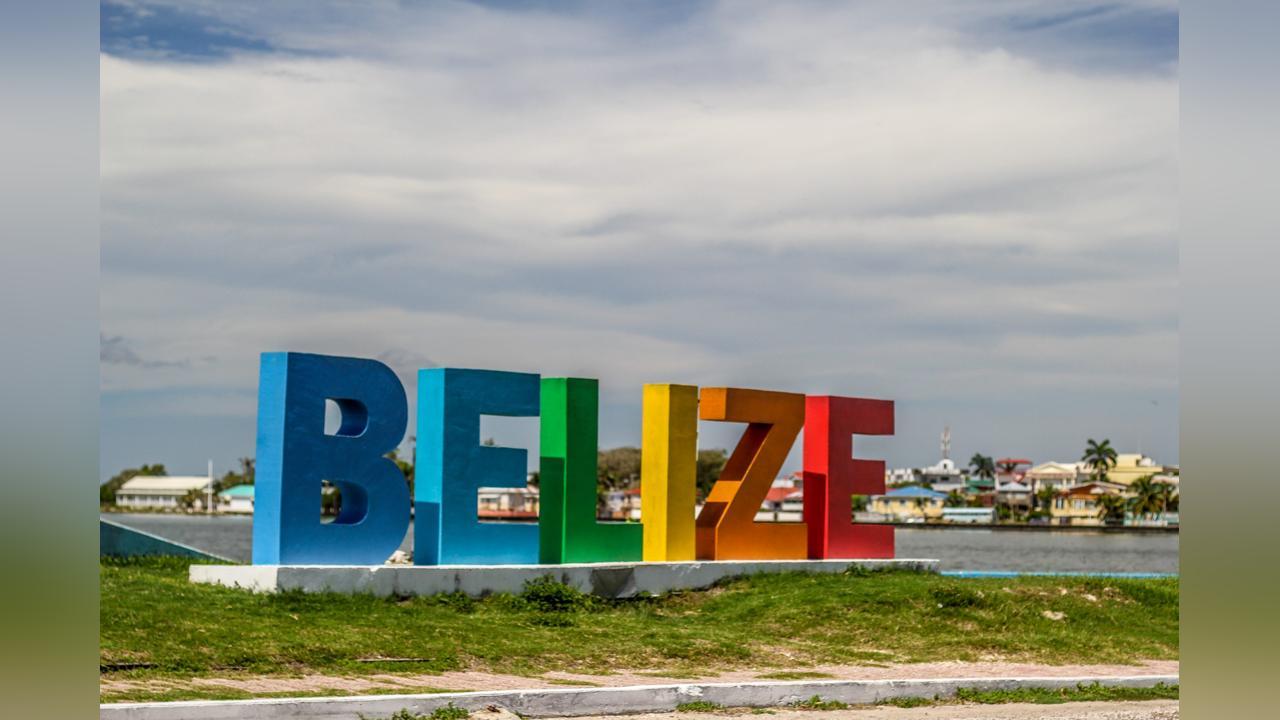
Upon arrival at the town of Belize, the breeze welcomes us. You can smell the pure smell of nature and hear the soothing sound of birds. We are in the northernmost municipality in the country.
Belize has 1,600 square kilometers and is bordered, to the North and East, by the Republic of Congo, to the South by the Democratic Republic of Congo (DRC), and to the West by the municipality of Buco-Zau. In addition to the main commune, which also retains the name Belize, the municipality is also made up of the communes of Luali and Miconje. Before Diogo Cão’s caravels, Belize was part of the famous Loango, the kingdom that, along with Cacongo and Ngoio, came together to form the current territory of Cabinda.
From an economic point of view, the locality is essentially agricultural, with a predominance of the cultivation of cassava, bananas, sweet potatoes, coffee, peanuts (ginguba), beans and gindungo, in addition to subsistence hunting and the raising of animals and birds such as chickens. , ducks, goats and pigs, which form the basis of the population’s diet.
In the village, there are many problems. The municipal administrator, Suzana de Abreu, recognizes, however, that some existing social infrastructures are in a marked level of degradation.
Without restaurants, movie theaters, theater spaces or multipurpose fields, young people make do as best they can, in bare fields and spaces adapted to carry out cultural activities and “food and drink” services, so as not to watch time pass in However, the energy, supplied 24/24, and the Internet signal “up to date” minimize some concerns.
300 residences
As part of the Integrated Municipal Intervention Plan (PIIM), the town gained a new image, with the construction of 300 homes, which will help improve the living conditions of public employees, health units and school establishments.
According to the administrator, accommodation conditions for National Police personnel are also being improved, with the construction of a new police station for the operation of the Municipal Command of the National Police.
The municipality occupies most of the Maiombe forest, considered the second largest plant lung in the world. It is, therefore, the second largest forest in the universe, only behind the Amazon, in South America.
The natural reserve has fauna and flora with abundant species. It is rich in gold, phosphate and manganese, as well as wood varieties such as blackwood, ebony and African sandalwood.
With trees that reach more than 50 meters in height, Maiombe is a true tourist paradise, bathed by the Chiloango, Lukula and Lubizi rivers, which not only accommodate various aquatic species but are also responsible for the balance of the ecosystem.
One of the “Seven Wonders of Angola”, Maiombe also has magnificent waterfalls and caves. It presents several mountainous elevations, with emphasis on the Foungout mountains (930 meters high); Bamba (810 meters); Kinoumbou Mountains (784 meters); Kanga (764 meters); Monte Bombo (751 meters); Pico Kiama (747 meters).
Lack of inspectors
In Maiombe, there is a lack of inspectors to combat poaching, gold mining and illegal logging. The few agents on duty are devoid of working resources and equipment that are up to the challenges of the moment. The forest is increasingly vulnerable.
“At the municipal level, there are no technical conditions, much less technological, to prepare inspectors. This is a matter of responsibility for the Ministries of Environment and Agriculture”, explained the administrator, adding that the Municipal Administration of Belize is not authorized to issue timber exploration licenses.
“This limits our control actions over who should or should not exploit wood in the Maiombe forest. Several companies enter and leave the site, often without our intervention, because our power to act is very limited”, he said.
Suzana Abreu explained that fines and revocation of licenses for companies that do not comply with the requirements for logging are the sole responsibility of the Forestry Development Institute (IDF).
Classroom deficit
There is a lack of classrooms in the locality and, for this reason, many students study in chapels or under trees. “Belize has a deficit of 45 classrooms, hence the use of these spaces so that students do not miss the academic year”, said the municipal administrator.
In the locality, many children do not attend school, due to distances and lack of transport. On the subject, Suzana de Abreu guarantees that the situation could be overcome, by the end of this year, with the construction of more schools, within the scope of PIIM.
Regarding the lack of classrooms, the situation is worsened by the fact that the Belize region is located along the extensive border with the Republic of Congo. Due to the proximity, many Angolan parents enroll their children in schools in the neighboring country.
Children, according to the municipal administrator, cross the Luali River daily to reach Congo (Brazzaville). “We are already going to minimize this, within the scope of PIIM. We are building a school with 12 classrooms, which is scheduled for completion in the next few days”, she highlighted.
“But, for now, the students will continue to study in that neighboring country. Many of them speak French and Lingala better than Portuguese”, he lamented.
Health Sector
Residents complain about the functioning of the Health sector. At this time, some service areas of the Health Center (under rehabilitation) operate in a residence, adapted to allow the population to benefit from medical and medication assistance.
In the temporary health unit, the technicians on duty mainly care for patients with malaria, diarrheal diseases, skin infections, coughs and other pathologies. Serious cases are transferred to the Municipal Hospital of Buco-Zau.
Meanwhile, construction work on the future Belize Municipal Hospital is at a standstill. The problem, according to administrator Suzana de Abreu, is already being resolved. “The contracted company will resume work in the next few days”, she assured.
The official gives a positive rating to the health sector professionals who work in the locality, considering them “true heroes”. “They work in very difficult conditions”, she acknowledged.
As for the Hotel, Tourism and Commerce sectors, the Belize administrator adds that the municipality has always been open to investments.
Communes of Luali and Miconje
Administratively, Belize is subdivided into two communes, Luali and Miconje. Access conditions to the 14 villages that make up Luali are reasonable. The locations are connected by a paved road.
Luali lacks drinking water, electricity and a functional health service. In this regard, the Belize administrator guarantees that, within the scope of PIIM, conditions are being created for the installation of water systems and the acquisition of more generator sets.
Suzana de Abreu added that, “at the moment, work is underway to build a hospital, to better serve the approximately two thousand people living in the region.”
As for the commune of Miconje, which has 28 villages and a larger territorial extension than that of Luali, the access roads to the villages require special attention from the Provincial Government.
With more than seven thousand inhabitants, Miconje presents an acceptable image from the point of view of school and health infrastructure. There is a fully functioning drinking water supply system in the locality, while energy is supplied to residents through a generator set.
According to the administrator, the main problem with Miconje lies in its impassability. “The roads are very degraded, especially the Nganda Cango / Chiloango River and Regedoria do Kibuende / Estrada Nacional no 100 road sections, which cause serious embarrassment to the local population”, she explains.
Given the situation of the roads, he added, most farmers are at a loss. Agricultural food spoils in growing areas. A clear example of this is what happens in the Nganda Cango area, where bananas rot due to the condition of the roads. Regarding the asphalting project for 300 kilometers of the road that connects the municipality of Cacongo to Alto-Sundi, in the commune of Miconje (Belize), Suzana de Abreu said that work is soon to begin that will ensure, in the future, a better movement of people and goods.
Alto-Sundi has true agricultural potential, but the lack of investment in the sector saddens peasants who, despite this, continue to focus on improving the production of vegetables, beans, cocoa, sweet potatoes and bananas.
Annually, according to the administrator, Belizean farmers produce more than 100 tons of cocoa and 300 tons of bananas. Meanwhile, the population is once again getting into the habit of raising cattle, goats, pigs and chickens.
Both agricultural food produced in the locality and livestock raised in the area are sold in the only existing market, which absorbs a large part of the merchandise that arrives from the neighboring Republic of Congo.
In general, product prices are much lower than expected. As in the municipality of Cacongo, it is the customer who determines the monetary value of the product.
The municipal administrator says that farmers/dealers often refuse to accept proposals made by customers. If there is no understanding between the parties, some peasants return with the merchandise to their places of residence.
On the subject, Suzana de Abreu recognizes that the situation has caused great financial losses to local producers.
Jornal de Angola
For More News And Analysis About Angola Follow Africa-Press