Africa-Press – Angola. The General State Budget (OGE) for the current year includes, for the first time, 610 projects chosen, directly, by citizens of 142 municipalities in the 18 provinces, through the Participatory Budget, revealed, Thursday, in Luanda, the secretary of State for Local Authorities.
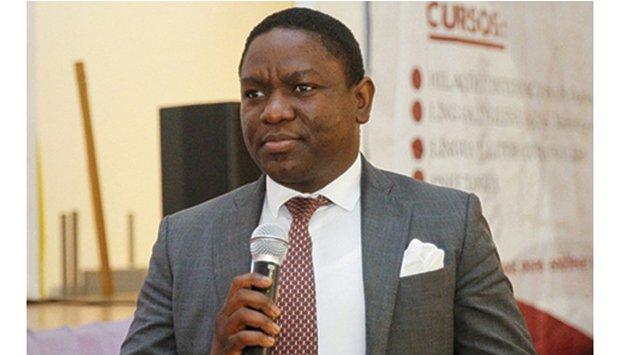
Márcio Daniel, speaking at the launch ceremony of the final report of the Municipal Forum for the Collection of Contributions for the Elaboration of the Budget of Municipal Administrations, which took place at the School of Administration and Public Policies (ENAPP), said that the exercise was carried out with the contribution of of 32 Non-Governmental Organizations, being called Participatory Budget (PB).
According to the official, the 610 projects included in the OGE 2022 will respond, in a concrete and immediate way, to the real needs in the different areas of the lives of the populations.
The projects, regarded as priorities and chosen by citizens, cover the Social Sector, with greater emphasis on Health, Education, Energy and Water, Sanitation, Social Assistance and the Environment. For the first time, according to Márcio Daniel, the problems that afflict citizens will be resolved according to locally identified priorities, and not as was done previously, with decisions taken by the administrative authorities of the municipalities.
The final report of the Municipal Forum for the Collection of Contributions for the Elaboration of the Budget of Municipal Administrations will allow that each budget has concrete results in political and financial executions.
Agglutinating Procedure
The Secretary of State for the Budget, Aia Eza da Silva, considered the Participatory Budget a unifying procedure, “because it enhances municipal administrations, citizens, civil society organizations and international partners”.
The Participatory Budget, he said, thus becomes a very important instrument aimed directly at citizens for the consolidation of a model of society that counts on everyone. “The Participatory Budget is an activity that will promote participatory, democratic and shared management of public resources, as well as encourage the exercise of citizenship among local communities”, predicted the Secretary of State.
Accordingly, he referred that the acts of the Public Administration should be a mechanism for monitoring and controlling the management of public affairs, precisely because they allow citizens not only to decide their priorities, but also to monitor their execution.
Aia Eza da Silva stated that the Executive is developing actions to improve procedures in the management of public resources, treating all projects in the same way, even if they are chosen by the citizens. So, she said, they must obey the rules of the OGE, because it presents the problems in a global way.
He mentioned that the Participatory Budget will be implemented on a permanent basis. “We are demonstrating the appropriate path in the execution of the General State Budget, through the Participatory Budget, emphasizing that the fulfillment of the population’s desires is the main objective of the Executive”, he said.
The final report of the Municipal Forum for the Collection of Contributions for the Preparation of the Budget of Municipal Administrations was promoted by the Ministry of Administration of the MAT Territory, in partnership with the United Nations Development Program (UNDP), and also counted on the contribution from 32 civil society organizations. Participating in Thursday’s event were members of the Executive, members of the National Assembly, governors, municipal administrators, representatives of NGOs, civil society and students.
For More News And Analysis About Angola Follow Africa-Press