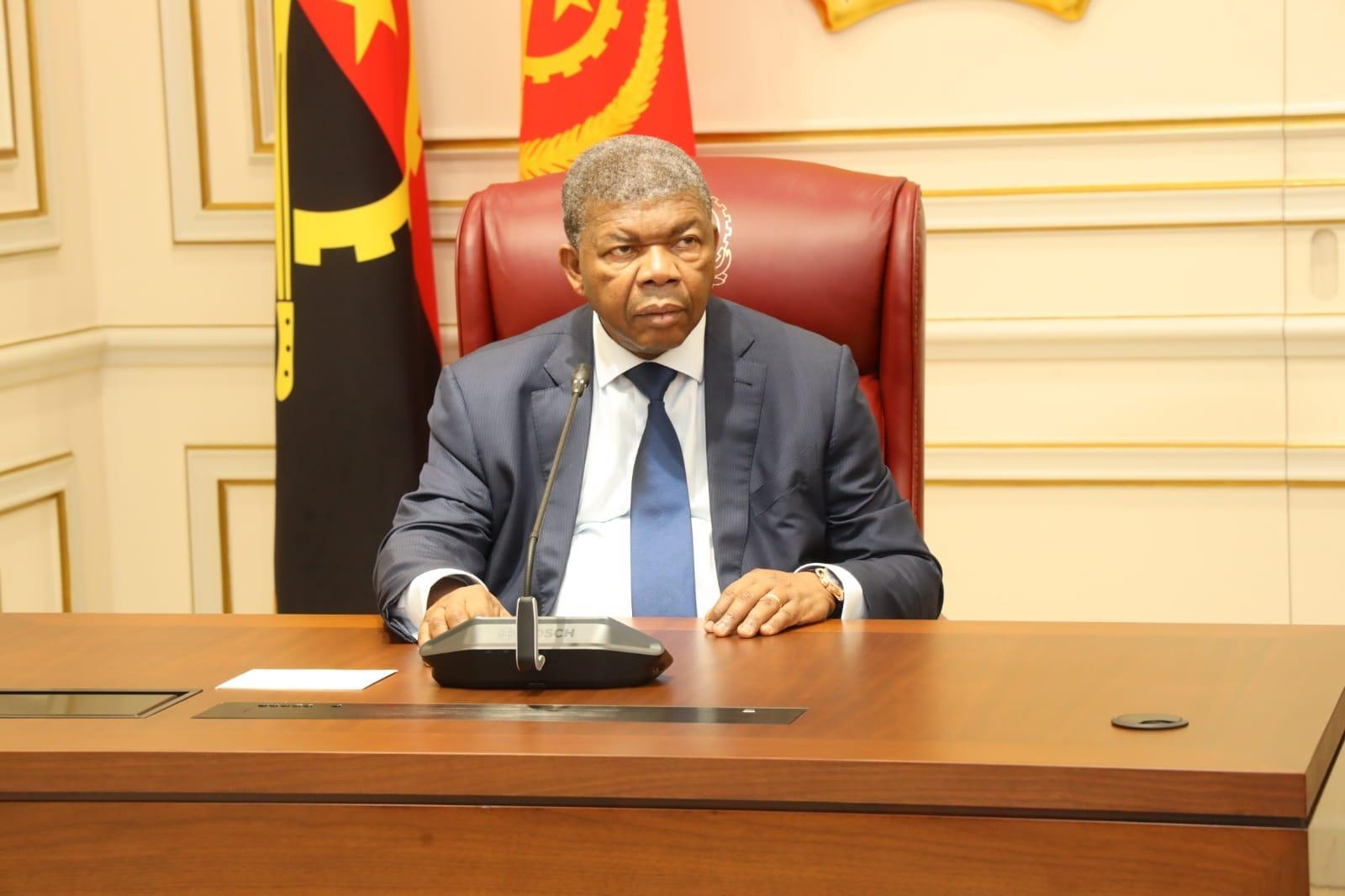
Africa-Press – Angola. Angolan President João Lourenço reaffirmed on Saturday that Angola maintains an open and pragmatic foreign policy, based on diversified partnerships and mutual respect.
“There is no need to exclude one partner to privilege another,” the Head of State said during an exclusive interview with CNN International, in Luanda.
Addressing the issue of international alliances, President João Lourenço stressed that Angola maintains good relations with both the United States and China, and that its foreign policy values all partners that contribute to the country’s economic and social development.
The statesman stressed that the world is not just two powers and that international cooperation must be guided by criteria of mutual benefit, sovereignty and national interest.
According to the Head of State, Angola’s option for a market economy naturally puts the country in line with the principles promoted by the United States and other liberal economies.
However, he also recognized the strategic importance of China as a global industrial power, whose productive capacity is fundamental for the global economic balance.
As an example, João Lourenço recalled China’s central role during the Covid-19 pandemic, when practically the entire world turned to the Chinese market to acquire medical equipment and logistics, highlighting the relevance of that country as a rapid response partner with great production capacity.
The Head of State reiterated that the diversification of the Angolan economy is a priority and stressed that the country is working to reduce dependence on oil and strengthen sectors such as agriculture, manufacturing, energy, tourism and telecommunications.
African Integration
In this line, João Lourenço argued that African economic integration is one of the most solid paths to sustainable growth, and that the increase in intra-African trade depends, above all, on massive investment in infrastructure.
For the President, the lack of mobility between African countries is one of the main barriers to continental trade.
He argued that “without interconnected airports, ports, railways and motorways, integration will only be a theoretical concept”, calling for a greater mobilisation of internal and external funding for structuring projects.
João Lourenço recalled that Luanda recently hosted an African Union summit dedicated precisely to mobilizing financing for essential infrastructure, and said that “development and integration will only be possible with interconnected energy and transport systems.”
He advocated that Africa should better exploit its own financial potential by channeling domestic resources into the development of infrastructure and productive sectors.
He stressed that the continent has large reserves of financial capital, often invested outside Africa, which could be mobilised for the benefit of Africans themselves.
In this sense, President João Lourenço stressed that the political will of African leaders is necessary, but not sufficient, and it is essential to create mechanisms that allow the continent to finance its own development and reduce external dependence.
For More News And Analysis About Angola Follow Africa-Press