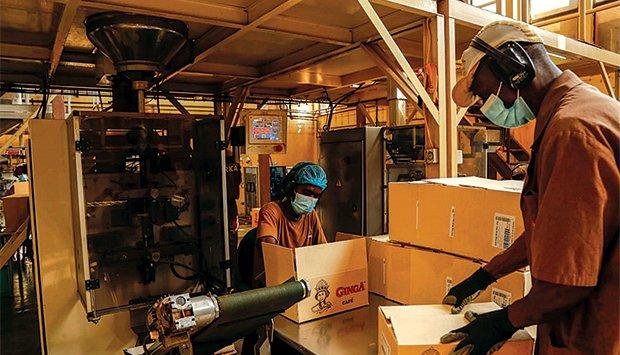
Africa-Press – Angola. The ambassador to Argentina, Fidelino Peliganga, expressed interest in supporting the export of Café Ginga to that country, during a visit yesterday to the Luanda factory where the brand owned by Grupo Angonabeiro is produced.
A group of Argentine businessmen expressed interest in Café Ginga, declared the diplomat, expressing their willingness to establish a “bridge” for the brand to conquer the market in the South American country.
The ambassador, who is in Luanda on a business trip, said that he will take advantage of his stay to meet with Angolan businessmen interested in expanding sales of products made in the country to Argentina.
Angonabeiro owns the Ginga brand (produced only with Angolan resources and grain), which is very popular in Angola and has already been exported to some countries in Africa and Europe.
Fidelino Peliganga is the second diplomat to visit the Café Ginga production unit this month, after, on 2 May, the Portuguese ambassador, Francisco Duarte, visited Angonabeiro, which presents the brand as a ” star product” in the company.
The Portuguese diplomat highlighted the Angolan brand’s relationship with Portuguese Cafés Delta, expressing confidence in the continuity of the association guaranteed by the Angonabeiro Group, which also owns the Portuguese label.
The Angonabeiro Group employs more than 100 workers in its manufacturing and storage facilities in Luanda, an area of 4,000 square meters where it packs more than 400 tons of sugar and 200 tons of roasted coffee, a product purchased from 20,000 producers in Angola.
Created by Grupo Nabeiro in 1998, in an institutional partnership established to revitalize the coffee sector, Angonabeiro started with the management and modernization of the Liangol factory, which had been deactivated since 1984. In 2001, the company’s industrial operations began and , in the same year, the roasting of Café Ginga was inaugurated.
The company says that, over more than 20 years, it has grown in a sustained way, working in close collaboration with the Angolan government, which considers this sector to be key to the diversification of the economy.
For More News And Analysis About Angola Follow Africa-Press