Africa-Press – Angola. Experimenting with prospecting and exploring new minerals, introducing more and more operators into the market and permanently investing in projects and infrastructures to support mining are urgent, short-term actions of the Angolan Executive, at a time when the country celebrates the 37th anniversary of the Mining Worker.
With the conclusion, this year, of the survey carried out within the framework of the Geological Plan of Angola (PLANAGEO), in an investment of 405 million dollars, Angola is working hard to start exploring new resources, out of a range of 42 resources capable of generating wealth. and community development, such as phosphate.
Currently, about 872,392 square kilometers, corresponding to 70 percent of the national territory, offer exploitable mineral potential, which gives rise to more investments in this sector that employs close to 20 thousand employees, mostly Angolans who, yesterday ( 27 April), celebrated 37 years.
They are professionals at the service of national companies such as Endiama, SODIAM, Sociedade Mineira de Catoca (SMC), Cuango, Sonangol, National Oil and Gas Agency (ANPG), Geological Institute of Angola (IGO), LNG, among other companies. international companies such as Rio Tinto, Anglo American, Tosyali, Alrosa.
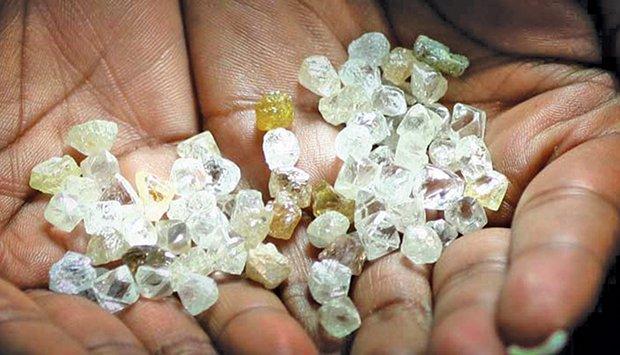
Most of these miners are directly engaged in the exploration of diamonds, oil, gold, iron, copper, ornamental rocks (granite and marble), silver, manganese, limestone, aggregates, among others, as well as in analysis and laboratories scattered around the 18 provinces of Angola.
In fact, the mining sector in Angola has shown itself, in the last three years, to be more competitive and attractive, due to the boldness of the Executive to redirect exploration towards new resources, in order to attract foreign investment and leverage the economy, which resulted in the return , this April, from De Beers, almost 12 years after its withdrawal.
Studies indicate that the country has at least 38 of the 50 most sought after minerals in the world, making it a “stage” of business opportunities that is increasingly attractive and open to new discoveries, a fact that has allowed the prospecting and exploitation of “virgin fields ” decoupled from oil and diamond.
All this potential, according to the chairman of the Board of Directors of IGEO, Canga Xiaquivuila, was discovered with the implementation of Planageo – a project of the Angolan Government that aims, among other objectives, to relaunch, stimulate and increase the fiscal contribution of the resources subsector minerals at the country level.
Contribution Of The Sector To GDP
Along with diamonds, the oil subsector is and will continue to be, at least for the next 20 years, according to projections, the main source of revenue for the Angolan State, taking into account its weight in the country’s macroeconomic structure (97% of exports , 65% of the General State Budget – OGE and 50% of the Gross Domestic Product – GDP).
After going through bad times, caused by the global economic and financial crisis, which began in 2014, and later worsened by the Covid-19 pandemic that greatly affected the economies of almost all countries in the world, both subsectors (oil and diamond) are back. to be reborn in Angola, giving back hope for better days.
As an example, gross revenue from the export of 98.3 million barrels of oil reached, in the first quarter of this year, 10.14 billion US dollars, with an increase of 29.84% compared to the IV quarter of 2021.
Of this gross amount of revenue, Angola retains those reverted in tax taxes paid to the State via the operators’ exports, and from the barrels of oil that the country is entitled to, in more than 280,000 barrels/day, which will have a positive impact on the exchange market, with the kwanza appreciating against the dollar, particularly.
Of the volume of oil exported, 26.22% is by the Concessionaire, the National Agency of Petroleum, Gas and Biofuels (ANPG) and 15.54% by the national oil company, Sonangol. The remaining quantities were exported by international companies, TotalEnergies (12.74%), Esso (9.56%), ENI (9.82%), BP (6.35%), SSI (6, 73%), Equinor (5.84) and Chevron (5.80%).
With oil traded at a weighted average price of US$103,083, exports fell 0.21% year-on-year and 0.40% compared to the fourth quarter of 2021, according to data released this Tuesday. (26), by the Ministry of Mineral Resources, Oil and Gas (MIREMPET).
However, the highest value of gross revenue was recorded in March, with 4.15 million US dollars, during which 34.44 million barrels of crude oil were exported.
For More News And Analysis About Angola Follow Africa-Press